

connector manufacturer selection is the single most critical supply chain decision for modern automated factories, heavy industrial facilities, and renewable energy infrastructure managers. In high-output manufacturing lines, automated robotic assembly zones, commercial energy storage arrays, and demanding maritime environments, continuous electrical continuity serves as the operational baseline. A single poorly constructed interface component that fails due to moisture ingress, continuous mechanical vibration, or thermal degradation can cause sudden, catastrophic plant downtime.
For factory procurement managers, operations directors, and systems engineering teams, moving past generic component brokers and establishing a direct partnership with an original connector manufacturing company is an essential operational strategy. Sourcing components directly from the production floor guarantees rigorous quality control, full material tracking, direct engineering support, and scalable customization options, ensuring your heavy equipment maintains optimal field uptime under the most severe operating stresses.
The Engineering Foundations of High-Performance Interconnects
Industrial deployment zones continuously subject mechanical and electrical junctions to challenging field forces. Continuous heavy machinery vibrations, high ambient humidity, airborne oil contaminants, and intense thermal fluctuations require robust component design. Surviving these operational stresses requires specialized material selection and precise production control.
Advanced Polymer Selection for Protective Housings
The external insulation shell of an industrial-grade plug serves as its primary defense layer. Leading electrical connector manufacturers utilize premium engineering thermoplastics rather than cheap commercial plastics. The most widely trusted structural options include glass-fiber reinforced Polyamide 66 (PA66) and Polybutylene Terephthalate (PBT). These advanced polymer compounds deliver excellent dimensional stability, strong electrical insulation, and high resistance to long-term ultraviolet (UV) exposure. Industrial-grade PA66 resists breakdown from common machine solvents, oils, and hydraulic fluids, preventing micro-cracks or localized shell degradation across years of field service.
Conductive Alloys and Surface Plating Technologies
Inside the insulation shell, the internal contact block controls the power and signal flow. High-performance industrial configurations rely on specialized copper alloys, such as phosphor bronze or beryllium copper, because of their superior tensile strength and electrical conductivity. To maintain low contact resistance over thousands of mating cycles, these raw metal pins receive a multi-stage electroplating finish. A baseline nickel layer is applied first to prevent copper migration, followed by a heavy gold plating layer. This engineering approach prevents surface oxidation and contact corrosion, ensuring clean low-voltage sensor data transmission even in highly humid or chemically aggressive environments.
Precision Injection Molding Tolerances
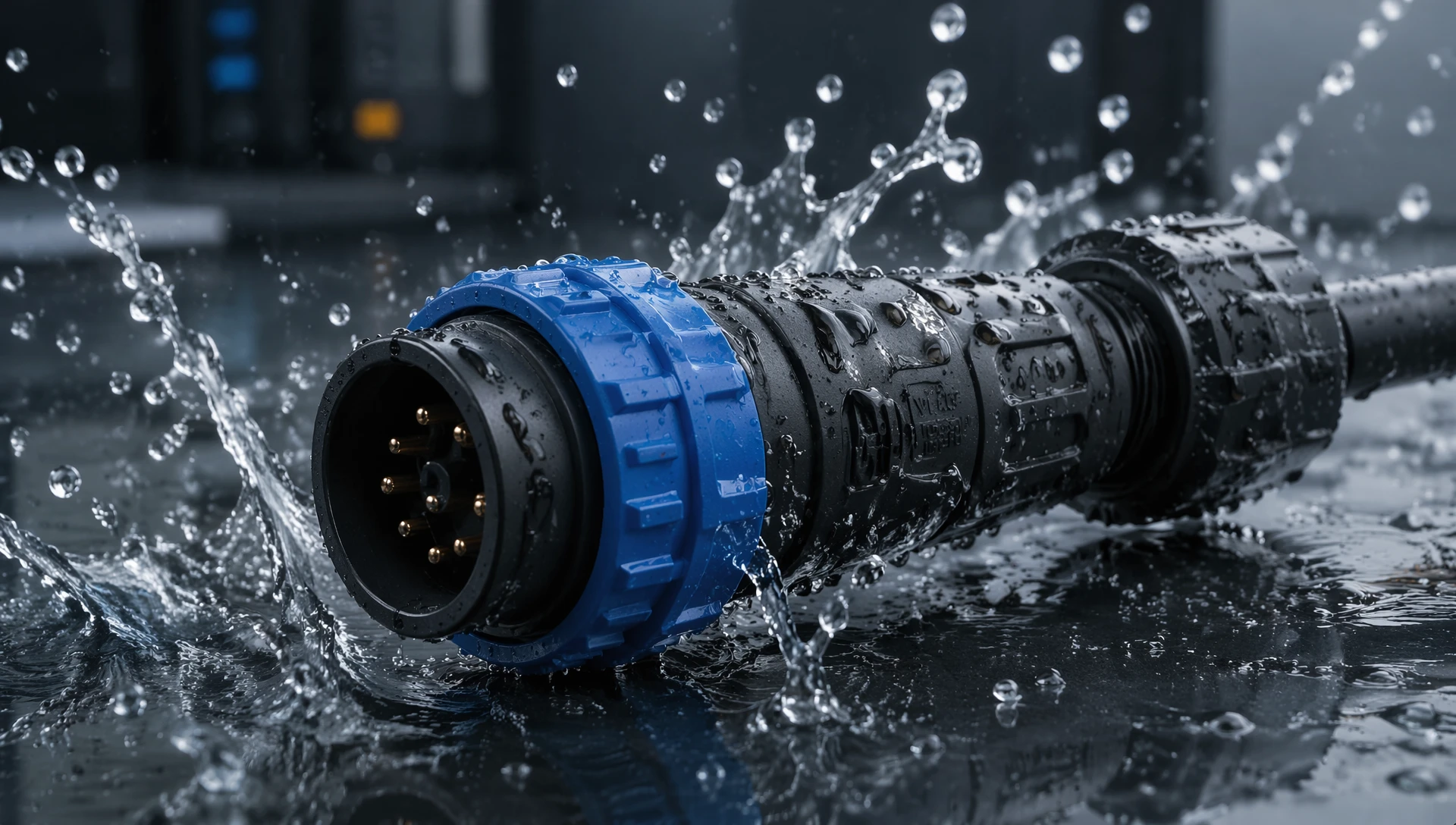
Achieving tight environmental defense rankings, such as an official IP67 or IP68 ingress protection rating, depends on extreme accuracy during the plastic molding phase. Modern production plants run high-pressure injection molding equipment configured to strict tolerances of plus or minus 0.01 mm. This mechanical precision eliminates micro-voids, flash defects, and internal material stress lines. Keeping these parameters steady ensures the connector body retains its structural shape and keeps its internal rubber sealing rings perfectly compressed, even during sudden shifts in field temperatures.
Navigating the Global Supply Chain of Electrical Components
The worldwide electronic component marketplace contains many different layers of suppliers, ranging from multi-national distribution catalog companies to specialized overseas trading firms and direct factories. Identifying the core structural differences between these supply sources helps B2B procurement professionals optimize their purchasing strategies.
Direct Factory Purchases vs. Trading Firm Intermediaries
-
Tier-1 Component Manufacturers: Sourcing parts directly from a dedicated factory offers full manufacturing visibility, direct engineering access for design modifications, and end-to-end component traceability. This approach eliminates multi-tier middleman markups and establishes a reliable supply line for high-volume production requirements.
-
Broad-Market Trading Distributors: Relying on generic brokers or catalog distributors restricts procurement teams to fixed, off-the-shelf product choices with zero design flexibility. Additionally, buyers face higher exposure to sudden supply chain disruptions, extended shipping times, and inconsistent batch quality.
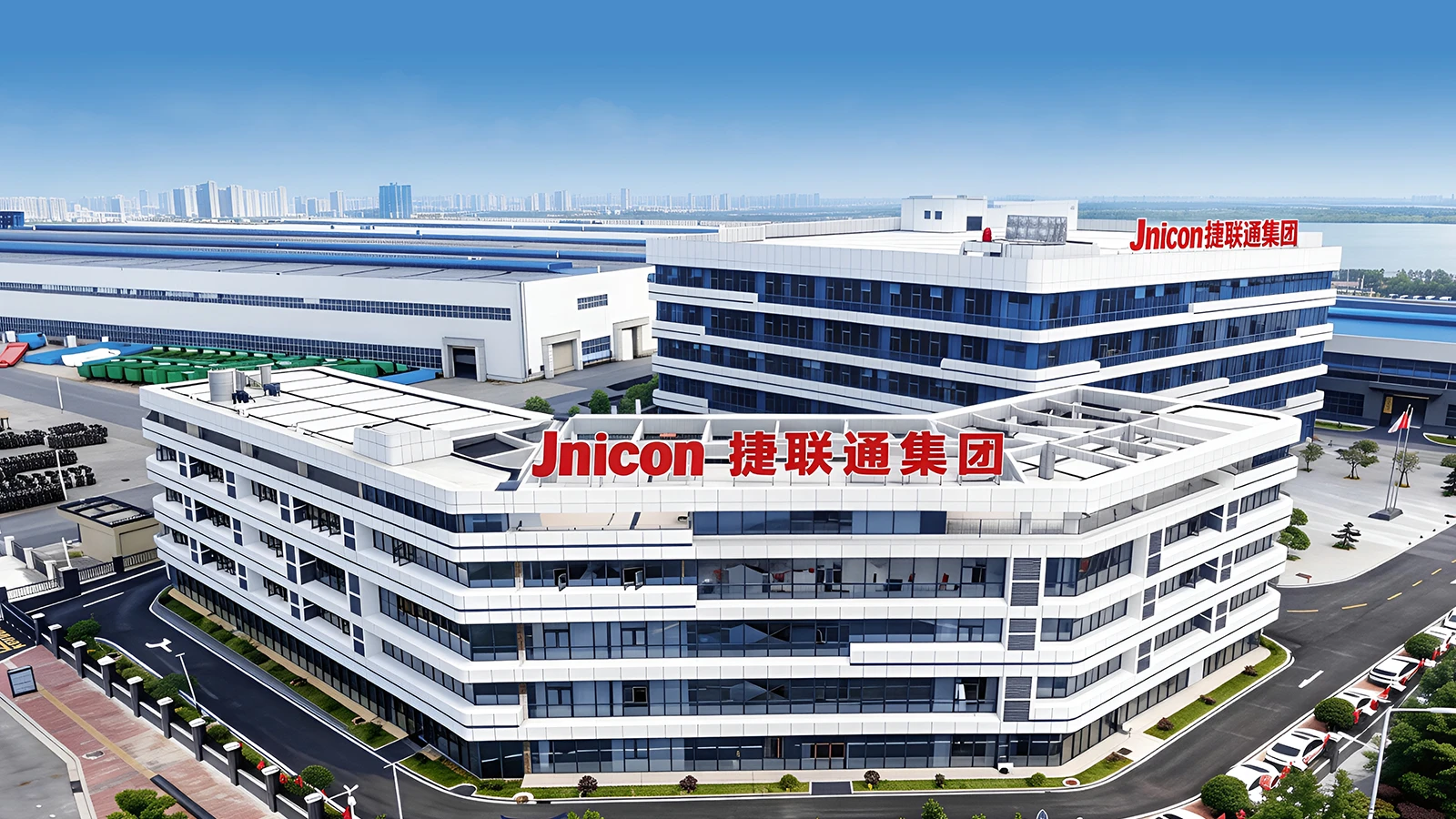
When checking prospective industrial suppliers, purchasing departments must look beyond simple price sheets and verify the entity's certified management frameworks. An authentic, high-quality connector manufacturer company must maintain accredited international standards, specifically ISO9001 for corporate quality control, IATF16949 for automotive-grade supply chain tracking, and ISO14001 for environmental management. These regulatory systems ensure every production run follows identical, audited operating procedures, providing reliable part uniformity across multi-year purchasing contracts. To learn more about our direct quality control systems, technical history, and factory operations, explore our About Us corporate background portal.
Technical Performance Comparison of Industrial Locking Mechanisms
Different factory infrastructure setups require distinct physical configurations to handle various mechanical loads and connection frequencies. Sourcing components from experienced connector manufacturers provides access to specialized structural locking systems optimized for specific operating environments.
| Technical Parameters | Screw-Locking Mechanisms | Push-Locking / Quick-Lock Systems | Bayonet-Locking Configurations |
| Ingress Protection Level | Typically IP68 (Excellent sealing) | Typically IP67 to IP68 (High sealing) | Typically IP67 (Reliable sealing) |
| Vibration Resistance | Medium (Requires lock washers over time) | High (Integrated spring-clip retention) | Extremely High (Mechanical pin engagement) |
| Installation Speed | Slow (Manual turning required) | Fast (Instant click coupling) | Medium (Quarter-turn engagement) |
| Human Error Risk | High (Risk of under-torquing) | Low (Audible click confirms locking) | Low (Visual marker alignment check) |
| Primary Industrial Use | Outdoor power systems and control boxes | Automated robotic lines and sensors | High-vibration heavy plant equipment |
Auditing Factory Engineering and Simulation Capabilities
Top-tier component producers avoid trial-and-error engineering. Instead, their development teams use advanced computer simulation software to analyze mechanical stress distributions during insertion and withdrawal cycles before cutting any steel production molds. Additionally, internal mold-flow simulation programs map plastic distribution inside the mold cavity, preventing the formation of weak weld lines near internal water-sealing rings.
Advanced Thermal and Structural Simulations
For heavy-duty power setups handling high amperages, engineers use computational fluid dynamics (CFD) software to predict the exact temperature rise (Delta T) across contact blocks. This digital analysis confirms that the final plug assembly will safely disperse heat and will not exceed its maximum operating limit when running under full electrical loads.
Furthermore, a reliable industrial component source must maintain an active, fully equipped testing laboratory. Sourcing teams should verify that the factory performs these three validation procedures on production samples:
-
Mechanical Durability Testing: Automated machinery couples and uncouples samples continuously to confirm that insertion and withdrawal forces stay within target limits over thousands of uses.
-
Thermal Shock Conditioning: Placing parts in specialized test chambers that cycle rapidly from minus 40 degrees Celsius to plus 105 degrees Celsius ensures that the structural polymers will not crack, shrink, or warp in extreme climates.
-
High-Pressure Fluid Validation: Testing sub-assemblies inside water-submersion tanks ensures that IP67 and IP68 sealing barriers prevent water intrusion, even under high-pressure industrial washdown conditions.
To evaluate drag chain fatigue lifecycles and overmolded strain relief mechanics, read our complete cable assemblies sourcing guide for industrial plant OEMs.
The Structural Advantages of Circular Interconnect Configurations
Industrial automation networks, remote sensor arrays, and plant power distribution frameworks widely use circular shapes. Selecting the right circular geometry impacts both field reliability and installation speed on the factory floor.
While traditional threaded connectors provide strong resistance to straight-line pulling forces, manual installation takes time and is vulnerable to human error. If field technicians under-torque a screw-locking ring, moisture can creep in over time. Conversely, over-torquing can strip the plastic threads and ruin the plug assembly.
Modern production facilities are rapidly switching to quick-lock systems designed by specialized circular connector manufacturers. These configurations feature a click-to-lock sleeve that provides clear physical and audible feedback the moment the connection is secure. This design reduces assembly times by up to 80 percent and removes the need for specialized torque wrenches. The constant internal spring pressure resists high-vibration forces, making it ideal for robotic arms and heavy manufacturing machinery. To review our complete selection of rugged circular configurations, visit our comprehensive Product Center landing page.
High-Specification Engineering: Military and RF Configurations
Certain heavy industrial sectors require specialized component designs that go far beyond standard commercial options. Equipping heavy mining equipment, deep-sea exploration gear, or high-altitude systems requires working with qualified military connector manufacturers who build parts to withstand extreme physical abuse.
Components engineered for these demanding fields comply with strict international ruggedization standards, such as the MIL-STD-810 and MIL-DTL-38999 testing frameworks. These specifications require high resistance to mechanical shocks, harsh chemical washes, and extended salt-spray exposure. To achieve this level of durability, the connectors feature high-grade aluminum shells treated with specialized anodized finishes or black zinc-nickel electroplating. These surface coatings provide excellent rust resistance while maintaining high electrical conductivity across the shell body to block electromagnetic interference (EMI) and protect data signals.
For high-frequency wireless systems and remote telemetry links, procurement teams work with leading rf connector manufacturers. These specialized parts require exact 50-ohm or 75-ohm impedance matching to minimize signal loss and data reflections. The production process demands tight control over internal insulation spacing materials, such as high-purity Polytetrafluoroethylene (PTFE), and micro-machining tolerances on internal pins to prevent variations in the Voltage Standing Wave Ratio (VSWR). Sourcing from a certified circular connectors manufacturers network ensures your facility gets parts built exactly to these high-frequency tolerances.
Overcoming Design Constraints with Custom Engineering Solutions
Standard, off-the-shelf components cannot always satisfy the tight space limitations or complex electrical requirements of modern industrial machinery. When standard catalog products fail to meet your project specs, partnering with a dedicated custom connector manufacturer is the most effective way forward.
For a project-level quotation and approval plan, use our OEM connector RFQ and sample approval checklist to organize drawing revisions, mating requirements, sample evidence and production release responsibilities.
The OEM Customization Pathway: Design to Mass Production
-
Step 1: Technical Consultation: Engineering teams define exact pin layouts, electrical ratings, spatial limits, and environmental exposure metrics.
-
Step 2: Digital Simulation: Design engineers run FEA stress models and moldflow analysis to validate the component structure before manufacturing.
-
Step 3: Precision Tooling Development: Internal mold workshops use high-precision CNC and EDM equipment to cut multi-cavity production tools.
-
Step 4: Monitored Injection Molding: Automated molding equipment runs monitored batches to ensure zero polymer defects or structural voids.
-
Step 5: Automated QA Testing: Final assemblies go through automated optical inspection (AOI) and high-pressure IP68 water sealing verification.
-
Step 6: Scheduled Bulk Delivery: Factory logistics teams manage bulk framework shipping and maintain buffer inventory for production lines.
Advanced Hybrid Pin Configurations
Modern compact machinery layouts frequently require routing power lines and high-speed data feeds through a single, space-saving connector panel. A professional connector manufacturing corporation can develop custom hybrid layouts that place high-amperage power pins right alongside shielded data pairs or fiber-optic strands within a single housing. This approach eliminates the need for multiple connectors, simplifies system wiring, and reduces the physical footprint on your equipment's exterior panel.
Heavy-Duty Cable Overmolding Engineering
Custom component design also includes the attached cable assembly. Industrial environments often require specialized cable overmolding, where the raw cord and the plug shell are permanently bonded together using molten polymer material. This process creates a highly resilient seal that protects internal wire terminations against liquid ingress and continuous physical bending. Custom overmolding can incorporate specialized jacket materials like polyurethane (PU) or thermoplastic elastomers (TPE) to provide targeted resistance against hot oil exposure, industrial chemical washes, or continuous robotic movements. To discuss your project's custom layout and tooling needs with our application engineers, visit our specialized OEM Customization Portal.
Related Product Recommendations
To assist engineering teams in navigating hardware configurations, we maintain distinct product architectures classified by deployment severity, sealing lock requirements, and spatial footprints. Selecting the correct layout ensures optimized termination efficiency across your machinery grid.
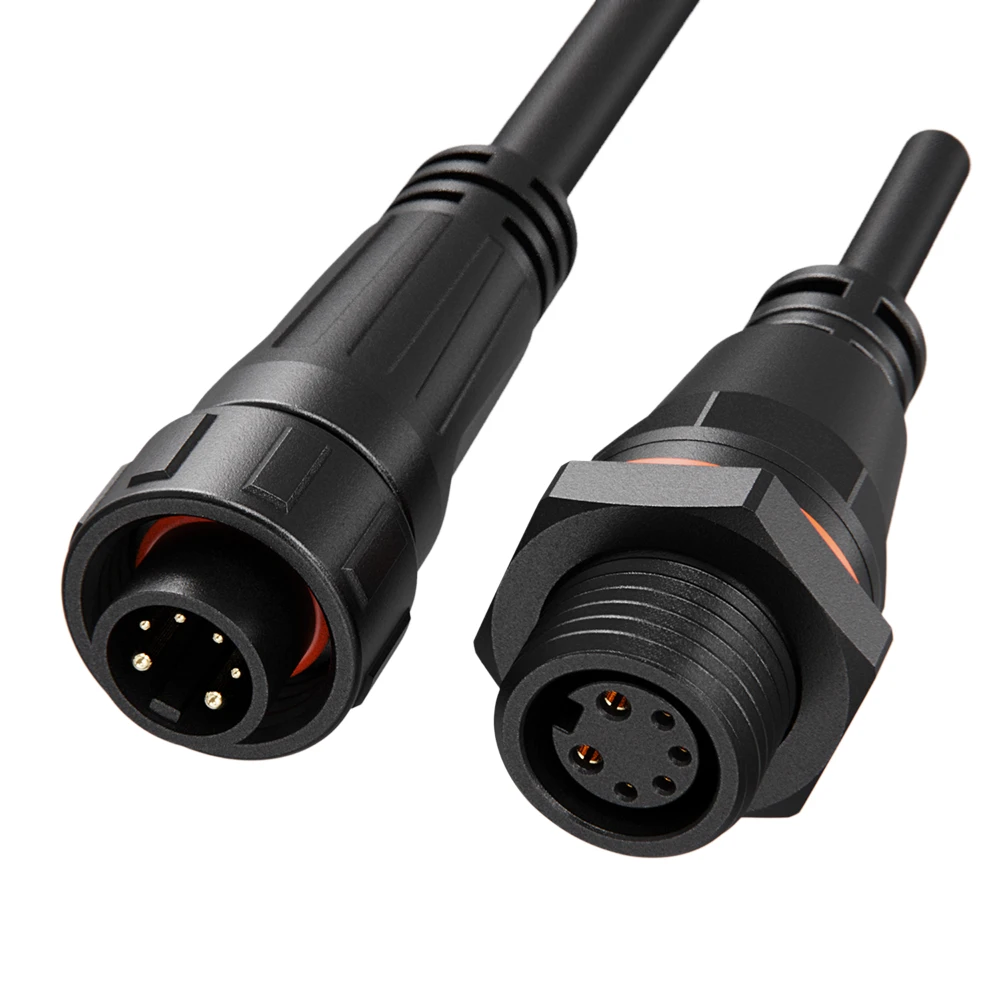
M16 2+4 Pin Hybrid Waterproof Connector 10A+5A Screw Locking IP68 for Power & Signal
10A+5A hybrid screw-locking waterproof connector combining power and signal in one M16 housing, field installable or molded with cable.
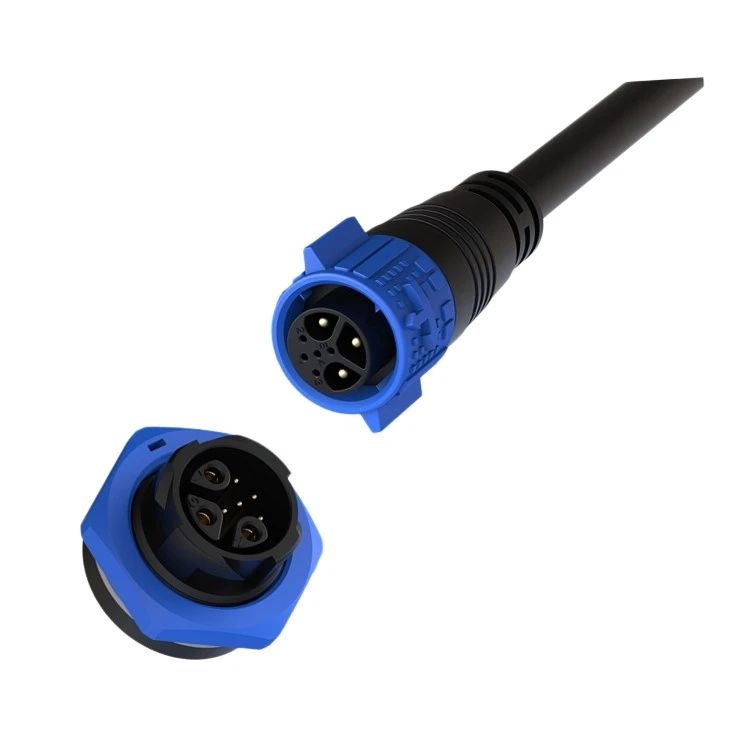
M19 3+5 Pin Hybrid Waterproof Connector 15A+5A Push Locking IP67 for Power & Signal
15A+5A hybrid push-locking waterproof connector combining power and multi-signal in one M19 housing for industrial control systems.
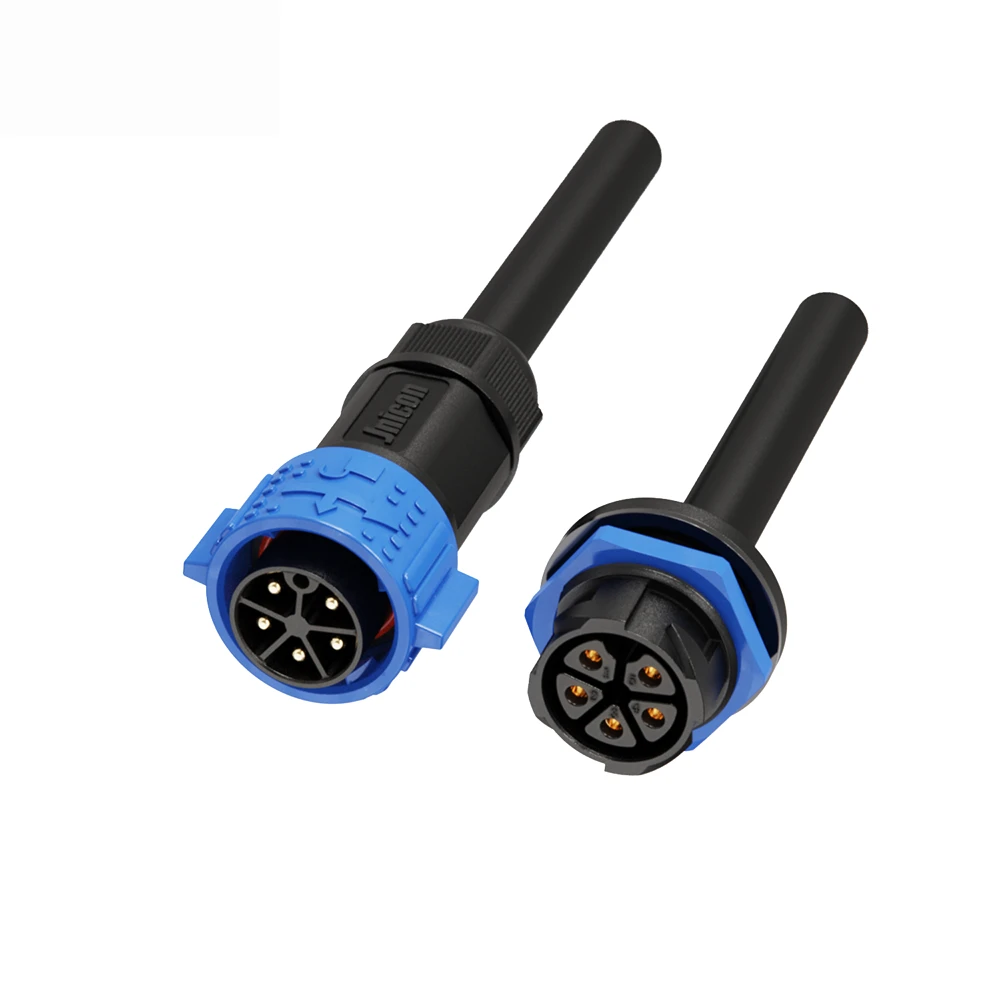
M25 5-Pin Waterproof Connector 30A Push Locking for LED Lighting & Marine
30A 5-pin push-locking waterproof power connector with IP67 protection for outdoor LED lighting and marine equipment.
To explore all mechanical dimensions, assembly drawings, and electrical datasheets for our complete lineup, browse our specialized Circular Connectors Portfolio.
Related Solution Recommendations
Factory infrastructure management extends beyond individual components to complete electrical routing ecosystems. Sourcing from a qualified industrial partner delivers fully validated engineering answers for complex environment installations.

New Energy & Energy Storage
Connector and cable assembly options for battery racks, BMS interfaces, power conversion equipment and energy-storage cabinets. JNICON supports configuration review based on current, voltage, thermal conditions, polarity, service access and environmental exposure.
Explore Solutions
Industrial Automation
Power, signal, and data connectivity for factory machines, robotic cells, sensors, and control cabinets. JNICON can review circular connectors and cable assemblies against motion, sealing, shielding, and maintenance requirements before prototype approval.
Explore Solutions
Marine & Offshore
Sealed power, signal and cable interfaces for marine equipment and offshore installations. Review salt exposure, condensation, vibration, cleaning and service conditions with JNICON. A stated IP68 rating does not by itself establish continuous subsea, pressure-depth or marine-class approval.
Explore SolutionsTo review complete operational case studies and review technical blueprints for your specific industry sector, check our comprehensive Industrial Solutions Directory.
Optimizing Total Cost of Ownership (TCO) in B2B Procurement
For procurement professionals managing large industrial programs, evaluating suppliers requires looking beyond the initial unit price. The total cost of ownership (TCO) includes the long-term expenses associated with field failures, assembly line downtime, and logistical inefficiencies.
Reducing Production Redundancies and Line Errors
Sourcing components from a trusted partner ensures consistent mechanical tolerances, which helps streamline assembly operations. Variations in shell dimensions or pin alignments can cause line workers to lose time during installation or lead to damage on internal printed circuit boards (PCBs). By stabilizing component dimensions, factories can increase their manufacturing efficiency and reduce internal scrap rates.
Long-Term Supply Chain Reliability
A direct manufacturing partnership protects your operation from sudden market disruptions. Tier-1 suppliers can provide long-term framework agreements, buffer stock management, and component lifecycle protection. This structure insulates your production lines from sudden logistics challenges, ensuring a steady supply of critical components year after year.
Technical Appendix: Ingress Protection (IP) Standards
| IP Rating Digits | First Digit: Solid Object & Dust Defense | Second Digit: Liquid & Water Intrusion Defense |
| Level 5 | Protects against harmful dust deposits | Protects against low-pressure water jets from any angle |
| Level 6 | Complete dust-tight barrier against all particles | Protects against high-pressure water streams and heavy seas |
| Level 7 | Not applicable for solid object metrics | Protects against water immersion up to 1 meter depth for 30 minutes |
| Level 8 | Not applicable for solid object metrics | Protects against continuous submersion beyond 1 meter under pressure |
| Level 9K | Not applicable for solid object metrics | Protects against high-pressure, high-temperature washdown jets |
Frequently Asked Questions (FAQ)
Conclusion: Securing Your Industrial Supply Chain
Optimizing your factory's electrical infrastructure requires looking beyond low-cost parts and carefully evaluating a supplier's engineering capabilities, quality control systems, and raw material tracking. Sourcing components directly from a trusted manufacturing partner protects your equipment from field failures and helps stabilize your assembly line costs. The Jnicon engineering team is ready to support your business with a wide selection of standard circular connectors or completely customized hybrid cable assemblies. To request detailed technical spec sheets, arrange a digital factory audit, or receive a project quotation, connect with our support team through our direct Inquiry and Contact Portal.