

Deploying a rugged waterproof connector system is the single most vital variable when safeguarding modern factory automation grids, outdoor power links, and heavy industrial machinery setups from sudden electrical short circuits. In high-output manufacturing facilities, marine processing yards, and automated distribution plants, continuous electrical power and uncorrupted data flows serve as the absolute foundation of all daily operations. A single sub-assembly failure triggered by oil penetration, high-pressure liquid washdowns, or atmospheric moisture migration can cause immediate plant shutdowns, leading to expensive maintenance schedules and thousands of dollars per hour in lost production efficiency.
For factory procurement directors, systems engineering leads, and industrial machinery designers, navigating the international electrical component supply chain requires looking past generic component brokers. Working directly with an established component factory guarantees complete control over raw material testing, certified laboratory validation, and long-term part tracking. By prioritizing professional-grade component selection, heavy industrial plants can completely eliminate weak termination points, protect sensitive internal electronics, and establish stable, low-maintenance connection matrices that perform flawlessly under extreme mechanical, thermal, and chemical stress.
The Engineering Foundations of High-Performance Ingress Protection
Industrial deployment zones continuously subject mechanical junctions and wiring tracks to aggressive environment forces. Heavy equipment vibrations, high ambient humidity, airborne chemical vapor, and sudden ambient temperature drops demand exceptional material durability. Preventing field failures requires deep material engineering and precise manufacturing quality control to ensure all installed waterproof electrical connectors retain their mechanical properties across multi-year duty cycles.
Ingress Protection (IP) Defense Matrix
| IP Level Rating | Concrete Environmental Validation Metric |
| IP65 | Protection against low-pressure liquid jets from any angle with no harmful effects. |
| IP67 | Complete immersion defense against water entry up to 1 meter depth for a 30-minute duration. |
| IP68 | Continuous submersion defense in water beyond 1 meter depth under custom specified factory pressures. |
| IP69K | High-pressure, high-temperature washdown protection against close-range, directional water streams. |
Advanced Polymer Engineering for External Housings
The external insulation body of an industrial component serves as its primary physical shield. Experienced component engineers utilize high-density engineering thermoplastics rather than commercial consumer plastics. The preferred base materials include glass-fiber reinforced Polyamide 66 (PA66) and Polybutylene Terephthalate (PBT). These specialized polymers deliver outstanding dimensional stability, strong dielectric breakdown resistance, and long-term protection against ultraviolet (UV) aging. Furthermore, industrial-grade PA66 retains its impact strength when exposed to common machine solvents, lubricants, hydraulic fluids, and cutting oils, preventing surface micro-cracks or chemical degradation on the factory floor.
Contact Elastomers and Internal O-Ring Engineering
Achieving a permanent water-tight seal requires matching the plastic shell with high-performance elastomeric seals. Internal O-rings and perimeter seals typically feature fluorosilicone rubber or Ethylene Propylene Diene Monomer (EPDM) compounds. These elastomers are selected for their excellent compression set resistance, meaning they maintain constant outward pressure against sealing walls even after thousands of hours of tight compression. Fluorosilicone, in particular, remains flexible at minus 40 degrees Celsius and stable at plus 105 degrees Celsius, ensuring that temperature changes do not shrink the internal sealing rings and allow moisture to enter the terminal block.
Micro-Machining Tolerances and Injection Quality
Maintaining a certified IP68 or IP69K ingress defense ranking requires high accuracy during the high-pressure plastic injection phase. Production facilities operate automated molding machines configured to tolerances within plus or minus 0.01 mm. This level of accuracy prevents the formation of structural voids, sink marks, or flash lines along critical mating seams. Ensuring these precise parameters keeps the connector body perfectly round, which prevents moisture from bypassing the elastomeric seals when the interface is subjected to high-pressure washdowns or deep water submersion. To review our complete structural testing history and advanced material validation methods, check out our comprehensive Product Center landing page.
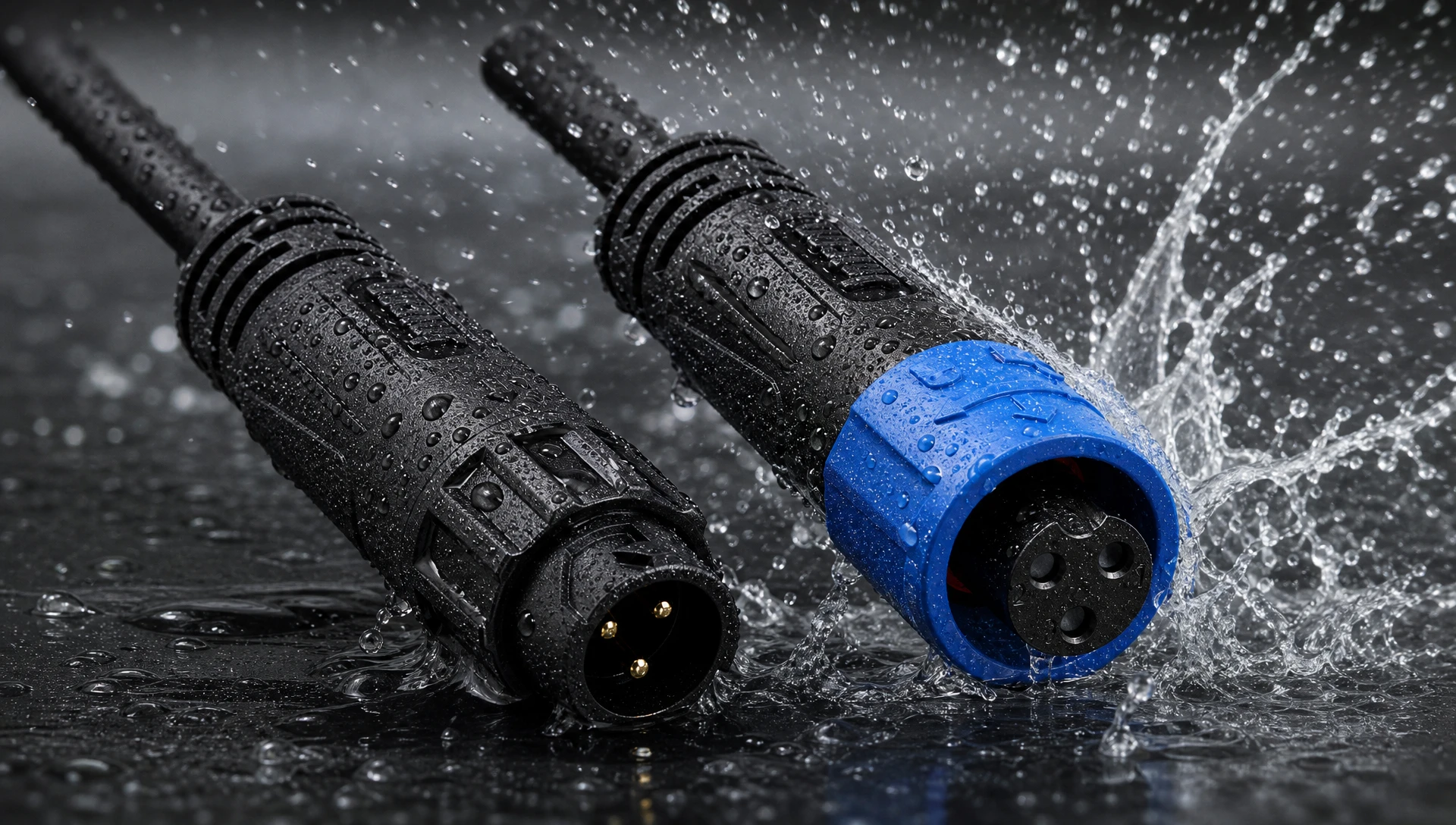
Moisture inside an assembly does not by itself prove that liquid crossed the connector seal. Before replacing parts, use our waterproof connector condensation and leakage troubleshooting guide to distinguish internal condensation, seal leakage and moisture transport along the cable.
Mechanical Interlocking Designs and Termination Standards
A secure electrical connection requires a strong physical locking mechanism to resist constant external forces. In heavy processing plants, continuous mechanical shaking from vibrating conveyor belts, stamping presses, and robotic turning axes can easily back out unlatched plugs, causing intermittent signal loss or complete electrical failure.
Threaded Coupling vs. Quick-Lock Systems
Traditional threaded coupling configurations provide strong resistance to straight-line pulling forces, making them a common choice for permanent outdoor electrical hookups. However, manual thread engagement takes time and is vulnerable to installation errors, such as under-torquing or cross-threading during field maintenance. If a field technician under-torques a heavy locking ring, moisture can seep along the loose threads over time.
Modern automated assembly lines increasingly adopt push-locking or quick-lock configurations designed by top-tier circular connector manufacturers. These systems feature an internal spring-clip ring that provides a clear physical and audible click confirmation the moment the interface is fully locked. This design cuts field installation time by up to 80 percent and removes the need for specialized torque wrenches, providing reliable protection against high vibrations. To evaluate all our physical locking styles and explore custom housing profiles, browse our comprehensive Connectors Portfolio catalog.
Precision Internal Contact Termination Methods
Inside the connector body, the wiring tracks must be securely terminated to prevent wire oxidation and maintain low electrical resistance. Sourcing departments can select from three main terminal configurations depending on their factory assembly tools:
-
Crimp Terminations: Ideal for high-volume automated wire processing lines, using targeted compression to create an air-tight, gas-tight bond between the wire strand and the contact pin.
-
Solder Cup Configurations: Preferred for field repairs or hybrid wire sizes, allowing technicians to create solid, durable connections without specialized crimping dies.
-
Screw-Terminal Blocks: Commonly used for heavy power distribution lines, enabling rapid field assembly with basic hand tools.
Regardless of the termination method, the internal contact pins rely on premium copper alloys finished with multi-stage electroplating. Applying a baseline nickel layer prevents copper migration, followed by a heavy gold plating layer to ensure minimal contact resistance and prevent surface corrosion across thousands of mating cycles.
High-Performance Wire Splicing and Inline Branching Systems
Distributing power and sensor signals across a large manufacturing floor requires reliable wire splicing and branching components. Standard electrical tape and basic twist-on wire nuts cannot survive the damp environments found in modern industrial facilities.
To meet these requirements, procurement managers utilize specialized waterproof wire connectors designed for direct inline splicing. These components feature rugged inline outer shells fitted with compression strain-relief glands at both cable entry points. When the external locking nut is tightened, the internal elastomeric grommet compresses tightly around the cable jacket, blocking moisture migration along the wire insulation.
For high-density electrical grids, using a single waterproof wire connector for each splice can take up too much physical space. Instead, engineering teams deploy integrated multi-point terminal blocks built by specialized electrical connector manufacturers. These sub-assemblies combine multiple conductive terminal bars inside a single compact housing pre-filled with non-conductive, self-healing sealing gel.
For quick field repairs or unexpected rewiring needs, using a rugged waterproof wiring connectors kit ensures that technicians can splice broken lines right on the factory floor without waiting for specialized overmolding tools. These components provide an immediate water-tight seal that isolates the copper conductor from ambient humidity and corrosive gases.
Technical Performance Matrix of Industrial Locking Systems
To help engineering and procurement teams evaluate different component configurations, this comparative table outlines the technical parameters of the most common industrial locking systems.
| Mechanical Design Parameters | Screw-Locking Mechanisms | Push-Locking / Quick-Lock Systems | Bayonet-Locking Configurations | Inline Splice Blocks |
| Ingress Protection Level | Typically IP68 / IP69K | Typically IP67 / IP68 | Typically IP67 | Typically IP68 / Gel-Sealed |
| Vibration Resistance | Medium (Requires lock washers) | High (Integrated spring-clip) | Extremely High (Pin engagement) | Medium (Static placement preferred) |
| Field Assembly Speed | Slow (Manual turning required) | Fast (Instant click coupling) | Medium (Quarter-turn action) | Fast (Integrated clamp screws) |
| Mating Lifecycle Rating | Up to 1000 Cycles | Up to 5000 Cycles | Up to 2000 Cycles | Up to 100 Cycles |
| Primary Industrial Use | Outdoor power links, control boxes | Automated robotic lines, sensors | High-vibration heavy equipment | Inline cable splicing, repairs |
| Electrical Load Capacity | Up to 50A | Up to 25A | Up to 40A | Up to 32A |
Low-Voltage Power Routing and Dual-Channel Interfaces
Automated industrial sensor networks, proximity switches, and small solenoid valves typically run on low-voltage power networks, such as 12V DC or 24V DC systems. Sourcing components for these setups requires finding space-saving designs that handle both power and signal lines cleanly.
For straightforward dual-conductor networks, a compact 2 pin waterproof connector provides a reliable solution. This setup uses a polarized internal plastic keyway to prevent mismatched connections during field installation, ensuring positive and negative power lines connect correctly every time.
For remote machinery setups, using a pre-wired 2 wire pigtail waterproof male connector streamlines assembly by providing a factory-overmolded plug with flying wire leads. This design removes the need for field terminal crimping, protecting the rear cable transition from water leaks.
When configuring these low-voltage systems, engineers must select components that match the specific voltage drops and current loads of their equipment. Using a high-quality waterproof 12v connector built with thick conductive pins prevents power drops over long wire runs, ensuring distant sensors receive clean, stable power.
Low-Voltage Interface Key Features
| Core Design Feature | Concrete Factory Operating Value |
| Polarized Internal Keyway | Completely eliminates cross-mating errors during rapid field installations. |
| Factory Polyurethane Overmolding | Seals the critical rear wire exit against high-pressure fluid leaks. |
| Gold-Plated Copper Contact Pins | Minimizes voltage drops over distance to maintain precise signal levels. |
| High-Durometer Locking Sleeves | Resists high physical impacts and dropped tools on production floors. |
High-Speed Networking and Specialized Field Interconnects
Modern smart factories rely on real-time data transmission between automated machinery and centralized control systems. Sourcing components for these high-speed data networks requires specialized designs that provide excellent signal integrity alongside high environmental protection.
High-Speed Ethernet Integration
Standard commercial network plugs will quickly fail if exposed to dust or moisture on a factory floor. To protect these critical data lines, industrial networks deploy a specialized rj45 waterproof connector. This design places a standard RJ45 plug inside a rugged circular housing fitted with an external locking mechanism and internal sealing rings. This setup provides high-speed data transmission up to Cat6A standards while completely sealing the connection against water and dust, allowing clean network communication right next to wet production processes.
Heavy Automotive and Fleet Deployments
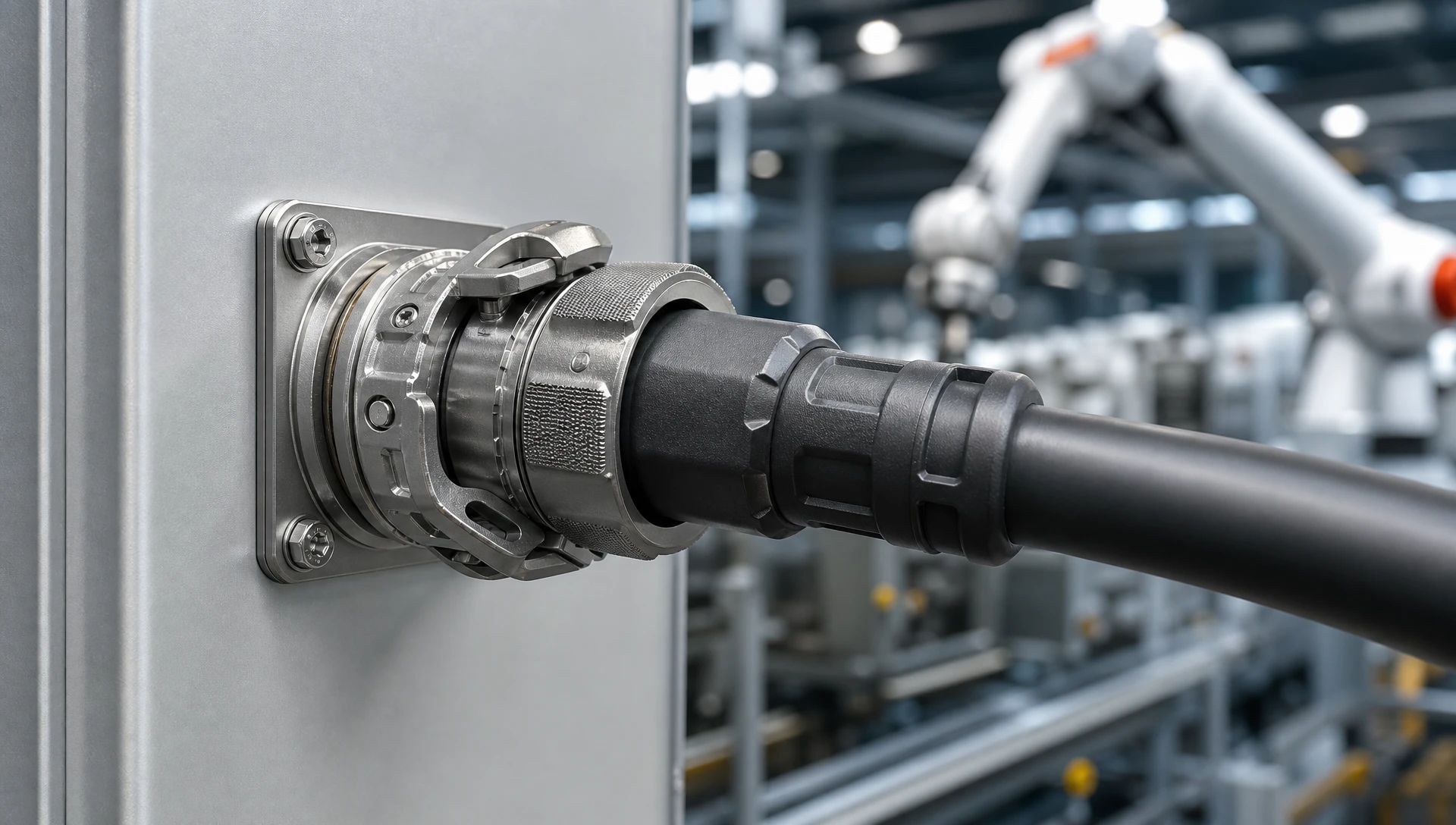
Heavy factory equipment—such as automated guided vehicles (AGVs), diesel forklifts, and outdoor moving cranes—requires specialized waterproof automotive connectors built to handle tough mobile conditions. These components must withstand continuous engine heat, road salt exposure, and splashing fuel or oil. While some procurement teams turn to standard dryconn waterproof connectors for basic static wiring, moving vehicles require components with high vibration resistance and robust locking latches to prevent loose connections during operations.
Custom Splicing Mechanics and Heavy-Duty Wire Extensions
Heavy-duty electrical installations often require splicing thick, high-amperage cables together. In these demanding setups, standard screw terminals may not provide enough structural support or current capacity.
To solve this issue, field teams deploy rugged waterproof butt connectors built for heavy wire gauges. These components use seamless copper tubes covered by thick, adhesive-lined heat shrink tubing. Once crimped onto the wire ends with a heavy hydraulic tool, the technician heats the outer sleeve, causing the internal adhesive to melt and flow into the wire strands. This process creates a solid, permanent inline splice that keeps out water, acids, and alkalis, making it ideal for buried lines or wet factory floors.
Related Product Recommendations
To help engineering teams optimize their factory layouts, we maintain distinct product line architectures classified by connection styles, locking speeds, and electrical load ratings. Selecting the right product family ensures long-term reliability across your entire hardware grid.
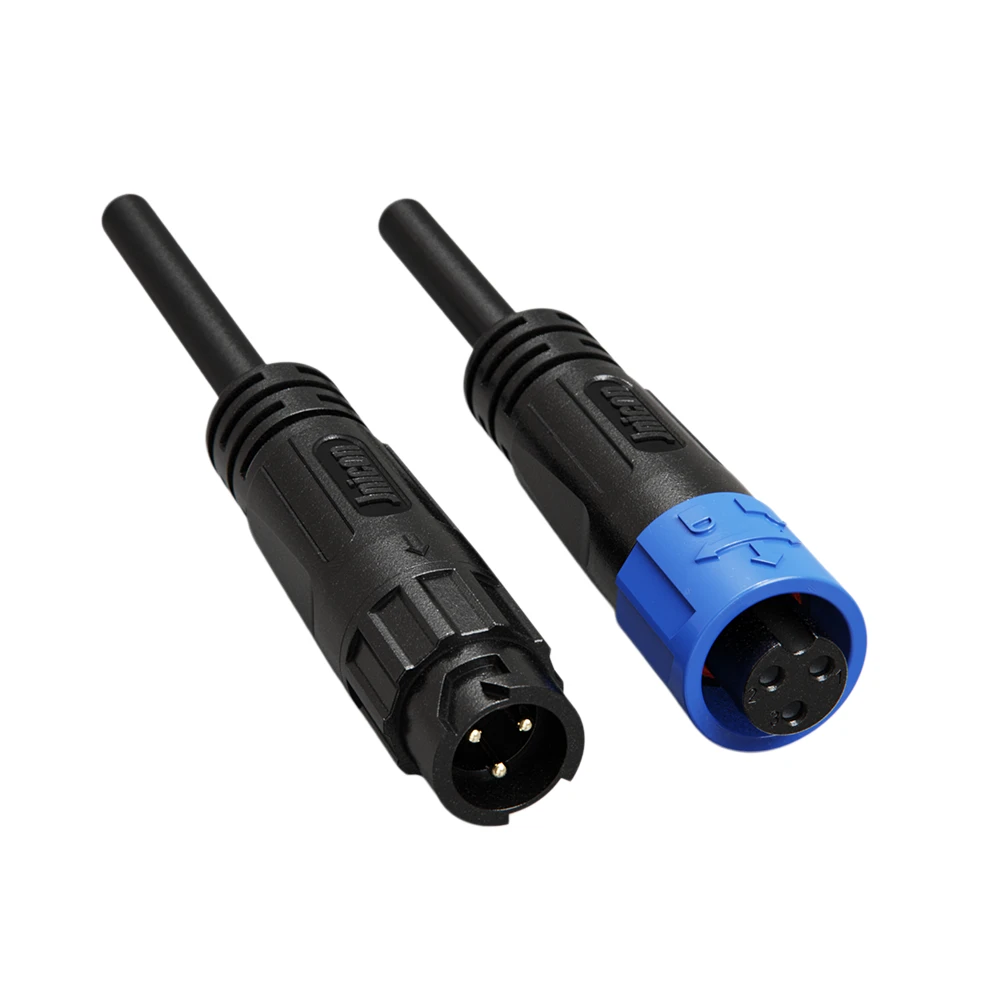
M12 3 Pin Waterproof Connector 7A Push Locking Molded with Cable for Industrial Controls
7A 3-pin push-locking waterproof connector pre-molded with cable, IP67-rated for ready-to-use PLC and control system connections.

M16 2 Pin Waterproof Connector 10A Screw Locking IP68 for Industrial Controls
10A 2 pin screw-locking waterproof circular connector with IP68 rating, field installable or molded with cable for industrial control and instrumentation.

M19 RJ45 Waterproof Connector 8Pin IP68 Screw Locking for Industrial Ethernet
8-pin RJ45 waterproof Ethernet connector with IP68 rating and screw locking for reliable industrial network connections in harsh environments.
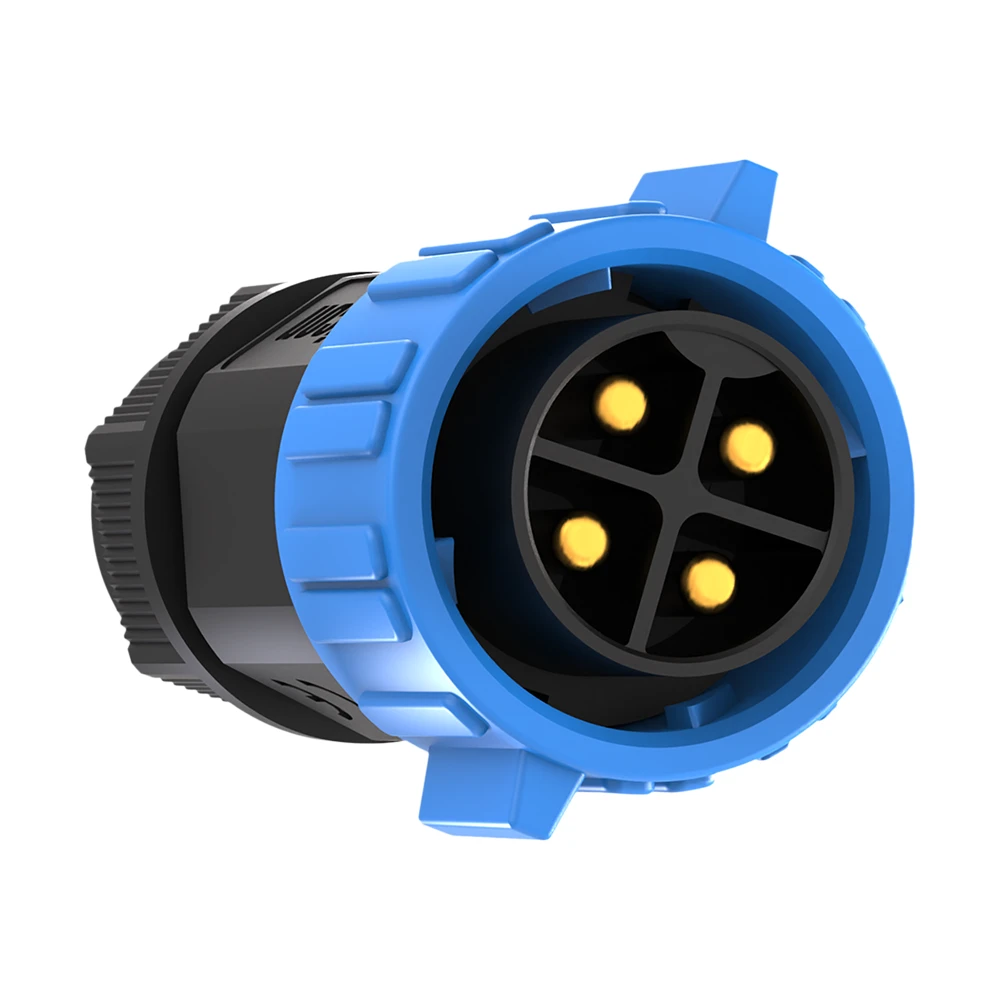
M25 4-Pin Waterproof Connector 50A Push Locking Field Installable for Industrial Automation
Field installable 50A 4-pin push-locking waterproof connector with IP67 protection, ideal for on-site wiring in industrial automation and control panels.
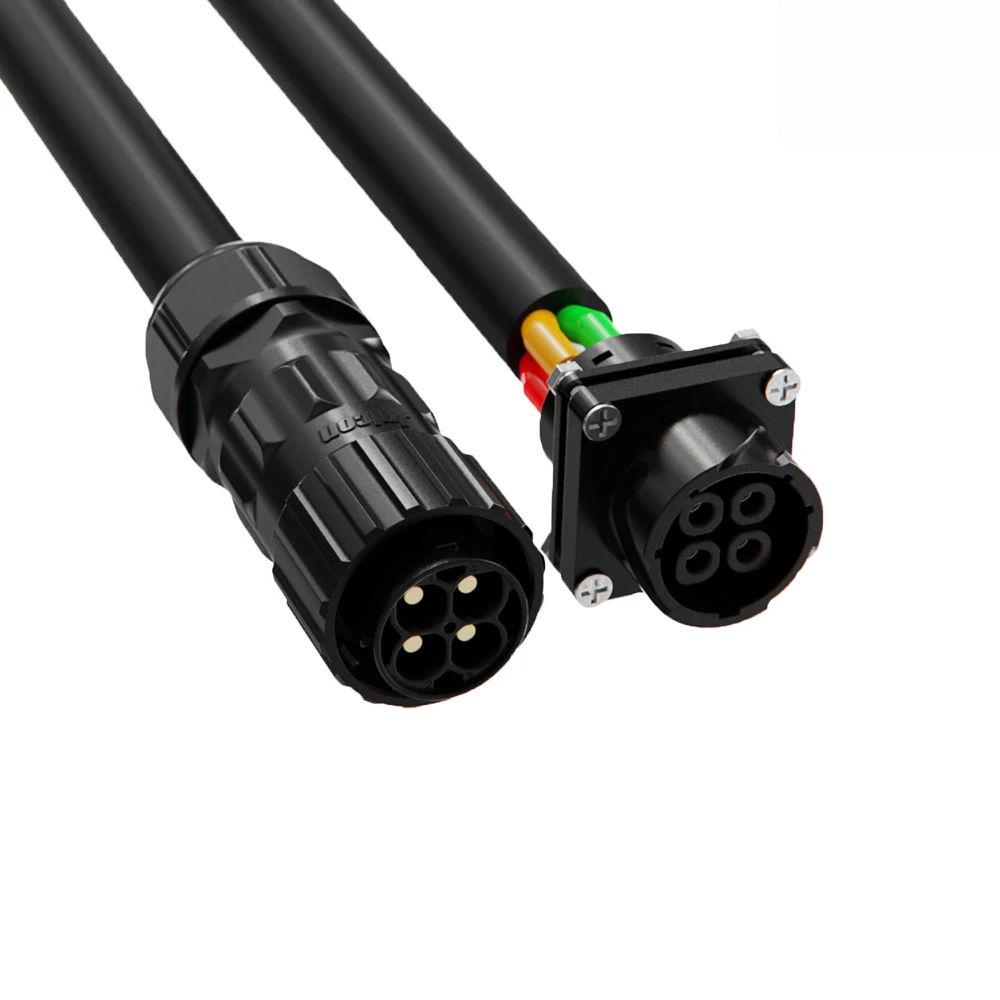
M28 4 Pin Waterproof Connector 60A Bayonet Locking IP67 for Power Systems
60A 4-pin bayonet-locking waterproof circular connector with IP67 rating for industrial power distribution and solar applications.
To review complete mechanical dimensions, layout prints, and technical datasheets for our full product lineup, visit our specialized Circular Connectors Portfolio landing page.
Related Industrial Solution Recommendations
Modern industrial infrastructure management requires looking beyond individual parts and designing complete electrical distribution systems optimized for specific operating environments.

New Energy & Energy Storage
Connector and cable assembly options for battery racks, BMS interfaces, power conversion equipment and energy-storage cabinets. JNICON supports configuration review based on current, voltage, thermal conditions, polarity, service access and environmental exposure.
Explore Solutions
Industrial Automation
Power, signal, and data connectivity for factory machines, robotic cells, sensors, and control cabinets. JNICON can review circular connectors and cable assemblies against motion, sealing, shielding, and maintenance requirements before prototype approval.
Explore Solutions
Marine & Offshore
Sealed power, signal and cable interfaces for marine equipment and offshore installations. Review salt exposure, condensation, vibration, cleaning and service conditions with JNICON. A stated IP68 rating does not by itself establish continuous subsea, pressure-depth or marine-class approval.
Explore SolutionsTo read detailed engineering case studies and explore technical design blueprints for your industry sector, browse our comprehensive Industrial Solutions Directory.
The Custom OEM Engineering Workflow
When standard components fail to meet custom machine envelopes or multi-signal layouts, direct factory intervention becomes necessary. The path from initial technical draft to global batch implementation follows a strict 6-stage quality pipeline:
-
Technical Consultation: Engineering teams define exact pin layouts, electrical ratings, spatial limits, and environmental exposure metrics.
-
Digital Simulation: Design engineers run FEA stress models and moldflow analysis to validate the component structure before manufacturing.
-
Precision Tooling Development: Internal mold workshops use high-precision CNC and EDM equipment to cut multi-cavity production tools.
-
Monitored Injection Molding: Automated molding equipment runs monitored batches to ensure zero polymer defects or structural voids.
-
Automated QA Testing: Final assemblies go through automated optical inspection (AOI) and high-pressure IP68 water sealing verification.
-
Scheduled Bulk Delivery: Factory logistics teams manage bulk framework shipping and maintain buffer inventory for production lines.
Sourcing components for critical industrial systems requires selecting a partner with proven manufacturing capabilities and transparent quality controls. Relying on unverified trading firms can lead to unexpected field failures if their parts lack robust validation testing. An authentic, high-quality component factory must maintain audited international standards, specifically ISO9001 for quality management, IATF16949 for automotive-grade supply chain tracking, and ISO14001 for environmental safety systems. To learn more about our manufacturing standards, laboratory equipment, and quality control systems, read our detailed guide on auditing an Industrial Connector Manufacturer for Harsh Grids.
Frequently Asked Questions (FAQ)
Conclusion: Securing Your Industrial Component Sourcing
Optimizing your factory's electrical infrastructure requires looking beyond low-cost parts and carefully evaluating a supplier's engineering capabilities, quality control systems, and raw material tracking. Sourcing components directly from a trusted manufacturing partner protects your equipment from field failures and helps stabilize your assembly line costs. The Jnicon engineering team is ready to support your business with a wide selection of standard circular connectors or completely customized hybrid cable assemblies. To request detailed technical spec sheets, arrange a digital factory audit, or receive a project quotation, connect with our support team through our direct Inquiry and Contact Portal.