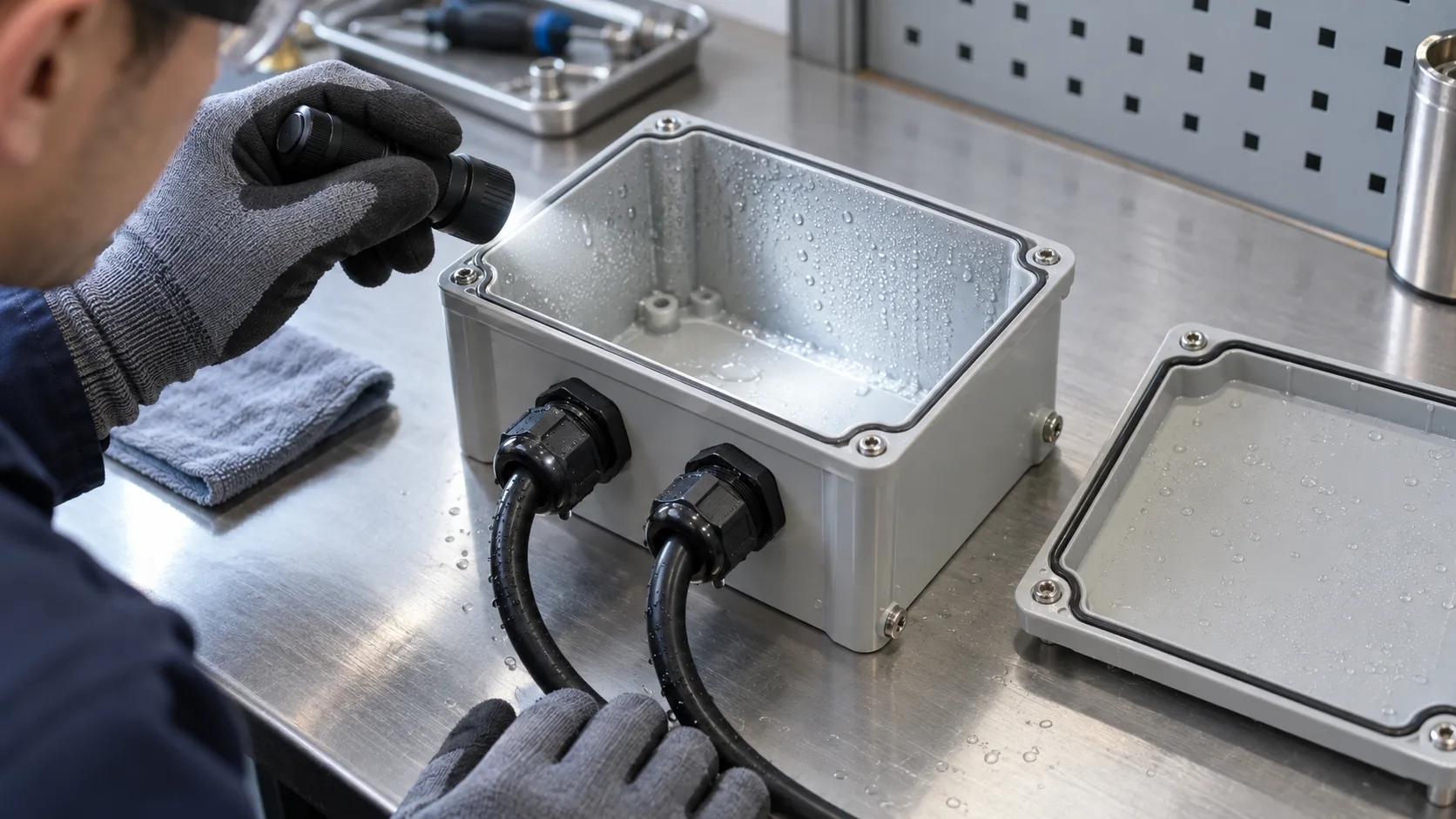
Salt exposure can change the electrical performance, sealing and serviceability of circular connectors long before a connector looks unusable. This OEM guide explains how to define sample configurations, choose corrosion evidence and set acceptance criteria for coastal equipment. Use the included review matrix to request a configuration-specific assessment from JNICON.
Define the Corrosion Question Before Ordering a Test
Begin with the failure you need to prevent. A coastal lighting connector may become difficult to disconnect, while a sensor interface may develop unstable contact resistance. An equipment enclosure can admit contamination through a cable entry even when the mating face appears intact. A useful corrosion review separates these mechanisms and identifies which part of the installation must remain functional.
For circular electrical connectors, list the external shell, coupling mechanism, exposed fasteners, contacts, cable termination, seals and protective caps. State whether each component encounters airborne salt, occasional splash, cleaning chemicals or direct seawater exposure. Salt mist, immersion and high-pressure washing are different conditions. Specify them separately rather than treating a generic marine application label as a complete environmental requirement.
Then define the decision the test will support: compare two finishes, qualify a complete assembly, investigate a field return or control a production process. Different decisions need different specimens and records. This guide provides an OEM planning framework, not a laboratory operating procedure or a claim that every JNICON connector has passed a salt mist test. Testing should use an approved method and competent laboratory personnel.
Separate Salt Mist Qualification from IP Protection
An IP designation does not establish corrosion resistance. IEC 60529 classifies protection provided by enclosures. Salt-exposure qualification asks additional questions about materials, finishes, electrical behavior and mechanical function. A connector can require both sets of evidence, with their exact assembly conditions documented separately.
Identify what the published protection statement actually covers. Does it apply to a correctly mated pair, an installed panel receptacle, a cable assembly or a connector fitted with a specified cap? Record cable diameter, sealing components, installation instructions and any limitations. Do not transfer a rating from a similar shell to a different termination or assume that an open socket remains protected during maintenance.
Keep a separate column for every environmental requirement in the approval plan. Water ingress, salt exposure, temperature, vibration and chemical compatibility should each have an applicable configuration and acceptance record. If corrosion preconditioning must be followed by a sealing check, specify the sequence and specimen allocation before testing. The waterproof connector condensation and leakage guide helps distinguish internal moisture mechanisms from material deterioration.
Choose a Test Method and a Referenced Edition
The standard number alone is not a complete test specification. Identify its edition, the chosen method or exposure sequence, specimen preparation, required duration, recovery conditions and evaluation criteria. Ask the laboratory to resolve these details against the governing specification. Do not copy chamber settings from an unrelated supplier report or prescribe a universal exposure period for all connectors.
IEC 60068-2-11:2021 addresses corrosion assessment in a salt mist environment, including comparative evaluation of protective coatings. IEC 60068-2-52:2017 covers cyclic salt mist exposure for components and equipment intended for salt-laden atmospheres. ASTM B117-26 describes operation of salt spray apparatus. These references are not interchangeable merely because they all involve salt.
The OEM and laboratory should select the approach for the intended decision and industry requirements. A continuous exposure comparison can answer a different question from an agreed cyclic program. If a customer contract names an edition or product-specific method, preserve that requirement and review any proposed deviation explicitly. A supplier's statement that a sample passed B117 is incomplete unless the duration, configuration and pass criteria are also supplied.
Freeze the Connector and Cable Assembly Configuration
Release a specimen definition before asking for results. Include connector and mating-part numbers, contact arrangement, keying, cable construction, termination type, panel mounting and sealing components. Specify relevant material or finish identifiers where available. Photographs support this record, but cannot replace a controlled drawing and bill of materials.
Use the cable and installation components intended for production. A bare connector shell does not demonstrate the behavior of a completed harness with crimp joints, backshells and cable entries. Likewise, a separately coated coupon cannot qualify a connector's locking mechanism or contact interface. Identify exactly which component-level evidence supports the assembly review and which requirements still need assembly testing.
Document any deliberate preparation, such as prior mating cycles or approved cleaning. If previous service wear is part of the risk, define it consistently for each group. Keep unexposed reference specimens for later comparison. Record sample IDs, drawing revisions and manufacturing lots so observations cannot be accidentally attributed to a different variant. For an earlier design review, use the industrial circular connector selection checklist to confirm interface and circuit requirements.
Use Mated, Unmated and Capped Sample Groups
A single mated sample may miss the installation's most vulnerable state. Equipment can be disconnected for shipping, commissioning, cleaning or maintenance. Consider each intended state and decide whether it belongs in the qualification plan. Use separate groups where the approved method requires different preparation or where opening one specimen would disturb another evaluation.
| Sample group | Configuration to identify | Question to resolve |
|---|---|---|
| Mated assembly | Exact pair, cable entries and mounting | Do exposed mechanisms and the complete interface retain required function? |
| Unmated half | Open contact face and permitted service exposure | What happens during the specified disconnected condition? |
| Capped half | Exact cap, seal and installation method | Does the intended maintenance protection work for that configuration? |
| Unexposed reference | Matching lot and preparation | Which changes are associated with exposure rather than handling? |
These are planning categories, not mandatory groups for every standard. Agree the sample count and sequence with the laboratory. A generic dust cover should not be substituted for a specified sealing cap without evidence. Keep capped and mated approval statements separate in the report so a passing configuration is not used to justify an untested state.
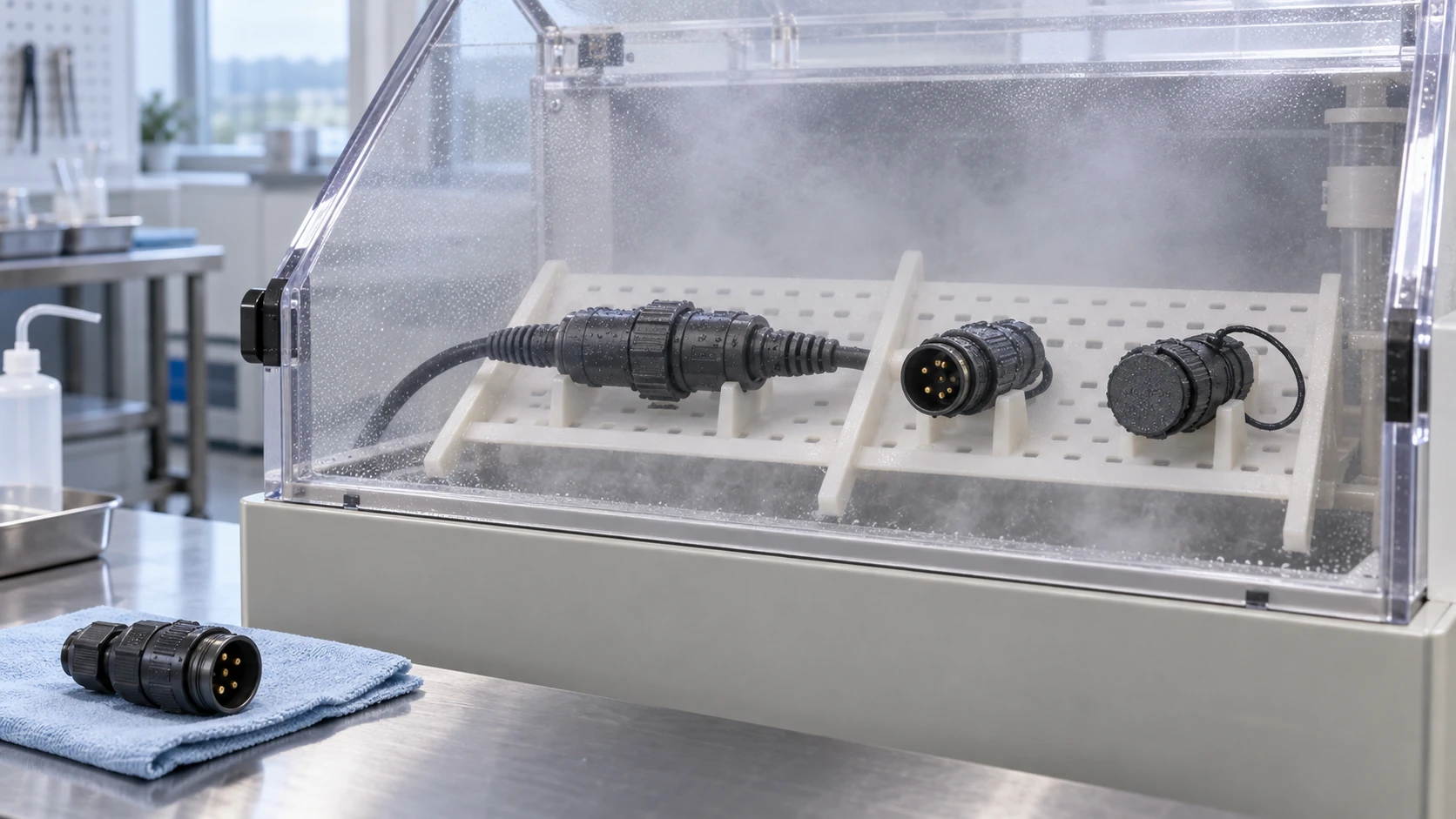
Review Metals, Coatings and Contact Interfaces
Evaluate the complete material combination instead of choosing a shell solely by appearance. Ask which metals, coatings and exposed interfaces are present in the proposed assembly, including fasteners and panel hardware. A polymer housing may reduce one metal exposure path, but it does not remove metallic contacts, termination hardware or installation components from the review.
For metallic components, request the relevant finish specification and manufacturing controls. Differences in surface preparation, coverage and wear can matter, so a material name alone is insufficient. Where different metals meet, review the environmental conditions and interface design with the supplier. Do not assume that any stainless, nickel-plated or gold-colored component is universally suitable for coastal service.
Contact interfaces deserve their own questions. Identify the contact material and plating, the intended mating history, termination method and approved lubrication or cleaning practice. Do not polish or replate a failed specimen before documenting the as-tested condition. That can change the evidence and obscure the failure mechanism. Production approval should refer to the actual construction tested, not an informal assertion that another finish is equivalent.
Record Electrical and Mechanical Baselines
Measure the functions that matter before exposure. Typical planning items include continuity, contact resistance, insulation-related checks, locking engagement, mating effort and visual condition. Select methods and limits from the applicable connector, equipment and customer specifications. There is no single resistance or retention limit that can be safely applied to every circular power connector and signal interface.
Specify measurement points, instruments, fixture arrangement and relevant environmental conditions. A contact measurement should not be confused with resistance through a long cable loop. For low-resistance measurements, use an appropriate method that controls lead and fixture contributions. Qualified personnel must assess suitable equipment and electrical safety before insulation or withstand testing; this guide does not prescribe test voltages.
Keep results by specimen and circuit rather than only recording an average. A stable average can hide one deteriorating path. For mechanical checks, identify the engagement state and the approved test procedure so before-and-after comparisons are meaningful. Take consistent photographs of critical surfaces. Distinguish pre-existing molding marks, plating variation and handling damage from changes observed after environmental exposure.
Control Exposure, Recovery and Handling
The laboratory record should explain what happened to each sample, not only how long the chamber ran. Follow the selected method for specimen orientation, spacing, exposure and recovery. Record interruptions, handling and any deviations that could change interpretation. Avoid mixing results from different chamber procedures into one comparison without reviewing their relevance.
Recovery and cleaning can materially affect electrical measurements and appearance. Decide when samples will be photographed, whether deposits may be removed, what preparation is permitted and when functional checks occur. Do not improvise a rinse or wipe because a surface looks dirty. Follow the approved method and preserve evidence of the as-exposed condition where required.
Keep energized operation separate from ordinary exposure planning. Do not power wet or salt-contaminated equipment merely to see whether it still works. Any specified electrical operation during environmental testing requires a purpose-designed, reviewed setup and qualified personnel. After recovery, perform only the checks authorized by the test plan. Record the order of visual, electrical, mechanical and sealing evaluations because one check can disturb the conditions needed for another.
Inspect Function After Exposure, Not Just Appearance
Surface color is a useful observation, but not a complete acceptance result. Identify where deposits, coating changes, pitting or material damage occur, and compare them with the agreed visual criteria. Distinguish external changes from damage at contact interfaces, sealing surfaces, threads or locking features. Do not diagnose a material or chemical mechanism from color alone.
Repeat the planned electrical and mechanical measurements using the same defined arrangement. Record changes by specimen, connector path and function. Check whether locking features engage and release as intended, and inspect cable entries and sealing components according to the approved sequence. If a sample needs exceptional force or unauthorized cleaning to function, document that intervention rather than treating it as an unqualified pass.
Investigate discrepancies instead of selecting the most favorable result. An electrically stable connector may still have unacceptable serviceability changes, while an apparently clean shell may conceal an affected contact path. Where mating-cycle wear is relevant, link the environmental assessment to the connector mating-cycle test guide. Keep findings traceable to the specific exposure and sample condition.
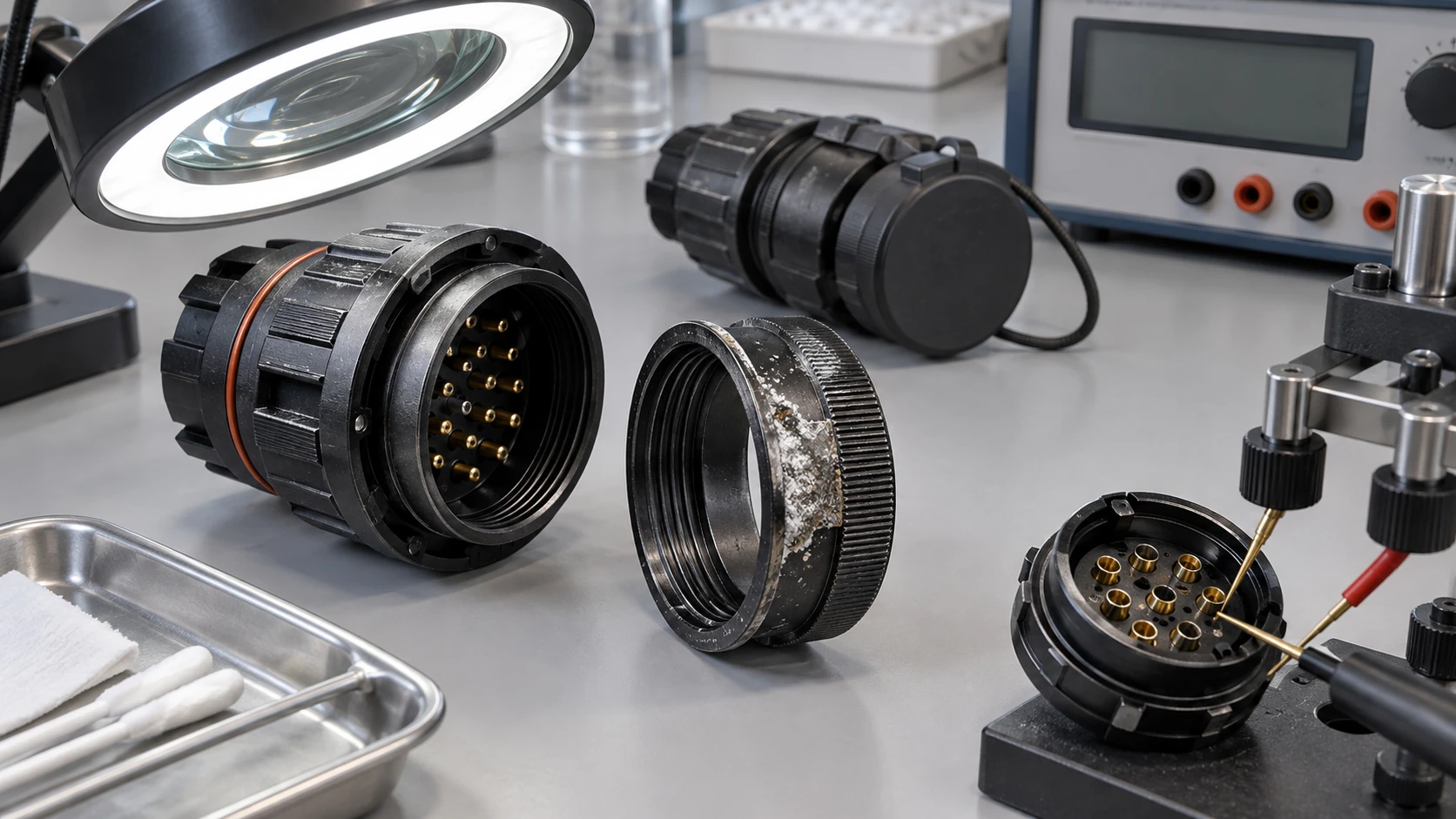
Write Acceptance Limits Before Samples Enter the Chamber
Agree what counts as acceptable before reviewing results. The plan should identify the relevant requirement, measurement method, limit, inspection stage and disposition of failures. Avoid a vague rule such as no corrosion anywhere unless the specification defines how that observation is evaluated and what surfaces are included.
| Acceptance item | Define in the approved plan | Report evidence |
|---|---|---|
| Surface condition | Critical areas and permitted changes | Comparable photographs and observations |
| Electrical behavior | Specified paths, method and limits | Individual before-and-after measurements |
| Locking and serviceability | Engagement and release requirements | Results under the defined mechanical procedure |
| Sealing after exposure | Configuration and evaluation sequence | Separate evidence for the stated assembly |
This matrix is an editable planning template, not a set of universal limits or a report of successful tests. Review every limit against actual product and equipment requirements. Separate cosmetic, functional and safety-related outcomes. A satisfactory appearance cannot overrule an electrical failure, and an acceptable electrical reading cannot automatically excuse damage to a required locking or sealing function.
Compare Supplier Reports Without Converting Hours into Years
A report can support a defined comparison without predicting a service lifetime. ASTM's published B117 guidance cautions that salt spray results used alone do not reliably establish natural-environment performance. Do not turn a chamber exposure duration into an unsupported number of years at sea or compare two duration claims as if they described identical conditions.
Request the test method and edition, specimen configuration, preparation, exposure schedule, recovery, acceptance limits and individual results. Confirm whether a report concerns the exact connector assembly, a different variant or only a material coupon. Check report identification, date, laboratory and drawing revision. A photograph beside a certificate cannot fill these missing fields.
When comparing suppliers, prepare a common evidence checklist and mark unresolved items. Longer exposure is not automatically a better fit if the tested state excludes the maintenance condition you need. Use field experience or other corroborating evidence where available, with its limitations stated. Keep qualification evidence distinct from claims about all production lots. Manufacturing changes affecting materials, finishes or seals may require review of the original approval.
Build an OEM Corrosion Review and RFQ Package
Send the supplier an application definition that engineering and purchasing can evaluate consistently. Identify the coastal or offshore installation, service access, connected and disconnected states, cable routing and required maintenance protection. Include actual circuit requirements and the proposed connector pair. Ask for a marked-up drawing and a list of assumptions rather than an unspecified corrosion-resistant replacement.
- Exact connector, mating-part and cap references, contact layout and termination details.
- Material or finish requirements and relevant cable, panel and fastener interfaces.
- Selected test reference, sample groups, preparation and acceptance requirements.
- Required report coverage, traceability, production controls and change notification.
- Sample and production quantities, packaging and service-replacement expectations.
The JNICON catalog provides starting points for connector and harness discussions, including marine and offshore connection applications. That does not demonstrate approval for a particular salt-exposure requirement. Request model-specific evidence and confirm feasibility for the intended assembly before agreeing production terms. Keep open technical items visible in the quotation so cost comparisons do not conceal different validation scopes.
Related Products for a Configuration Review
These actual catalog entries are review candidates, not salt-mist-qualified combinations. Confirm the exact variant, mating parts, materials and environmental evidence.
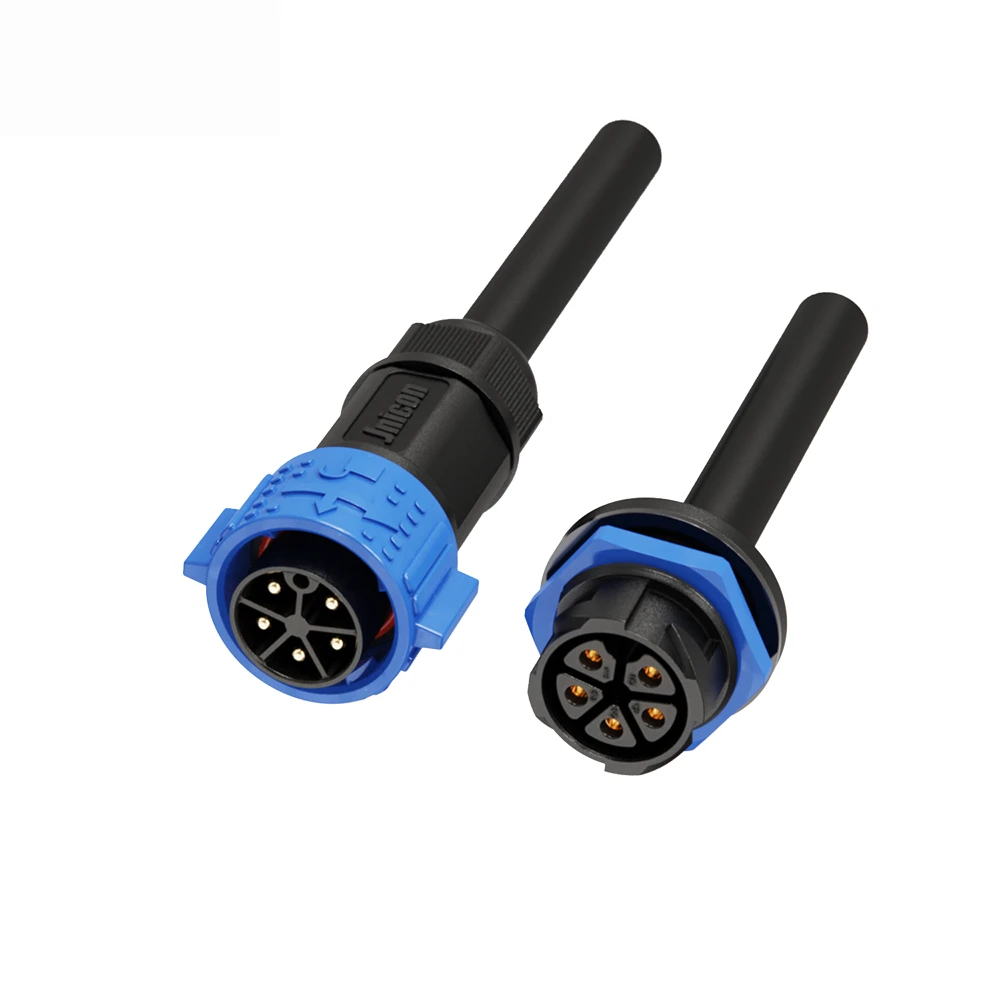
M25 5-Pin Waterproof Connector 30A Push Locking for LED Lighting & Marine
30A 5-pin push-locking waterproof power connector with IP67 protection for outdoor LED lighting and marine equipment.

M16 4Pin Waterproof Connector 10A Screw Locking IP68 for Automation
10A 4 pin screw-locking waterproof circular connector with IP68 rating, field installable or molded with cable for industrial automation and measurement.

Circular Connector Waterproof Dustproof Rubber Protective Cap
This rubber protective cover is compatible with common circular power and signal aviation connectors. It offers two installation structures: single hole and 4-hole flange mounting. The attached lanyard prevents loss after opening, effectively blocking dust and splashing water to shield idle connector sockets from oxidation, corrosion and mechanical damage. It is a necessary supporting accessory for industrial circular connectors.
Related Coastal and Outdoor Solutions
Use the application requirements below to define actual exposure, installation states and maintenance conditions.

Marine & Offshore
Sealed power, signal and cable interfaces for marine equipment and offshore installations. Review salt exposure, condensation, vibration, cleaning and service conditions with JNICON. A stated IP68 rating does not by itself establish continuous subsea, pressure-depth or marine-class approval.
Explore Solutions
Outdoor Lighting & LED
Power and control connections for outdoor luminaires, architectural lighting and LED installations. JNICON can review connectorized cables, locking styles and sealing arrangements against driver loads, cable dimensions, weather exposure and maintenance needs.
Explore Solutions
Solar & Photovoltaic
Connection options for solar equipment, auxiliary power, monitoring and storage integration. Review the exact circuit and connector ratings with JNICON; an industrial circular connector must not be assumed suitable for a high-voltage PV string or compatible with another manufacturer’s mating system.
Explore SolutionsFAQ: Circular Connector Corrosion Qualification
Conclusion: Approve the Assembly and the Evidence
For coastal equipment, reliable circular connectors require a defined assembly and a test plan that addresses its actual exposure states. Keep ingress protection separate from corrosion evidence, compare the intended mating and cap configurations, and assess electrical behavior and serviceability alongside surface condition. Link every conclusion to the specimen, procedure and acceptance limit used.
Before approving production, resolve missing drawings, material information and report coverage. Send JNICON your connector drawing and corrosion requirements to request an engineering review and configuration-specific quote. Include the application, mating pair, cable and maintenance conditions so the proposal can identify both suitable catalog starting points and any qualification work still required. Do not release an untested configuration solely because another variant passed a longer exposure.