

Selecting professional waterproof wire connectors is the single most vital variable when safeguarding modern factory automation grids, outdoor power distribution loops, and heavy OEM industrial machinery setups from sudden electrical breakdown. In high-output manufacturing lines, commercial processing yards, and automated distribution infrastructure, continuous electrical continuity serves as the absolute foundation of all daily operations. A single wiring junction failure triggered by water intrusion, chemical vapor penetration, or ambient humidity wicking can cause immediate plant shutdowns, leading to expensive maintenance troubleshooting and thousands of dollars per hour in lost production efficiency.
For factory procurement directors, systems engineering leads, and machinery control designers, navigating the international electrical component supply chain requires looking past generic consumer-grade component brokers. Working directly with an established component factory guarantees complete control over raw material testing, certified laboratory validation, and long-term part tracking. By prioritizing professional-grade component selection, heavy industrial plants can completely eliminate weak termination points, protect sensitive internal electronics, and establish stable, low-maintenance connection matrices that perform flawlessly under extreme mechanical, thermal, and chemical stress.
The Physics of Moisture Migration in Wire Terminations
Industrial deployment zones continuously subject mechanical junctions and wiring tracks to aggressive environmental forces. To deploy reliable wiring grids, engineers must understand the physical mechanisms that cause moisture to breach standard electrical wire insulation.
The Capillary Wicking Effect in Stranded Conductors
One of the most common causes of hidden electrical failures in industrial plants is the capillary wicking effect. When standard insulated cables are subjected to temperature fluctuations—such as an automated motor heating up during a shift and cooling down overnight—a thermal vacuum is created inside the cable jacket. If the exposed wire termination point is not completely sealed by an industrial waterproof wire connector, ambient humidity or liquid moisture is drawn directly into the stranded copper core. Once inside, the water acts like a straw, wicking feet away from the initial junction point and corroding the wire internally until it reaches the main printed circuit board (PCB) or control relay module.
Ingress Protection (IP) Defense Standards for Wire Junctions
Preventing this wicking effect requires deploying components that maintain a certified ingress protection barrier at the exact point where the wire insulation ends. Sourcing teams should look for components evaluated under the international IEC 60529 standard to match their specific facility exposure metrics:
-
IP65 Protection Grids: Engineered to block low-pressure liquid streams from any angle, making them suitable for indoor equipment lines subjected to light dust or occasional wipe-downs.
-
IP67 Sealing Barriers: Designed to provide complete immersion defense against water entry up to 1 meter depth for a 30-minute duration, perfect for equipment that encounters occasional flooding or heavy condensation.
-
IP68 Continuous Defense: Engineered for continuous submersion in water beyond 1 meter depth under custom specified factory pressures, making them the standard choice for deep outdoor wells, marine processing pits, and permanent underwater infrastructure.
-
IP69K High-Pressure Protection: Designed to withstand close-range, high-pressure, high-temperature washdown procedures, which are common in food, beverage, and chemical processing facilities that use harsh sanitizing solutions.
Mechanical Splice Design vs. Engineered Overmolded Junctions
When configuring field wiring layouts, procurement managers often contrast standard aftermarket terminal components against heavy-duty industrial factory assemblies. Understanding the design limitations of each choice helps prevent unexpected failures after installation.
Limitations of Standard Consumer Gel Splices
In light commercial applications or basic landscape irrigation setups, installers frequently rely on basic twist-on or gel-filled capsule joints, such as standard dryconn waterproof wire connectors. These components utilize a flexible outer plastic cap pre-filled with a thick silicone sealing gel. When wires are twisted together inside the cap, the gel surrounds the bare copper conductors to block water entry.
While a basic dryconn waterproof wire connector can perform reliably in residential irrigation setups, it is not engineered to handle the high physical demands of heavy industrial plants. The internal silicone gel can degrade, shift, or wash away when exposed to constant mechanical vibration, high-voltage heat cycles, or common industrial lubricants and cutting oils. Once the gel barrier is compromised, the internal copper conductors are left exposed to corporate ambient moisture and rapid oxidation.
The Reliability of Factory-Overmolded Pigtails
For high-volume OEM manufacturing and heavy machinery integration, engineering teams bypass loose gel caps and choose factory-overmolded sub-assemblies. Utilizing a pre-wired 2 wire pigtail waterproof male connector provides a completely solid, sealed interface.
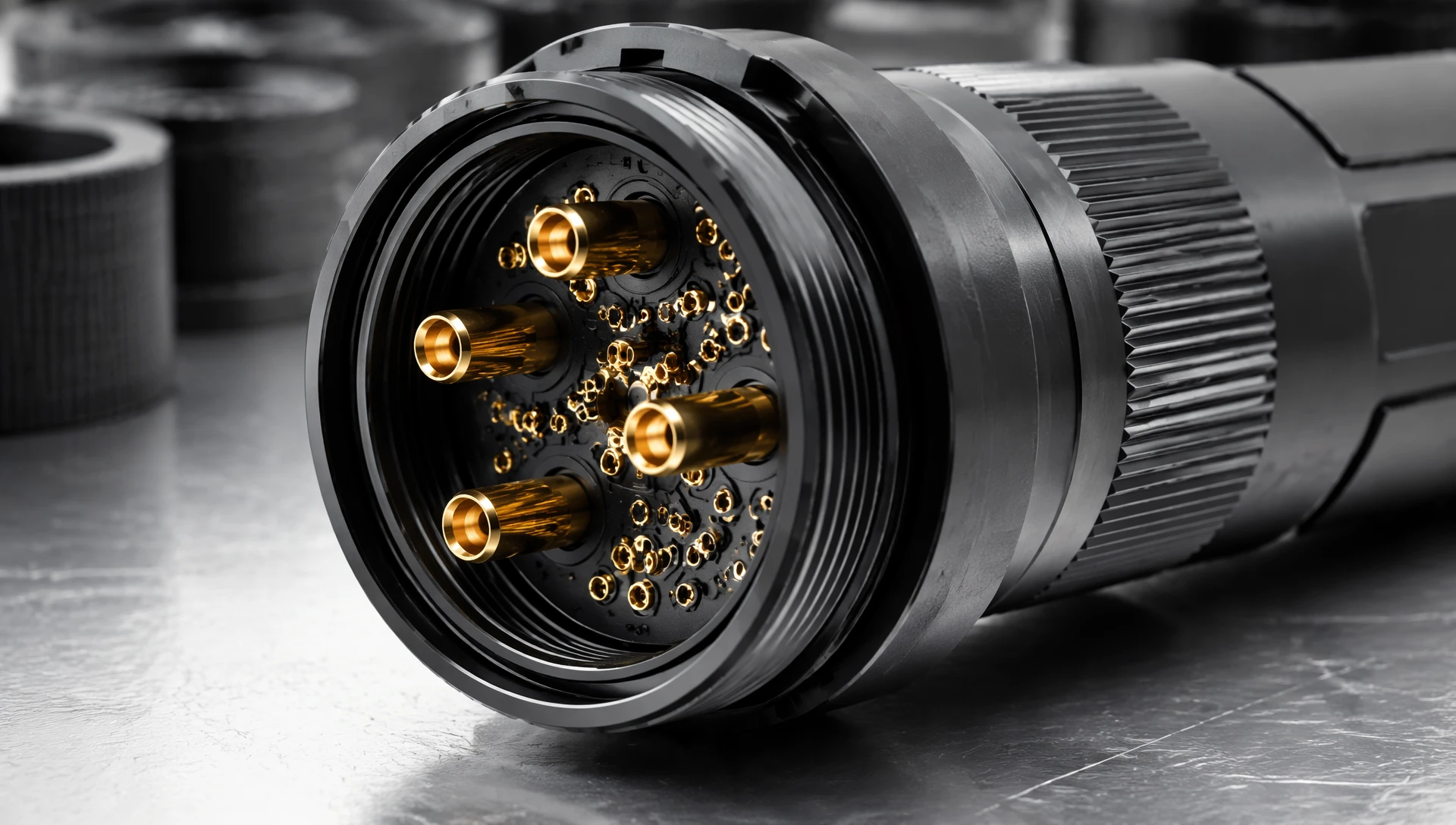
In this configuration, the raw wire strands are machine-crimped to gold-plated pins, and the entire rear exit of the plug is encapsulated in molten polyurethane (PU) or thermoplastic elastomer (TPE) material inside a high-pressure mold. This factory overmolding process creates a permanent, solid structural bond between the wire jacket and the connector shell, completely blocking moisture from entering the rear of the plug and eliminating the risk of human assembly errors on the shop floor.
Heavy-Duty Multi-Phase and Branching Topologies
Automated factory layouts require routing a mix of multi-phase electrical power lines and complex low-voltage sensor signals across extensive machinery grids. Sourcing departments must select specialized component configurations to handle these various wiring paths cleanly.
Low-Voltage Signal Distribution
Modern smart factories feature hundreds of proximity switches, digital flow meters, and automated temperature sensors that communicate back to central Programmable Logic Controllers (PLCs). These networks typically run on low-voltage DC grids, requiring compact and highly reliable low voltage wire connectors waterproof components.
Using dedicated waterproof low voltage wire connectors ensures that delicate, milliamp-level data signals are protected from voltage leaks or corrosion-induced resistance changes, which could otherwise send corrupted data back to your control system and cause machine calibration faults.
To explore heavy-duty solutions for vehicle fleets and outdoor trailers, review our guide on waterproof wiring connectors.
Handling 3-Phase Power and Industrial Splitters
For primary equipment hookups running on alternating current (AC), engineering teams utilize robust 3 wire waterproof connector systems to handle line, neutral, and ground wires within a single compact housing. These components feature distinct internal insulating barriers that prevent high-voltage arcing between phases, even if the equipment operates in humid or wet outdoor production environments.
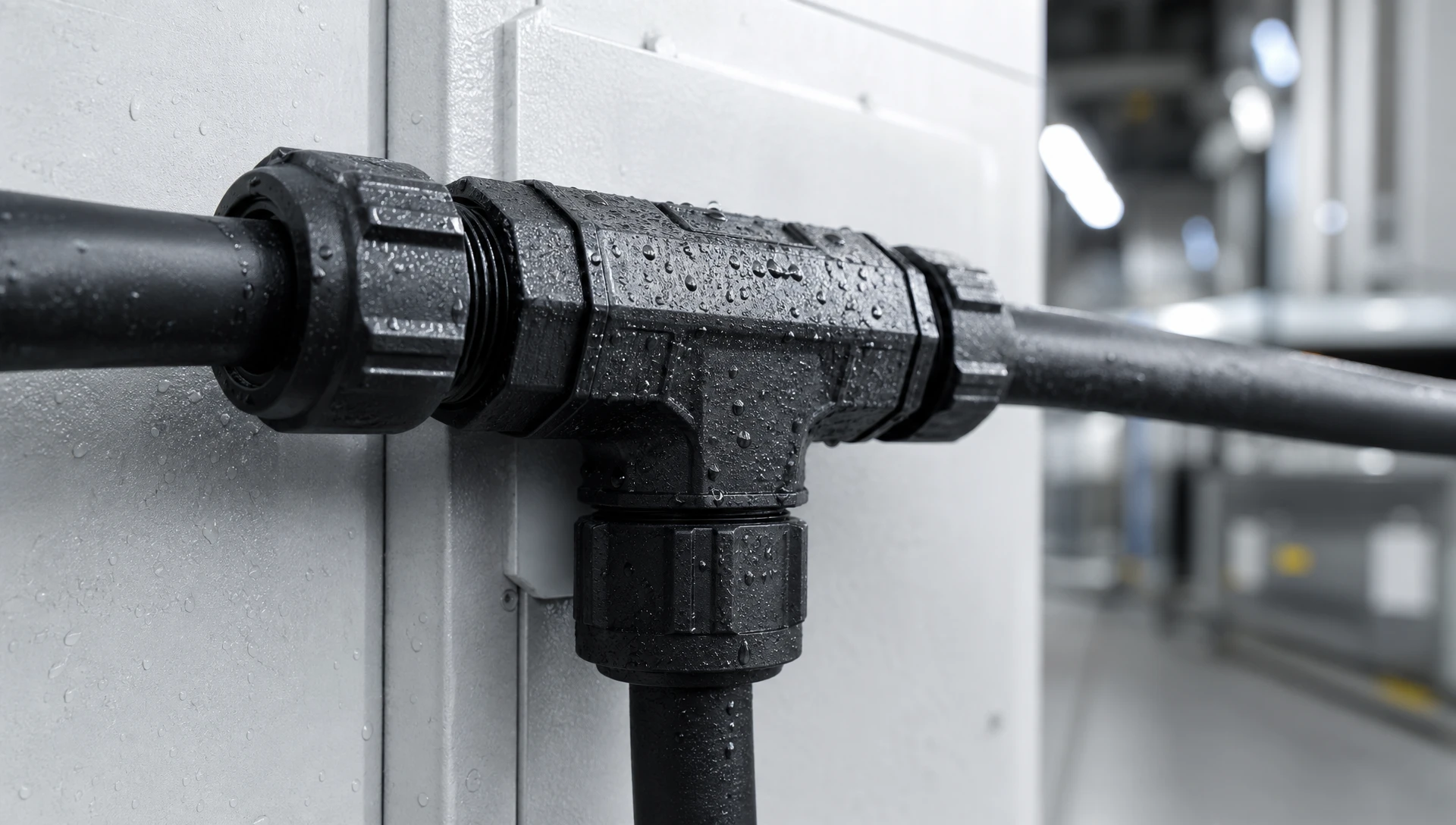
When a single power or data line needs to feed multiple devices down the production line, using a specialized 3 way wire connector waterproof splitter block enables clean T-junction or Y-junction branching without requiring custom terminal boxes. This setup simplifies field wiring, reduces installation times, and ensures every branch point maintains a consistent IP68 ingress protection rating. For plant configurations that require reliable performance across complex external layouts, deploying rugged outdoor waterproof wire connectors protects all exposed field splices from UV degradation, heavy rain, and seasonal temperature cycling.
Technical Configuration Matrix for Industrial Wire Junctions
To assist engineering and procurement teams in matching hardware configurations to their specific factory electrical loads, this comparative matrix outlines the performance parameters of common wire termination styles.
| Wire Integration Style | Applicable Wire Gauges (AWG) | Continuous Peak Current | Ingress Protection Rating | Mechanical Locking Mechanism | Primary Factory Sourcing Vector |
| Pigtail Overmolded Plugs | 18 AWG to 24 AWG | Up to 10 Amps | IP67 / IP68 Sealing | Push-Lock / Quick-Connect | Automated sensors, proximity monitors |
| Heavy-Duty Power Blocks | 10 AWG to 14 AWG | Up to 35 Amps | IP68 / IP69K Sealing | Threaded Coupling Ring | Heavy motors, conveyors, power links |
| Inline Branching Splitters | 12 AWG to 16 AWG | Up to 25 Amps | IP68 Waterproof | Internal Cam-Lock Latches | Distributed power loops, drop lines |
| Gel-Filled Cap Splices | 14 AWG to 22 AWG | Up to 15 Amps | IP65 Dust-Proof | Twist-On Threaded Spring | Static facility lighting, utility wiring |
Avoiding Cable Degradation in Specialized Industrial Environments
Different industrial sectors subject electrical wiring to unique environmental hazards. Sourcing managers must evaluate a component's material compatibility against the specific chemical and physical stresses found on their factory floors.
Chemical Resistance in Livestock Farming and Smart Agriculture
Agricultural processing hubs and automated livestock facilities present exceptionally harsh environments for electrical components. High concentrations of airborne ammonia gases, combined with acidic washdown chemical solutions and consistent organic humidity, can quickly corrode exposed copper wiring.
Historically, specialized components like the M19 series were widely deployed across commercial cultivation lights and greenhouse feeding infrastructure because their targeted environmental seals resisted these aggressive agricultural vapors. When choosing components for current agricultural setups, ensuring the outer plastic shell utilizes specialized, non-porous polymers prevents the housing from cracking or corroding when exposed to continuous organic vapors.
Oil and Solvent Exposure in Automated Manufacturing
On high-speed automated machining floors, components encounter a constant mist of synthetic cutting fluids, cooling lubricants, and hydraulic oils. Standard commercial wire insulation and basic rubber seals will quickly absorb these petroleum-based compounds, causing them to swell, soften, and lose their sealing ability.
To maintain reliable performance in these conditions, industrial-grade wiring systems use specialized outer jackets made of cross-linked polyurethane (PUR) or fluorosilicone rubbers. These materials resist oil penetration and hold their physical shape, ensuring the internal connections stay completely dry even under constant exposure to chemical lubricants.
Custom Hybrid Terminations: Balancing Power and Signal Paths
As modern industrial equipment becomes more compact and complex, machinery designers face the challenge of routing both high-amperage electrical power and sensitive high-speed data lines into a single piece of equipment. Using separate cables for power and data requires extra installation time and takes up valuable space on machinery enclosure panels.
To solve this design challenge, factory engineering teams work with direct component producers to design custom hybrid connection systems. These advanced configurations combine thick power contacts and shielded, twisted-pair data tracks within a single high-durability circular shell.
Manufacturing these complex custom configurations requires advanced engineering capabilities. The factory design team must carefully calculate the internal physical spacing to prevent electromagnetic interference (EMI) from the high-power lines from disrupting the neighboring low-voltage data signals.
This is achieved by integrating internal metallic shielding plates and grounding lugs directly into the custom connector body. Sourcing custom hybrid assemblies helps factory operations simplify their wiring layouts, eliminate assembly installation errors, and cut total machine integration times.
Related Product Recommendations
To help purchasing and engineering departments optimize their facility layouts, we maintain distinct product families categorized by current capacities, locking mechanisms, and customizable configurations.

M25 2-Pin Waterproof Connector 50A Push Locking Field Installable for Solar & Energy Storage
Field installable 50A push-locking waterproof connector with IP67 rating, designed for on-site wiring and custom cable assembly in solar and energy storage applications.
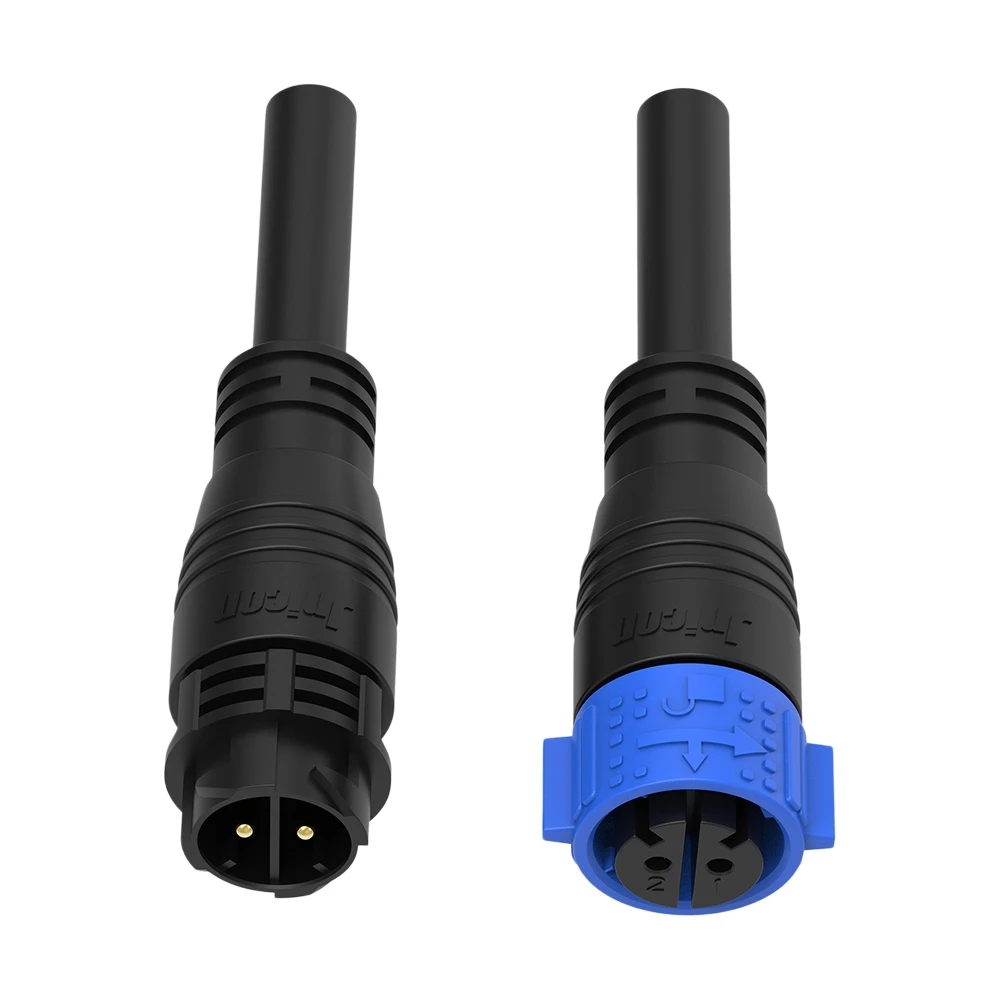
M25 2-Pin Waterproof Connector 50A Push Locking Molded with Cable for Solar & Energy Storage
Pre-molded 50A push-locking waterproof connector with IP67-rated cable, ready-to-use for reliable outdoor power connections in solar and energy storage systems.
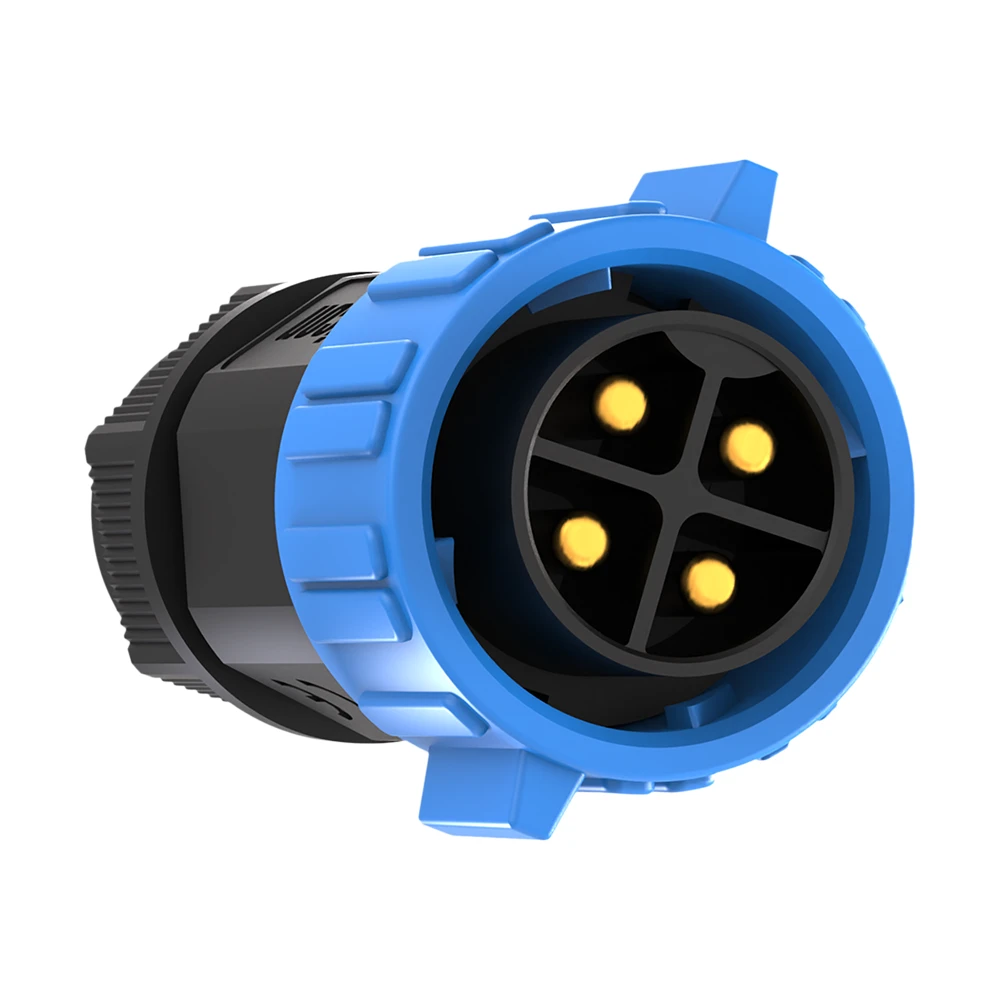
M25 4-Pin Waterproof Connector 50A Push Locking Field Installable for Industrial Automation
Field installable 50A 4-pin push-locking waterproof connector with IP67 protection, ideal for on-site wiring in industrial automation and control panels.
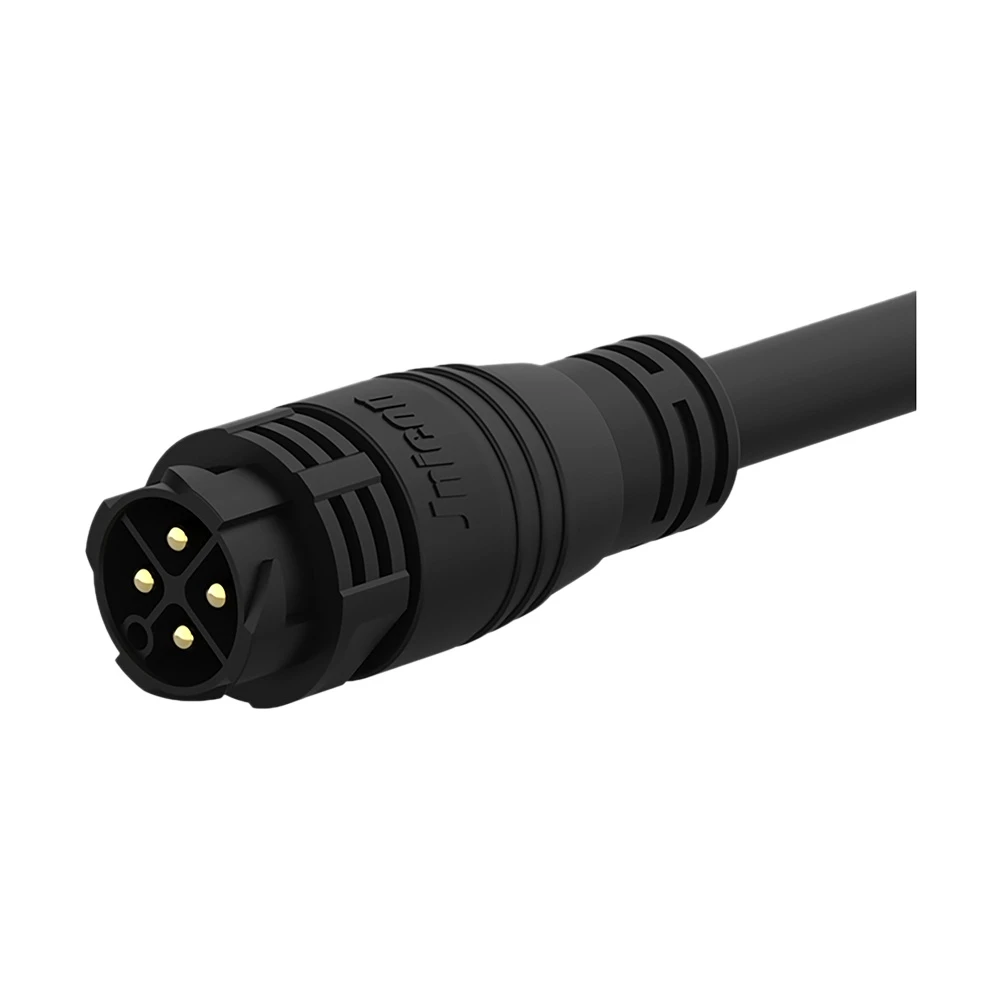
M25 4-Pin Waterproof Connector 50A Push Locking Molded with Cable for Industrial Automation
Pre-molded 50A 4-pin push-locking waterproof connector with IP67-rated cable, ready-to-use for industrial equipment and outdoor LED lighting installations.
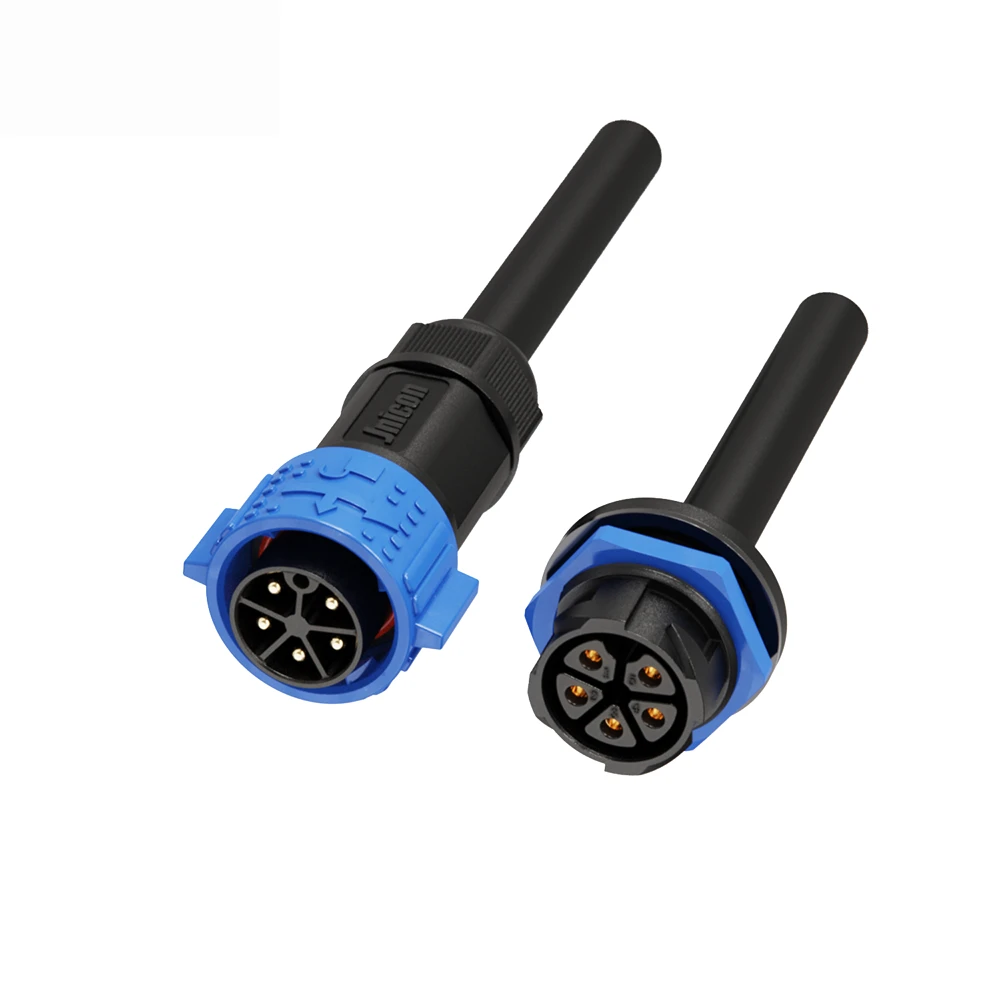
M25 5-Pin Waterproof Connector 30A Push Locking for LED Lighting & Marine
30A 5-pin push-locking waterproof power connector with IP67 protection for outdoor LED lighting and marine equipment.
To explore full mechanical blueprints, detailed assembly drawings, and complete electrical spec sheets for each product family, browse our comprehensive Circular Connectors Portfolio landing page.
Related Industrial Solution Recommendations
Modern factory infrastructure requires looking beyond individual parts and designing complete electrical distribution systems built to withstand specific environmental challenges.

New Energy & Energy Storage
Connector and cable assembly options for battery racks, BMS interfaces, power conversion equipment and energy-storage cabinets. JNICON supports configuration review based on current, voltage, thermal conditions, polarity, service access and environmental exposure.
Explore Solutions
Industrial Automation
Power, signal, and data connectivity for factory machines, robotic cells, sensors, and control cabinets. JNICON can review circular connectors and cable assemblies against motion, sealing, shielding, and maintenance requirements before prototype approval.
Explore Solutions
Marine & Offshore
Sealed power, signal and cable interfaces for marine equipment and offshore installations. Review salt exposure, condensation, vibration, cleaning and service conditions with JNICON. A stated IP68 rating does not by itself establish continuous subsea, pressure-depth or marine-class approval.
Explore SolutionsTo read detailed engineering case studies and explore technical design blueprints for your industry sector, check out our comprehensive Industrial Solutions Directory.
Comprehensive Sourcing Quality Audits
Sourcing components for critical industrial grids requires working with a manufacturing partner that maintains transparent quality controls and proven production systems. Relying on unverified component brokers can lead to unexpected field failures if their parts lack robust validation testing.
An authentic, high-quality component factory must maintain accredited international standards, specifically ISO9001 for corporate quality control, IATF16949 for automotive-grade supply chain tracking, and ISO14001 for environmental management. These systems ensure every production run follows identical operating procedures, providing reliable part uniformity across multi-year purchasing contracts.
To learn more about analyzing a supplier's engineering capabilities and production systems, read our comprehensive guide on evaluating an Industrial Connector Manufacturer for Harsh Grids. For additional best practices on protecting your facility's wiring grids from moisture damage, read our complementary Waterproof Connector Sourcing Guide for Industrial Plants.
Frequently Asked Questions
Conclusion: Partnering for Reliable Industrial Sourcing
Optimizing your facility's electrical infrastructure requires looking beyond low-cost parts and carefully evaluating a supplier's engineering capabilities, quality control systems, and raw material tracking. Sourcing components directly from a trusted manufacturing partner protects your equipment from field failures and helps stabilize your assembly line costs. The Jnicon engineering team is ready to support your business with a wide selection of standard circular connectors or completely customized hybrid cable assemblies. To request detailed technical spec sheets, arrange a digital factory audit, or receive a project quotation, connect with our support team through our direct Inquiry and Contact Portal.