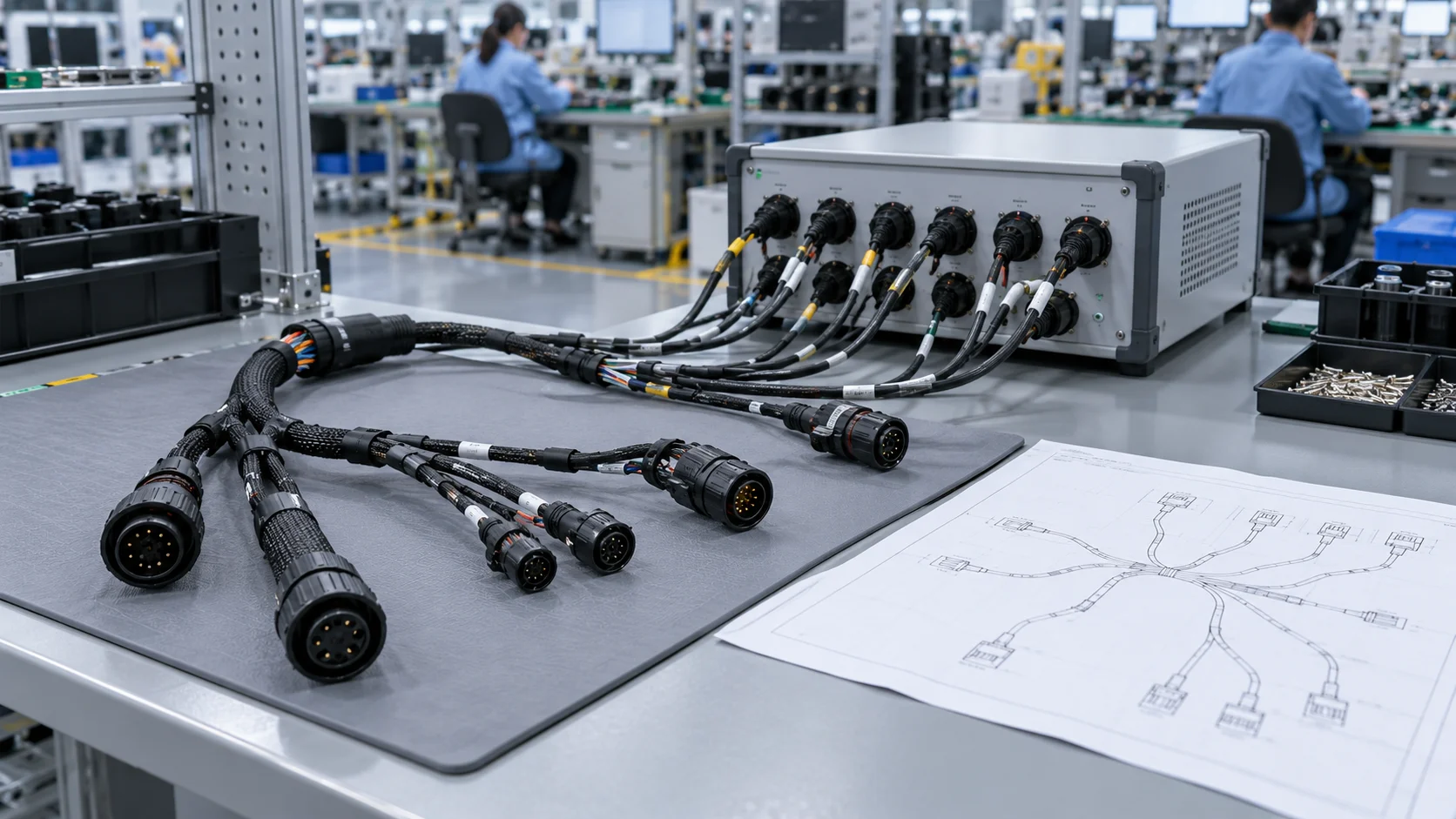
A connector manufacturer can quote only the requirements it can identify. Missing mating drawings, cable dimensions or sample acceptance criteria can turn an attractive quotation into repeated engineering changes. This guide helps OEM purchasing and engineering teams prepare one controlled RFQ package, compare supplier responses and approve samples against the intended installation. Use it when sourcing circular connectors, a customized interface or a connector supplied with a cable assembly.
Define the Purchase Before Comparing Connector Manufacturers
Start with a short description of the deliverable: a loose plug, a panel receptacle, a complete mating pair or a finished cable assembly. Identify who supplies the other components and who owns the final equipment qualification. Two quotations cannot be compared fairly when one includes contacts, seals and cable termination while the other covers a housing alone.
State whether the project uses an existing catalogue configuration, a modification to an existing design or a new interface. A custom connector manufacturer needs to understand which features are fixed and which can change. Separate mandatory dimensions from preferences so an alternative can be evaluated without silently changing the requirement.
Give each open point an owner and a required decision date. For example, procurement may own quantities and delivery destination, while the equipment designer owns mating geometry and circuit allocation. A supplier should return assumptions explicitly. Treat unresolved assumptions as engineering actions before the purchase order becomes a production instruction.
For broader supplier screening, read the connector manufacturer sourcing guide. The checklist below addresses the documents and approval decisions needed for a specific OEM part.
Freeze the Mating Interface and Drawing Revision
Send a controlled drawing with a part number, revision and clearly identified mating view. Include both halves when possible. Define contact numbering, gender, key orientation, panel thickness, mounting cutout and the space available to connect or disconnect the cable. A front photograph can help explain appearance, but it leaves tolerances and hidden interfaces unresolved.
Mark the dimensions that affect fit or function. These may include the panel seal seat, contact position, locking engagement and cable exit envelope. Specify the reference surfaces used for measurement. A dimension measured from a different datum can appear acceptable on a report while the assembly still interferes with the equipment.
Provide representative mating hardware if the interface is already installed in the machine. Ask the supplier to identify the exact counterpart used for sample verification. Similar shell sizes, pin counts or visual layouts do not establish cross-brand compatibility. Any proposed substitution needs a documented mating and functional assessment.
Keep the RFQ drawing and the approved production drawing separate until engineering closes the differences. Record the revision accepted in the quotation, sample request, inspection report and purchase order. This gives the connector manufacturing company one unambiguous definition of the part being reviewed.

Describe the Electrical Circuits and Operating Conditions
Provide a circuit table rather than a single headline current. Identify each contact, circuit function, operating voltage and expected current. State which circuits operate simultaneously and whether startup, charging or switching produces a short-duration load. Include the installation temperature and nearby heat sources so the supplier can review the configuration in context.
For signal circuits, name the protocol and relevant communication requirement. A connector with enough contacts may still require a particular pair arrangement, shield connection or cable construction. Keep protective earth, shielding and signal return definitions explicit. The equipment designer should approve their allocation before samples are wired.
Ask for the conditions supporting any proposed electrical rating: cable or conductor size, termination method, contact population, ambient conditions and assembly state. Compare evidence for the quoted configuration. A value associated with another contact size or a different cable does not automatically establish the performance of your assembly.
Use the high-current connector temperature-rise checklist when thermal evidence is a release requirement. State the agreed measurement method and acceptance limits in the project plan. Request missing information before approving a rating on the drawing.
Include the Cable and Termination Details in the RFQ
A cable-mounted connector depends on the cable it grips and seals. Provide the cable outside diameter range, conductor size, insulation dimensions, conductor construction and jacket material. Identify shielding, drain wires, fillers and any unusual geometry. Where drawings are incomplete, supply representative cable samples and record their identification.
Describe whether the connection will be soldered, crimped, screw terminated or supplied as an overmolded assembly. Ask which contacts, preparation dimensions, tools and process instructions apply. For field assembly, define what the installer receives and which assembly steps remain at the customer's factory.
Specify finished cable length from named reference points. Include branch lengths, breakout positions, bend direction, labels and connector orientation. A length measured to the end of the shell is different from one measured to a mating face. An annotated drawing avoids repeated clarification during sample preparation.
When workmanship acceptance uses IPC/WHMA-A-620, agree the applicable revision, class and contractual scope. IPC describes requirements for cable and harness interconnections; project inspection frequency and the complete equipment test plan still need definition. Naming a standard in an RFQ does not establish that a supplier or product is certified.
Turn Environmental Claims into Reviewable Requirements
Describe the real exposure: rain, condensation, salt deposits, cleaning agents, oil, dust, vibration or repeated movement. State whether the connector operates mated, unmated with a cap or inside a cabinet. Explain cleaning and maintenance practices, including the likelihood that a technician disconnects the interface in a wet area.
For sealing requirements, identify the complete assembly and requested verification conditions. Include the cable, seals, panel interface and accessories in the review. Ask whether the available evidence covers that configuration and state. A published IP designation should not replace discussion of immersion conditions, pressure washing or long-term chemical exposure.
For mechanical exposure, describe the mounting location and cable support. A rigid cabinet interface and a cable hanging from a moving machine experience different loads. Let engineering translate the installation into an agreed test plan with specified fixtures, monitoring and acceptance criteria.
Link each required report to a named release decision. If vibration is a concern, the industrial connector vibration test guide helps define the installed assembly. Keep environmental, electrical and functional evidence traceable to the samples tested.
Use One RFQ Comparison Matrix for Every Supplier
Send the same revision to each candidate and request a line-by-line response. Ask suppliers to mark a requirement as confirmed, proposed deviation or open. Store the explanation beside the requirement so a blank cell cannot be interpreted as acceptance. The matrix below is a starting structure; adapt it to the assembly.
| RFQ item | Buyer input | Supplier response to request |
|---|---|---|
| Part definition | Drawing revision and mating part | Quoted configuration and exceptions |
| Cable interface | Construction and dimensional range | Contact, seal and termination proposal |
| Qualification | Test conditions and acceptance criteria | Available evidence and additional testing |
| Sample build | Purpose, quantity and target date | Tooling, materials and prototype differences |
| Commercial basis | Order sizes and destination | Unit price, one-time charges and terms |
| Production release | Required reports and approvers | Inspection, traceability and change controls |
Compare electrical connector manufacturers on the full scope. Separate tooling, engineering, testing, packaging and freight assumptions from the recurring unit price. Record quote validity and the conditions that start a lead-time commitment.
Keep a dated clarification log. If a requirement changes during discussions, issue the same controlled update to the suppliers still under consideration. This prevents procurement from choosing a low price based on an obsolete technical scope.
Assign a Specific Purpose to Each Sample Build
Write the sample objective before requesting a delivery date. A fit sample checks installation geometry. A termination sample checks the selected cable and assembly process. A functional sample supports circuit testing. A production-representative sample evaluates the intended materials, tools and process. One build may support several objectives when those conditions are documented.
Ask the supplier to identify prototype differences. Machined housings, temporary seals, manually prepared contacts or substitute materials may be useful during development, but their approval should have a defined scope. Record which questions remain for production tooling and which tests must be repeated after the design changes.
Identify every sample or clearly defined sample group. Record its drawing revision, mating counterpart, cable batch, material configuration and build date where available. The test report should refer to that identifier. A photograph without an identifier is difficult to connect to later design decisions.
Agree who will retain samples and reports. Keep a reference assembly for fit and appearance comparison when appropriate, alongside the dimensional requirements that govern acceptance. A reference sample can support communication, but it should not silently replace the controlled drawing or hide a known deviation.
Inspect Samples Against an Agreed Acceptance Plan
Start with identity and configuration. Check that the received parts match the requested revision and that any approved deviations are listed. Verify the mating pair, contact arrangement, cable, seals, labels and accessories before spending time on functional tests. A test on the wrong configuration cannot close the intended requirement.
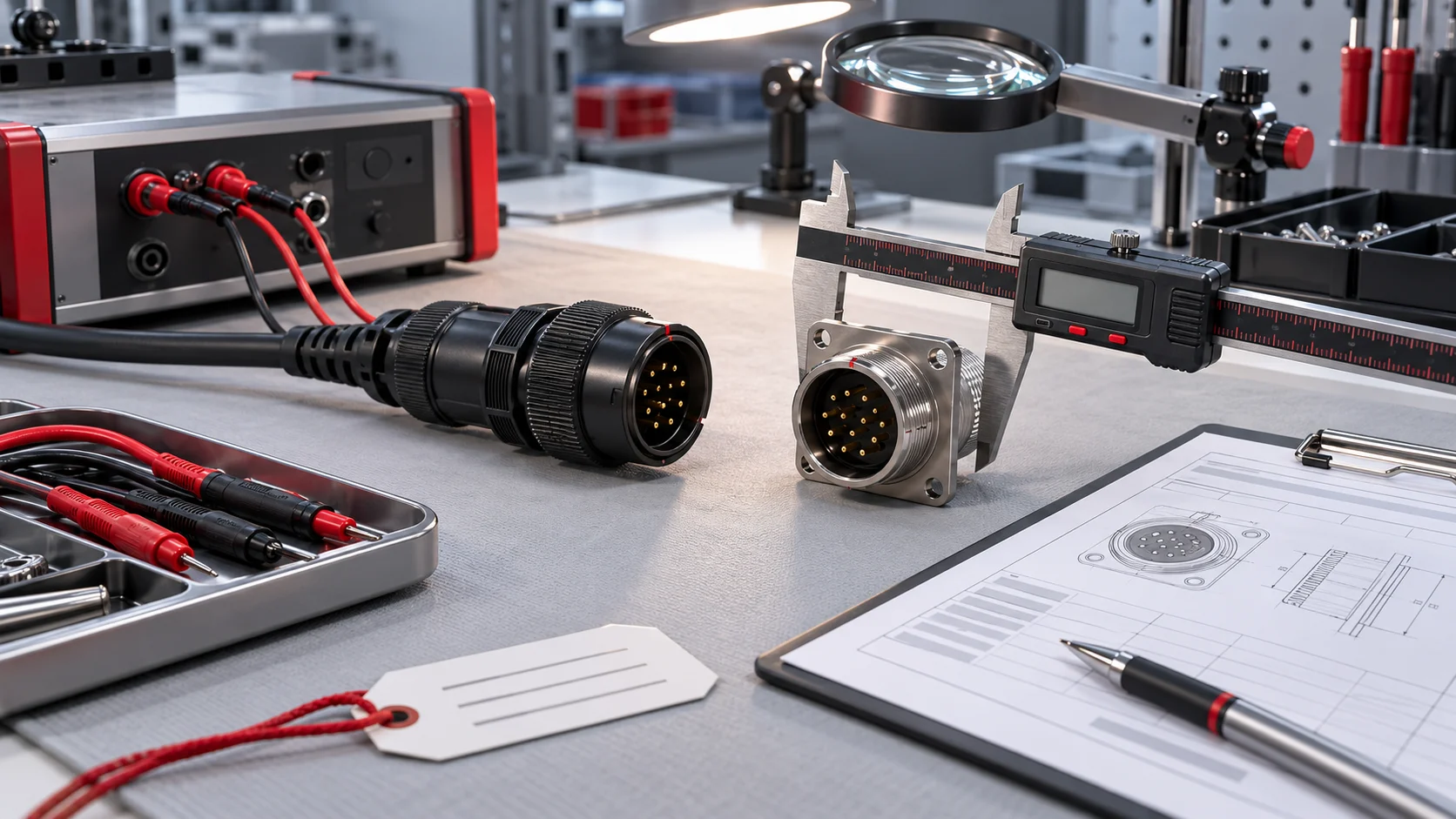
Then review the critical dimensions using the drawing's datum system and suitable measurement equipment. Record actual results where needed for the decision. Check mating alignment, locking operation, clearance and installation access with representative hardware. Include the full routing path when cable stiffness or bend direction affects assembly.
Electrical checks may include a pin-to-pin map, continuity, isolation and application-specific measurements. Define the equipment, settings, connection arrangement and limits beforehand. For insulation or dielectric testing, engineering must choose conditions appropriate to the assembly and connected electronics. Do not apply an arbitrary test voltage to a populated system.
Use a report that distinguishes pass, fail and not tested. Each open issue needs a disposition, owner and next action. Keep the pinout and intermittent-fault testing guide available for assemblies whose wiring or contact stability needs closer investigation.
Separate Sample Approval from Production Release
Close sample results with a written decision that states the approved configuration and scope. For example, mechanical fit may be approved while environmental verification remains open. Identify any deviation accepted for a limited build and its expiry or replacement condition. Avoid an unrestricted approval email when the evidence supports only a specific development step.
Before production release, confirm which materials, tooling, cavities, termination equipment and inspection instructions will be used. Ask how the pilot build represents normal production. If production tools differ from prototype tools, identify the dimensions and tests that must be checked again.
Agree the first production lot's documentation. Depending on the project, this may include a dimensional report, electrical test record, material declaration, batch identifier and packaging inspection. Choose evidence that answers a defined risk or contractual requirement. A long report list adds little when nobody owns its review.
Record the authorized approvers for drawing release, sample disposition and purchase order release. The connector manufacturer should receive one controlled acceptance statement. Keep approval records with the part revision so a later repeat order does not depend on finding an old message in someone's inbox.
Agree Traceability, Changes and Repeat-Order Controls
Decide which identifiers must connect delivered parts to their production records. Discuss part number, drawing revision, lot or batch code, cable identification and test record linkage. The required detail depends on the application. Ask the supplier to show how a delivered assembly can be traced through the records it proposes to retain.
Define changes that require notification or approval. Examples include contact material or finish, housing material, seal compound, cable construction, tooling, production site or a critical process. Agree how the impact will be assessed and which verification must be repeated. Set expectations before the first repeat order.
Document how nonconforming material will be contained and identified. Agree who evaluates rework, who approves a concession and how replacement parts are separated from rejected stock. A useful corrective-action response connects the cause, containment and evidence that the revised process addresses the cause.
For repeat purchasing, state the current released revision on the order and confirm substitutions explicitly. If a component becomes unavailable, evaluate a proposed replacement against the original fit, electrical, environmental and process requirements. Similar catalogue descriptions alone should not become the basis for an uncontrolled production change.
Review Commercial Assumptions Alongside Engineering
Provide realistic sample, pilot and recurring order quantities. Distinguish an annual forecast from a firm purchase commitment. Ask for pricing at the batch sizes you expect to order, including any minimum order or material commitment. This gives procurement a clearer view of cost when the production plan changes.
Separate one-time tooling or development charges from recurring prices. Clarify what is included, who owns any dedicated tooling and what happens if the design changes. Confirm the required approval steps before tooling manufacture starts. These points should be resolved in the commercial agreement for the project.
Define packaging and delivery requirements: individual protection, contact protection, labels, carton quantity and destination. State the agreed delivery terms and identify how transport, duties and taxes are handled. Ask whether the quotation assumes a released drawing, available material or completed sample approval before the delivery period begins.
Compare quotations after the technical exceptions and commercial assumptions have been reconciled. Record both the accepted configuration and the outstanding decisions. This lets purchasing explain the selection to engineering and operations with the same facts used to prepare the production order.
Prepare a Connector Review Package for JNICON
Send JNICON a concise project summary with the controlled drawing, mating requirement and cable details. Add the circuit table, installation conditions and photographs that explain access or routing constraints. Mark the mandatory requirements and list the items where an engineering proposal is welcome.
Include the sample objective and the evidence needed to approve it. State the requested sample quantity, pilot quantity, expected order sizes and target milestones. Identify the person who can approve a drawing change and the person who owns the commercial response. A clear question list helps the review focus on decisions that affect the proposed configuration.
Ask which catalogue option or customization route is appropriate and which specifications still need confirmation. Review model-specific drawings and reports before selecting an interface. For a modified connector or finished assembly, use JNICON's OEM and ODM engineering page as the starting point for a configuration discussion.
Keep the accepted RFQ package as the baseline for the next stage. Update it when a decision changes the part, then circulate the new revision. The goal is a sample and production order that engineering, purchasing and the supplier can all identify and review consistently.
Related Products for an OEM Configuration Review
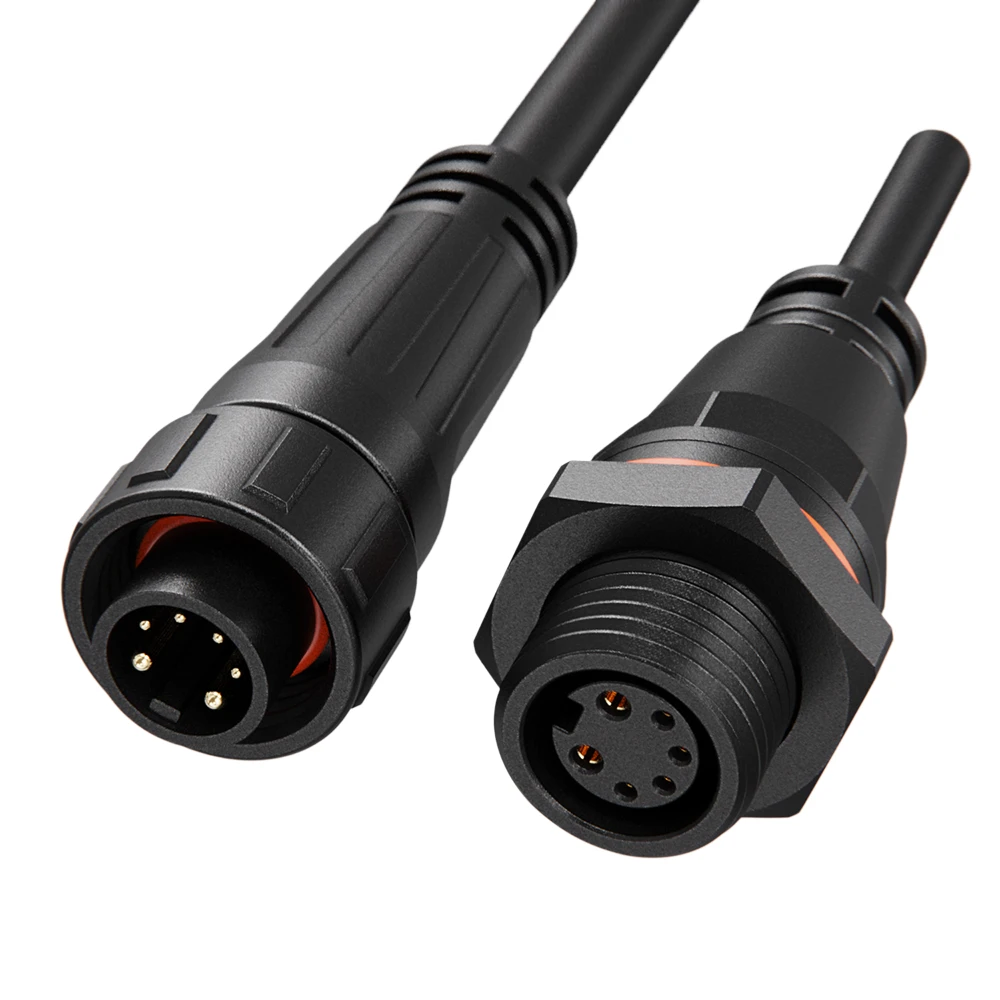
M16 2+4 Pin Hybrid Waterproof Connector 10A+5A Screw Locking IP68 for Power & Signal
10A+5A hybrid screw-locking waterproof connector combining power and signal in one M16 housing, field installable or molded with cable.
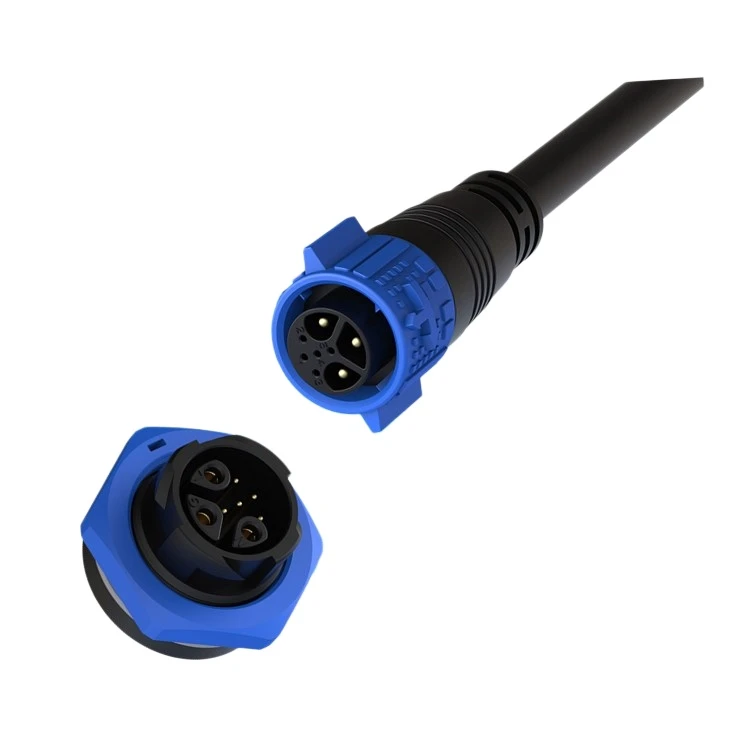
M19 3+5 Pin Hybrid Waterproof Connector 15A+5A Push Locking IP67 for Power & Signal
15A+5A hybrid push-locking waterproof connector combining power and multi-signal in one M19 housing for industrial control systems.
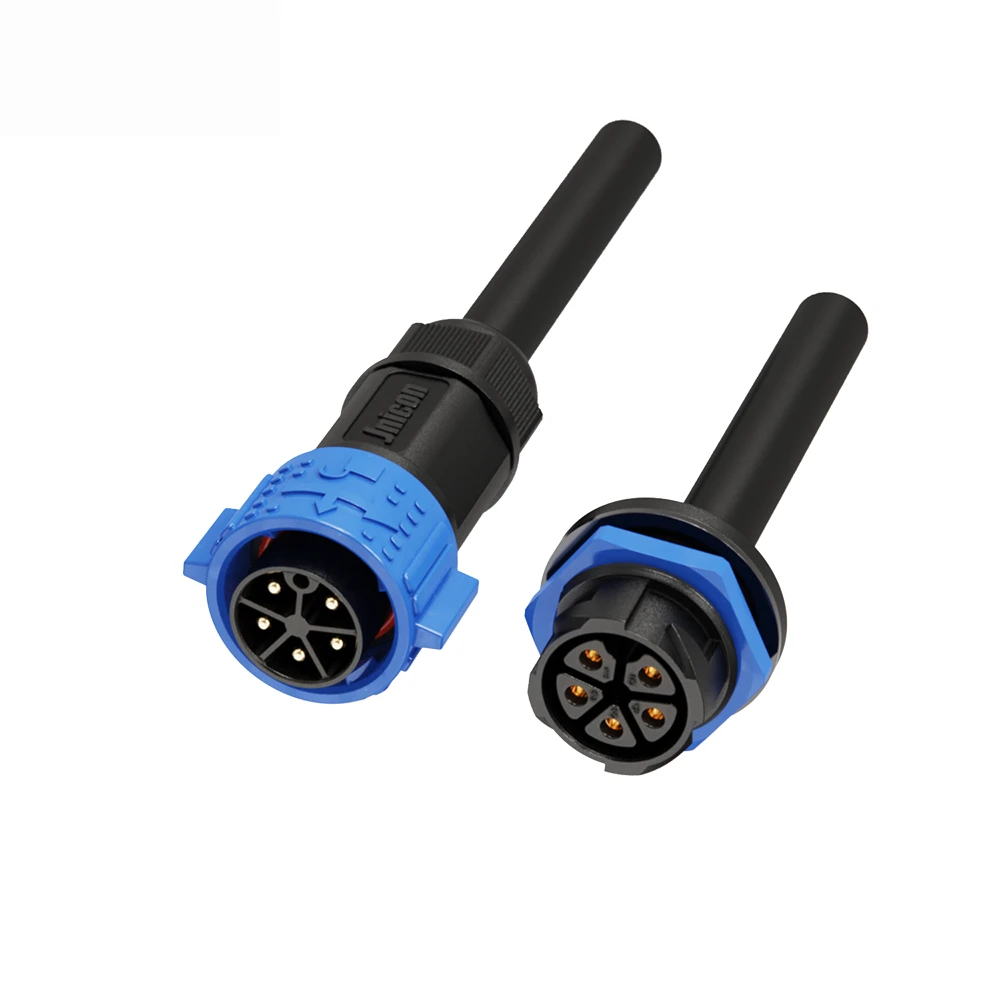
M25 5-Pin Waterproof Connector 30A Push Locking for LED Lighting & Marine
30A 5-pin push-locking waterproof power connector with IP67 protection for outdoor LED lighting and marine equipment.
Related Industrial Solutions

Industrial Automation
Power, signal, and data connectivity for factory machines, robotic cells, sensors, and control cabinets. JNICON can review circular connectors and cable assemblies against motion, sealing, shielding, and maintenance requirements before prototype approval.
Explore Solutions
Marine & Offshore
Sealed power, signal and cable interfaces for marine equipment and offshore installations. Review salt exposure, condensation, vibration, cleaning and service conditions with JNICON. A stated IP68 rating does not by itself establish continuous subsea, pressure-depth or marine-class approval.
Explore Solutions
New Energy & Energy Storage
Connector and cable assembly options for battery racks, BMS interfaces, power conversion equipment and energy-storage cabinets. JNICON supports configuration review based on current, voltage, thermal conditions, polarity, service access and environmental exposure.
Explore SolutionsFAQ: Connector Manufacturer RFQs and Samples
Conclusion: Release a Defined Connector Configuration
A useful connector manufacturer RFQ connects the drawing, mating pair, cable, operating conditions and acceptance plan. Sample approval then becomes a documented engineering decision that can be carried into production and repeat orders. Keep unresolved assumptions visible and identify the evidence needed to close them.
For your next circular connector or cable assembly project, send JNICON your drawing and sample requirements for an OEM review. Include the current revision, installation constraints and expected quantities so the discussion can address a specific configuration and quotation scope.