

Intro
Reliable circular electrical connectors do more than join two wires. In factory equipment, they must maintain power or signal integrity while resisting vibration, dust, water, oil, temperature changes, and repeated service operations. The connector also has to fit the machine's routing, assembly method, maintenance plan, and production cost target.
This guide helps OEM engineers and industrial buyers compare connector formats, contact layouts, locking methods, backshell options, waterproof requirements, and supplier capabilities. It also explains how to evaluate china circular electrical connectors without choosing on unit price alone. For a new machine, replacement project, or repeat-production program, the right specification can reduce wiring labor, installation errors, and field failures.
What Are Circular Electrical Connectors?
A circular electrical connector uses a round mating interface to transmit electrical power, control signals, data, or a combination of these functions. Depending on the series, the connector may use screw locking, bayonet locking, push locking, quick locking, crimp contacts, solder contacts, or a pre-terminated cable. The circular form factor helps distribute mechanical load around the mating area and makes it practical to route the cable in compact equipment.
For OEM applications, a connector should be considered as part of a complete interconnection system rather than as an isolated component. The system includes the plug, receptacle, contact, insulator, seal, backshell, cable, strain relief, mounting method, and test specification. A connector that looks compatible may still fail if the cable diameter, contact size, pin assignment, sealing geometry, or locking clearance is wrong.
Most electrical circular connectors are selected for one or more of five reasons: a compact installation envelope, a need for fast mating and unmating, resistance to harsh environments, a modular pin layout, or a requirement for a repeatable factory connection. They are common in automation equipment, control cabinets, sensors, motors, energy storage, outdoor lighting, transport systems, marine equipment, and industrial instruments.
The key question is not simply which connector is cheapest. It is which connector can deliver the required electrical, mechanical, environmental, and production performance over the expected service life. That question keeps engineering and procurement decisions aligned.
Why Factories Choose Circular Connector Designs
Factory customers often choose circular connectors when equipment needs reliable connections in restricted spaces or exposed operating conditions. A round connector can be easier to route through a panel, machine frame, or cable gland than a rectangular connector with the same number of circuits. The circular interface also supports several locking concepts, allowing the design team to balance speed, security, and serviceability.
Another advantage is configuration flexibility. A small connector may carry control circuits, while a larger series can handle high current or combine power and signal contacts. If a cable is cut, terminated, labeled, and tested at the supplier, the equipment builder receives a defined interface instead of loose parts. The factory can then install the assembly according to a repeatable work instruction.
However, the benefits depend on correct selection. A circular design with insufficient contact capacity can create heat. An underspecified seal can allow moisture ingress. A locking mechanism that is difficult to access can increase service time. For moving machinery, a standard cable exit may not control the bend radius well enough. Selection should therefore start with the application route and failure modes, not with the connector outline alone.

Circular Electrical Connector Types for OEM Equipment
The term circular electrical connector covers several product families. Understanding the practical differences helps an OEM create a better request for quotation.
Signal and control connectors
Signal connectors normally use multiple small contacts for sensors, switches, encoders, field devices, or control interfaces. Pin count, contact resistance, shielding, keying, and ingress protection are often more important than maximum current. A compact 6- or 8-pin design may be suitable for a sensor network, provided the contact layout and cable construction match the electrical requirements.
Power connectors
Power connectors use larger contacts and a housing designed for higher current, thermal dissipation, and mechanical retention. The specification should include continuous current, peak current, voltage, inrush conditions, conductor size, contact plating, and allowable temperature rise. Do not assume that a connector's marketing current rating applies in every cable size or ambient temperature; confirm the derating conditions with the supplier.
Hybrid power-and-signal connectors
Hybrid circular connectors combine power and signal contacts in one interface. They can reduce harness count and installation time in battery systems, industrial controllers, and mobile machinery. The design review should separate the power circuit requirements from the signal requirements, then verify creepage, clearance, shielding, and isolation between the circuits.
Waterproof and outdoor connectors
Waterproof connectors are used where rain, washdown, condensation, dust, or fluid exposure can threaten the connection. IP67, IP68, and IP69K are not interchangeable labels; they indicate different test conditions. The complete assembly—including cable exit, mating condition, panel interface, and accessory—must be evaluated. A connector body with a high IP rating can still leak through an unsuitable cable seal or improperly assembled backshell.
Overmolded circular cable assemblies
An overmolded assembly integrates the connector and cable into a factory-controlled unit. This can improve strain relief, reduce field wiring, and make incoming inspection easier. It is often a strong choice when the machine builder wants a plug-and-play interface and consistent cable lengths across a production batch.
How to Specify a Circular Backshell Electrical Connector
A circular backshell electrical connector is not defined only by its round shell. The backshell controls the transition from the connector body to the cable and may provide strain relief, bend control, shielding termination, environmental sealing, or cable routing at a right angle. For this reason, the backshell should be specified with the cable and installation path in mind.
Start by documenting the cable outer diameter, minimum bend radius, static or dynamic movement, pull direction, and available clearance behind the connector. If the cable must exit at 90 degrees, confirm the backshell orientation and whether the assembly can rotate during installation. For robotic or automated equipment, define the motion profile, travel distance, cycle count, torsion, and flex-life target.
Shielded applications require additional detail. State whether the shield must be terminated to the connector shell, connected through a 360-degree clamp, or separated from the signal reference. Identify the EMC environment and the test method that will verify performance. A backshell that looks mechanically suitable may not provide the desired shielding continuity.
Environmental requirements should also be explicit. Specify exposure to water, oil, coolant, salt spray, chemicals, ultraviolet radiation, dust, or pressure washing. Include the temperature range, flame-retardance needs, halogen-free requirements, and any RoHS, REACH, UL, CE, or sector-specific documentation expected for the project.
Finally, clarify how the assembly will be serviced. A field-replaceable backshell may be valuable for maintenance, while a molded backshell may offer better consistency and sealing for high-volume production. The best option depends on whether the priority is repairability, installation speed, environmental protection, or long-term repeatability.
Waterproof Ratings, Materials, and Contact Performance
When selecting 6 pin female waterproof electrical circular connectors or another sealed format, focus on the complete protection system. The seal material, cable gland, connector interface, locking mechanism, and panel mounting gasket all contribute to water resistance. Ask how the IP rating was tested and whether the rating applies to the mated connector, the cable assembly, or only a component under a defined laboratory condition.
Housing material affects service life. Engineering-grade PA66 can provide mechanical strength, flame retardance, and temperature resistance, while metal shells may be preferred for shielding, impact resistance, or specific industrial environments. The material choice should match ultraviolet exposure, chemical contact, thermal cycling, and expected mechanical loads.
Contacts are equally important. Copper-alloy contacts with suitable gold or silver plating can reduce contact resistance and help resist oxidation. The contact size must match the conductor and current requirement. A small contact forced to carry excessive current can create heat at the interface even when the initial continuity test passes.

Locking and keying protect against accidental disconnection and incorrect mating. Bayonet systems can support quick installation, screw locks can provide a clear tightening action, and push-locking designs can shorten assembly time. Keying prevents an operator from connecting the wrong circuit, but only when the project uses a controlled connector family and clear identification.
For an OEM release, request the relevant drawings, pinout, cable specification, torque or mating guidance, seal information, dimensional tolerances, and test records. These documents help engineering approve the design and help procurement compare suppliers on equivalent technical terms.
Choosing Six-Pin Female Waterproof Circular Connectors
The search phrase 6 pin female waterproof electrical circular connectors usually reflects a practical need: a compact female interface with enough circuits for power, sensors, control, or communication in a wet or dusty environment. The six-pin count alone does not identify the right product. The buyer should define the mating male connector, pin arrangement, current per contact, voltage, signal type, cable size, and environmental conditions.
For a six-pin control assembly, confirm whether all contacts carry the same circuit type. A connector carrying six low-current signals may need different contact spacing and shielding from one carrying power plus auxiliary signals. If two contacts carry power and four carry data or interlock circuits, verify separation, insulation, and test requirements for the mixed function.
Female connectors also need a clear mounting and service plan. Decide whether the receptacle is panel mounted, cable mounted, bulkhead mounted, or integrated into a molded cable assembly. Check the space required for mating, locking, and unmating, especially when the connector is installed inside a cabinet or behind a machine guard.
Before approving a sample, perform a mating test, pinout test, continuity test, insulation test where required, cable pull or strain-relief check, and sealing inspection. For production equipment exposed to vibration or washdown, add the mechanical and environmental validation justified by the risk assessment. A six-pin connector is reliable when the complete interface—not merely the pin count—matches the application.
China Circular Electrical Connectors: What Factory Buyers Should Check
Many OEMs search for china circular electrical connectors to access competitive manufacturing, customization, and global supply. The right comparison should include technical control, documentation, communication, and delivery capability in addition to price.
First, verify whether the supplier controls the connector, cable, and assembly process or only resells components. A coordinated manufacturer can review the drawing, confirm compatibility, manage tooling, and investigate failures through one engineering channel. Request evidence such as controlled bills of materials, work instructions, inspection plans, sample records, and change-history procedures. Also clarify sample lead time, tooling charges, minimum order quantity, production lead time, packaging, and nonconforming-product handling.
JNICON states that its connector and cable assembly capabilities include circular, power, signal, hybrid, and waterproof formats, with engineering support for industrial applications. Its published product information also identifies IP67/IP68 options, customizable cable exits and lengths, and factory testing for cable assemblies. These claims should still be matched against the customer's drawing, test plan, and required certification before order approval.
Cheap Circular Electrical Connectors and Total Cost of Ownership
The phrase cheap circular electrical connectors may describe a buyer's budget objective, but the lowest purchase price is not always the lowest system cost. A connector that requires field wiring, extra sealing parts, manual testing, or frequent replacement can increase the total cost of ownership.
Calculate the installed cost. Include receiving inspection, storage, cable preparation, stripping, crimping, labeling, testing, operator training, rework, and installation time. Compare that with a factory-terminated cable assembly that arrives tested and ready to install. For large equipment programs, even a small reduction in wiring operations can produce meaningful savings and reduce variation between machines.
Also consider the cost of failure. An intermittent connector can be difficult to diagnose because the equipment may pass a static test and fail only during vibration, flexing, water exposure, or thermal cycling. Downtime, field service travel, replacement inventory, and customer dissatisfaction can outweigh the original unit-price saving.
This does not mean every application requires the most expensive connector. It means the buyer should define the minimum performance required and compare equivalent constructions. A standard connector may be the right answer for a protected cabinet; an IP-rated overmolded assembly may be better for outdoor or moving equipment. Cost control is strongest when the design, test method, and sourcing decision are made together.
A Practical Supplier Evaluation for Circular Connectors
When evaluating circular electrical connectors suppliers, use a structured RFQ and sample-approval process. Provide the connector family or mating interface, contact count, gender, keying, cable type, length, termination, operating conditions, annual volume, and target launch date. Add drawings, photographs, pinouts, and packaging requirements when they affect the quote.
Ask the supplier to identify assumptions and open risks. A professional circular electrical connector manufacturer should flag unclear current ratings, cable diameter limits, seal compatibility, bend-radius problems, or unavailable tooling rather than quoting a nominal part that may not work. The supplier should also explain what is standard, what is customized, and what evidence will be delivered with the first article.
Sample approval should cover mechanical fit, electrical function, environmental suitability, labeling, dimensions, and documentation. For a repeat-production release, define the approved drawing, bill of materials, inspection standard, test specification, packaging, and change-control route. This makes future orders easier to verify and protects the OEM from silent substitutions.
For projects with confidential drawings or unusual connector requirements, establish an NDA and a clear project contact. JNICON's published support model highlights engineering assistance, custom project communication, and manufacturing support. Those capabilities are most valuable when they are connected to a documented approval process and measurable customer requirements.
Jnicon Support for Circular Electrical Connector Projects
JNICON supports factory customers that need waterproof circular connectors, molded cable assemblies, hybrid power-and-signal interfaces, and application-specific interconnections. Its published circular connector range includes M and MJ series options across different pin counts, current levels, locking methods, and IP ratings. The product center provides filters for rated current, voltage, number of pins, IP rating, wiring type, locking mode, and series, which can help an engineer narrow an initial selection.
For an OEM project, JNICON can be evaluated as a manufacturing partner across the design-review, sample, and production stages. Share the mating interface, drawing, cable route, current and signal requirements, environmental exposure, and target quantities. The engineering review can then determine whether an off-the-shelf circular connector, a molded cable assembly, or a customized construction is the most practical solution.
Relevant application areas include industrial automation, energy storage, solar equipment, rail transit, outdoor lighting, marine electronics, and industrial instrumentation. The final product choice should be approved against the customer's actual test plan and compliance requirements. This approach keeps the focus on reliable installation, repeatable manufacturing, and serviceable equipment rather than on a connector label alone.
Related Circular Connector Products

M16 8Pin Signal Waterproof Connector 5A Screw Locking IP68 for Sensor Networks
5A 8 pin screw-locking waterproof signal connector with IP68 rating, field installable or molded with cable for sensor arrays and fieldbus systems.
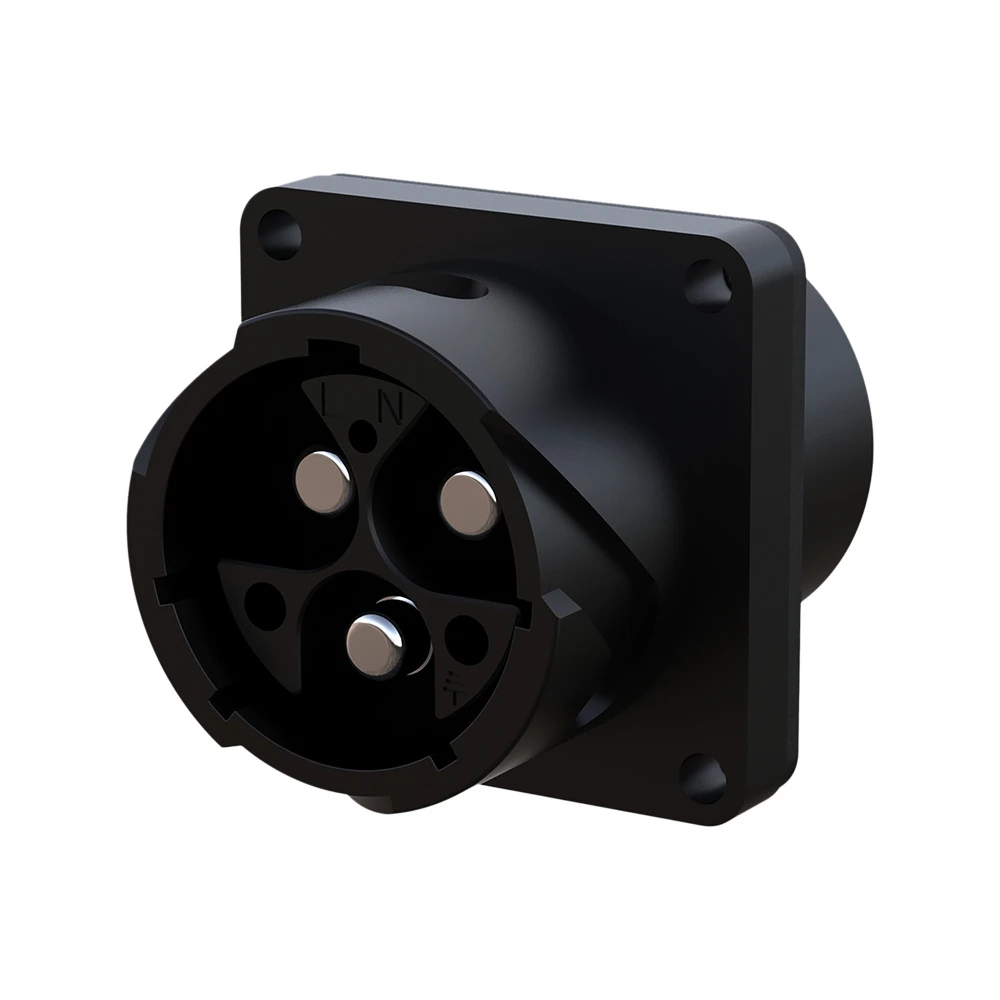
M28 3-Pin Waterproof Connector 80A Bayonet Locking IP67 for Solar & Storage
80A 3-pin bayonet-locking waterproof circular connector with IP67 rating for solar photovoltaic and energy storage systems.
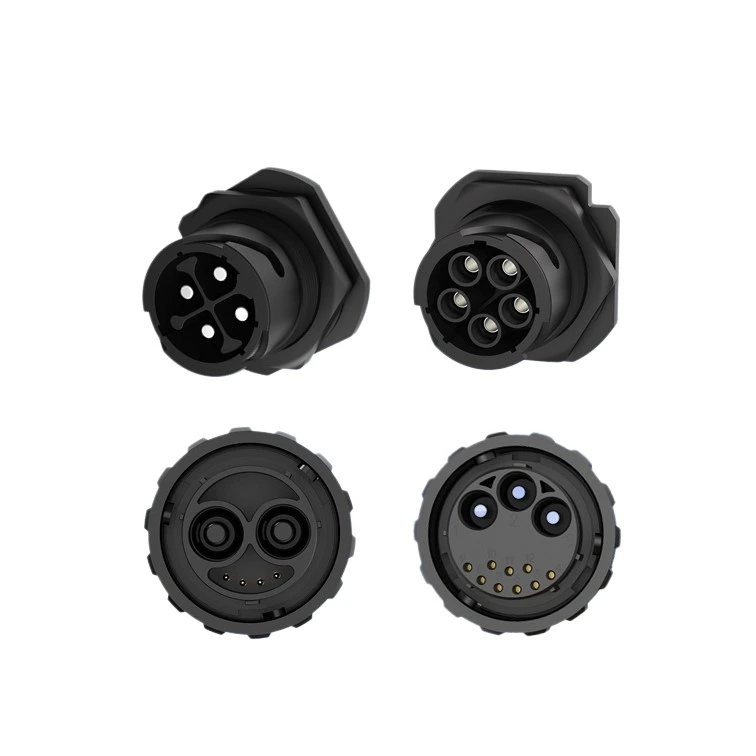
M40 4-Pin Waterproof Connector 120A Bayonet Lock for EV Charging
120A bayonet lock waterproof connector for EV charging and energy storage, with IP67 protection and reliable power transmission.
Related Circular Connector Solutions

Industrial Automation
Power, signal, and data connectivity for factory machines, robotic cells, sensors, and control cabinets. JNICON can review circular connectors and cable assemblies against motion, sealing, shielding, and maintenance requirements before prototype approval.
Explore Solutions
New Energy & Energy Storage
Connector and cable assembly options for battery racks, BMS interfaces, power conversion equipment and energy-storage cabinets. JNICON supports configuration review based on current, voltage, thermal conditions, polarity, service access and environmental exposure.
Explore Solutions
Rail Transit
Connector and harness options for rail equipment cabinets, auxiliary systems and monitoring interfaces. JNICON can review circuits, vibration, material requirements and maintenance with the OEM. Rail-specific approval must be confirmed for the exact part and installation, not inferred from industrial product ratings.
Explore SolutionsFrequently Asked Questions About Circular Electrical Connectors
Conclusion: Select a Circular Connector Partner for Production
The right circular electrical connectors protect more than an electrical path. They support machine uptime, operator safety, installation consistency, service access, and the OEM's production reputation. Select the connector by evaluating contact performance, sealing, locking, cable routing, backshell design, validation, documentation, and total installed cost together.
If you are comparing a standard product, a custom circular electrical connector, or a complete waterproof cable assembly, share your drawings and application requirements through the JNICON Inquiry and Contact Portal. The JNICON team can help review the interface, recommend a suitable product family, and prepare a factory quotation for your project.


