

What Do Cable Assembly Manufacturers Actually Deliver?

Professional cable assembly manufacturing combines cable preparation, terminal processing, connector assembly, inspection, and validation into a controlled process. The output may be a simple two-conductor power lead, a shielded coaxial assembly, a multi-branch cable harness, a molded hybrid cable, or a fully documented electromechanical subassembly.
The manufacturing scope may include:
- Wire and cable cutting to controlled lengths
- Stripping, tinning, crimping, soldering, and ultrasonic or other approved joining processes
- Contact and connector insertion with polarity and keying control
- Shield termination, drain-wire processing, and EMI-conscious backshell assembly
- Braiding, sleeving, conduit, labels, heat-shrink, and cable-management components
- Potting or PUR overmolding for strain relief and environmental protection
- Continuity, hipot, insulation-resistance, pull-force, dimensional, and visual tests
- Lot traceability, first-article approval, inspection records, and packaging controls
The best cable assembly manufacturer does not treat these operations as isolated steps. Cable construction, connector choice, tooling, test limits, and packaging must work together. For example, increasing conductor size can reduce voltage drop but may also require a larger contact system, a different bend radius, and a stronger backshell. A change that appears minor on a drawing can affect the entire assembly process.
Why Factory OEMs Need More Than a Catalog Cable
Standard catalog cables are useful for prototypes and common applications. They are less suitable when the equipment has unusual routing, limited installation space, aggressive motion, strict connector requirements, or an integrated power-and-signal architecture. OEMs usually need a controlled assembly that matches their mechanical envelope and production workflow.
Common factory problems include:
Excessive voltage drop and heat
Every conductor and contact has resistance. The basic relationships are:
Voltage drop:  Vdrop = I × R
Resistive heat: Pheat = I² × R

Higher current ──► contact resistance matters more ──► temperature rises
       │
       └──────────────► insulation aging, derating, or failure risk
Because heat increases with the square of current, a modest increase in resistance can become significant in high-current circuits. Poor crimp compression, contaminated contacts, undersized conductors, or damaged plating can all increase resistance. A capable supplier verifies the termination process rather than relying only on a final continuity check.
Intermittent signals in moving equipment
Robots, pick-and-place machines, automated guided vehicles, and articulated tooling subject assemblies to repeated bending and torsion. A cable that passes a static test may fail after repeated flexing if the conductor construction, jacket material, breakout geometry, or strain relief is unsuitable.
A dependable design review considers dynamic bend radius, flex direction, cycle expectations, cable routing, unsupported length, connector locking, and the transition between flexible and fixed sections. Robotics cable assembly manufacturers should be able to discuss these factors in engineering terms and recommend a design that can be validated on the actual machine.
Water, dust, oil, and chemical exposure
Ingress does not always occur through the connector face. It may travel along a cable, enter through a damaged jacket, wick through a poorly sealed termination, or pass a backshell during thermal cycling. An IP rating is meaningful only when the complete mated system, cable exit, seals, and installation conditions are considered.
For outdoor automation, washdown equipment, marine machinery, and industrial vehicles, a customer may need an IP68 or IP69K-oriented design. Jnicon’s waterproof connector and wiring solutions can be reviewed alongside its waterproof connector sourcing guide for industrial plants and waterproof wiring connectors for marine and trailer harnesses.
How to Evaluate Cable Assembly Manufacturers
An OEM supplier audit should cover engineering competence, process control, testing, documentation, and communication. The following framework helps purchasing and engineering teams compare suppliers consistently.
1. Confirm application and design capability
Ask whether the supplier can interpret your schematic, connector specification, cable datasheet, and mechanical drawing. A capable partner should identify missing information such as current by circuit, mating cycles, operating temperature, flexing conditions, EMC requirements, connector keying, cable length tolerance, and acceptable substitutions.
For non-standard assemblies, compare custom cable assembly manufacturers on how early they raise risks. Early questions are usually a positive sign. They reduce engineering changes after tooling and production have begun.
2. Review material and component control
The assembly is only as reliable as its weakest component. Review conductor material and size, insulation and jacket type, connector housing, contact plating, seals, backshells, labels, shielding materials, and approved alternates. The supplier should maintain a controlled bill of materials and prevent unauthorized substitutions.
If the application includes power and data in one route, discuss a hybrid configuration. Hybrid cable assemblies require attention to isolation, crosstalk, shielding, thermal loading, and serviceability. Jnicon’s hybrid connector selection guide can help teams frame the power-and-signal discussion before finalizing the interface.
3. Inspect crimp and termination process control
Crimp quality is not determined by appearance alone. A reliable gas-tight crimp depends on the correct terminal, wire range, applicator, die, strip length, conductor position, and applied force. Verification may include crimp-height measurement, cross-section analysis, pull testing, and periodic tooling checks.
Soldered joints also require controlled preparation, temperature, dwell time, wetting, insulation clearance, and strain relief. IPC/WHMA-A-620 Class 3 is particularly relevant where high-reliability workmanship and objective acceptance criteria are required. The standard does not replace an application-specific test plan, but it gives an OEM and supplier a common quality language.
4. Verify electrical and environmental testing
At minimum, the test strategy should reflect the risk profile of the assembly. Typical controls include 100% continuity and short-circuit testing, insulation resistance, dielectric withstand, contact resistance, pin-to-pin verification, and visual inspection. Environmental or qualification testing may include temperature cycling, humidity, vibration, flexing, salt spray, ingress protection, and chemical exposure.
For coaxial and high-frequency assemblies, continuity alone is not enough. The team may need impedance control, insertion loss, return loss, shielding effectiveness, and connector-interface verification. Coaxial cable assembly manufacturers should understand that cable geometry and termination workmanship directly affect signal integrity.
5. Assess traceability and corrective action
Ask how the supplier identifies raw materials, terminals, operators, tooling, test results, and production lots. Traceability supports faster containment if a problem appears in the field. It also helps OEMs establish a reliable link between a drawing revision and the assemblies built against it.
Review the supplier’s nonconformance process. A mature manufacturer should document root cause, containment, corrective action, effectiveness checks, and customer communication. Certifications matter, but day-to-day response discipline is equally important.
Cable Manufacturing and Assembly: From Drawing to Shipment
The term cable manufacturing and assembly may describe a broad supply chain. Some suppliers only assemble purchased cable and connectors. Others control connector production, molding, harness assembly, and final inspection under one manufacturing system. Understanding the boundary is important when the design is customized.
OEM requirements
      │
      ▼
Electrical + mechanical review ──► BOM / drawing / test plan
      │                                      │
      ▼                                      ▼
Prototype or first article ───────► Validation and approval
                                             │
                                             ▼
Controlled production ──► 100% inspection/testing ──► Traceable shipment
A practical process usually includes design clarification, sample or first-article assembly, approval of critical dimensions, test-limit definition, pilot production, process capability review, and volume production. For factory OEMs, this staged approach reduces the risk of discovering assembly problems only after equipment has entered the customer’s line.
Jnicon’s broader cable assemblies sourcing guide for industrial plant OEMs is a useful internal-link reference for comparing assembly scope, while the cable harness assembly guide for industrial machinery OEMs focuses on multi-branch harness considerations.
Choosing the Right Assembly Type for the Application
Different industries impose different failure modes. A supplier should be selected for demonstrated process capability rather than a generic claim that it can “make any cable.”
| Assembly type | Main design concerns | Typical validation focus |
|---|---|---|
| Industrial power assembly | Current, voltage drop, heat, locking, touch protection | Contact resistance, temperature rise, hipot, pull force |
| Robotics harness | Dynamic bending, torsion, breakout strain, cycle life | Flex-cycle testing, continuity during motion, bend-radius review |
| Medical cable assembly | Cleanability, biocompatibility requirements, signal stability, documentation | Insulation, leakage or signal tests, visual control, traceability |
| Military or defense-oriented assembly | Ruggedization, vibration, sealing, EMI, connector retention | Environmental, vibration, shielding, retention, qualification testing |
| Coaxial assembly | Impedance, shielding, connector geometry, routing | Insertion loss, return loss, shielding, continuity |
| Hybrid power-signal assembly | Isolation, crosstalk, current loading, serviceability | Electrical separation, signal integrity, thermal and mechanical tests |
Medical cable assemblies
Medical cable assembly manufacturers must work from the device risk profile and applicable customer or regulatory requirements. Important questions include cleaning agents, sterilization exposure, patient-contact classification, connector cycles, flexing, leakage, signal quality, labeling, and lot traceability. A supplier should not imply regulatory compliance solely from a general quality certificate; the OEM remains responsible for defining the applicable requirements and approving the complete design. For component-level criteria, see our medical connector selection guide.
Military cable assemblies
For defense, aerospace-adjacent, and rugged field equipment, military cable assembly manufacturers may need to address vibration, shock, moisture, temperature extremes, EMI/EMC, connector retention, and repairability. Shield termination is especially important: a shield that is electrically continuous but poorly bonded to the connector shell may not deliver the intended protection. The correct acceptance criteria must be agreed in the project specification.
Coaxial and RF assemblies
For RF systems, coax cable assembly manufacturers and coaxial cable assembly manufacturers should be evaluated on measurement capability, connector installation, cable handling, and test repeatability. Excessive stripping, an uneven dielectric transition, a damaged braid, or an incorrect torque can change the electrical performance. The assembly drawing should identify connector series, cable type, length tolerance, bend constraints, and required RF test limits.
Jnicon’s Manufacturing and Quality Framework
Jnicon Electric positions itself as a source factory for industrial connectors, circular connectors, high-flex industrial harnesses, and customized connection solutions. For OEM sourcing, the value of a source manufacturer is the ability to coordinate the connector, cable, overmold, sealing, and assembly details as one system.
Its stated quality and production framework includes ISO9001, IATF16949, ISO14001, IPC/WHMA-A-620 Class 3, IP68/IP69K, and UL94-V0. These references can support a customer’s supplier prequalification, but each project should still define its own drawings, approved materials, inspection plan, and qualification evidence.
The product and solution scope can be explored through the Product Center, Connectors Category, and Circular Connectors Portfolio. These pages are especially relevant when a cable assembly requires a sealed circular interface, high-current contact system, keyed multi-pin configuration, or power-and-signal combination.
For a detailed review of pin layouts, locking methods, backshells, and sealing requirements, read our circular electrical connectors guide for factory OEMs before approving the mating interface.
Questions to Include in an RFQ
An RFQ becomes much more useful when it includes enough information for the supplier to price and validate the actual assembly. Provide the connector part numbers or interface requirements, cable type, conductor count and size, finished length, tolerances, wire colors, shielding, labels, overmold or sleeve requirements, annual volume, sample quantity, target delivery, operating environment, and required tests.
For factories, also specify how the assembly will be installed. A cable that is technically acceptable but difficult to route, identify, or replace can increase labor cost on the production line. Photos, installation drawings, mating-part samples, and a description of the failure modes to avoid can significantly improve the first design review.
The phrase cable assembly manufacturers should therefore be treated as a starting point for supplier research. The final selection should be based on verified capability, transparent documentation, stable communication, and evidence that the supplier can repeat the approved design at production volume.
From Prototype Approval to Stable Mass Production
Prototype success is important, but it does not automatically prove production readiness. A factory OEM should define a controlled transition from samples to volume. During this stage, the supplier confirms that the approved materials, tooling, work instructions, test fixtures, and inspection points are available on the production line—not only in an engineering area.
Several practical checks are valuable before releasing a blanket purchase order:
- Compare the first-article assembly with the released drawing and revision level.
- Confirm that connector orientation, cavity numbering, labels, and branch lengths are unambiguous.
- Review crimp-height records, pull-force results, and any cross-section or tooling verification required by the project.
- Run representative assemblies through the intended installation process to catch routing, latch, bend, and access problems.
- Confirm that test fixtures detect open circuits, shorts, miswires, reversed polarity, and incorrect component variants.
- Agree on packaging that prevents tangling, terminal damage, contamination, and mix-ups between similar part numbers.
This is where experienced cable assembly manufacturer teams create measurable value. They convert lessons from prototype builds into work instructions and mistake-proofing controls. For a complex harness, a pinboard, digital tester, barcode system, or visual connector keying may prevent errors that a final visual inspection could miss. For a high-flex assembly, sample retention and flex-cycle records can help correlate field performance with the approved construction.
Change management should also be explicit. If a cable, terminal plating, mold compound, connector housing, or approved alternate changes, the OEM needs advance notice and a defined requalification path. A stable supplier protects the interface over the entire product lifecycle, helping the factory avoid unexpected fit, performance, or service issues after production has scaled.
Related Cable Assembly Products
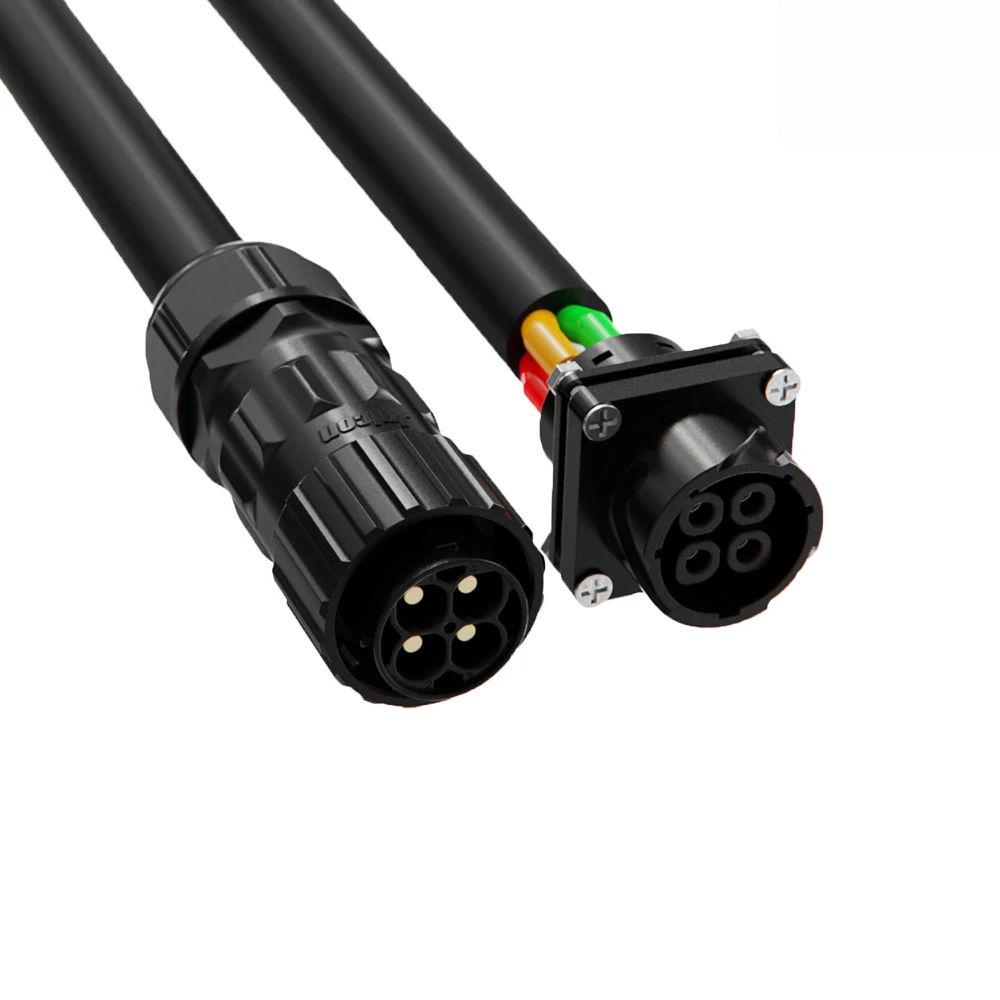
M28 4 Pin Waterproof Connector 60A Bayonet Locking IP67 for Power Systems
60A 4-pin bayonet-locking waterproof circular connector with IP67 rating for industrial power distribution and solar applications.
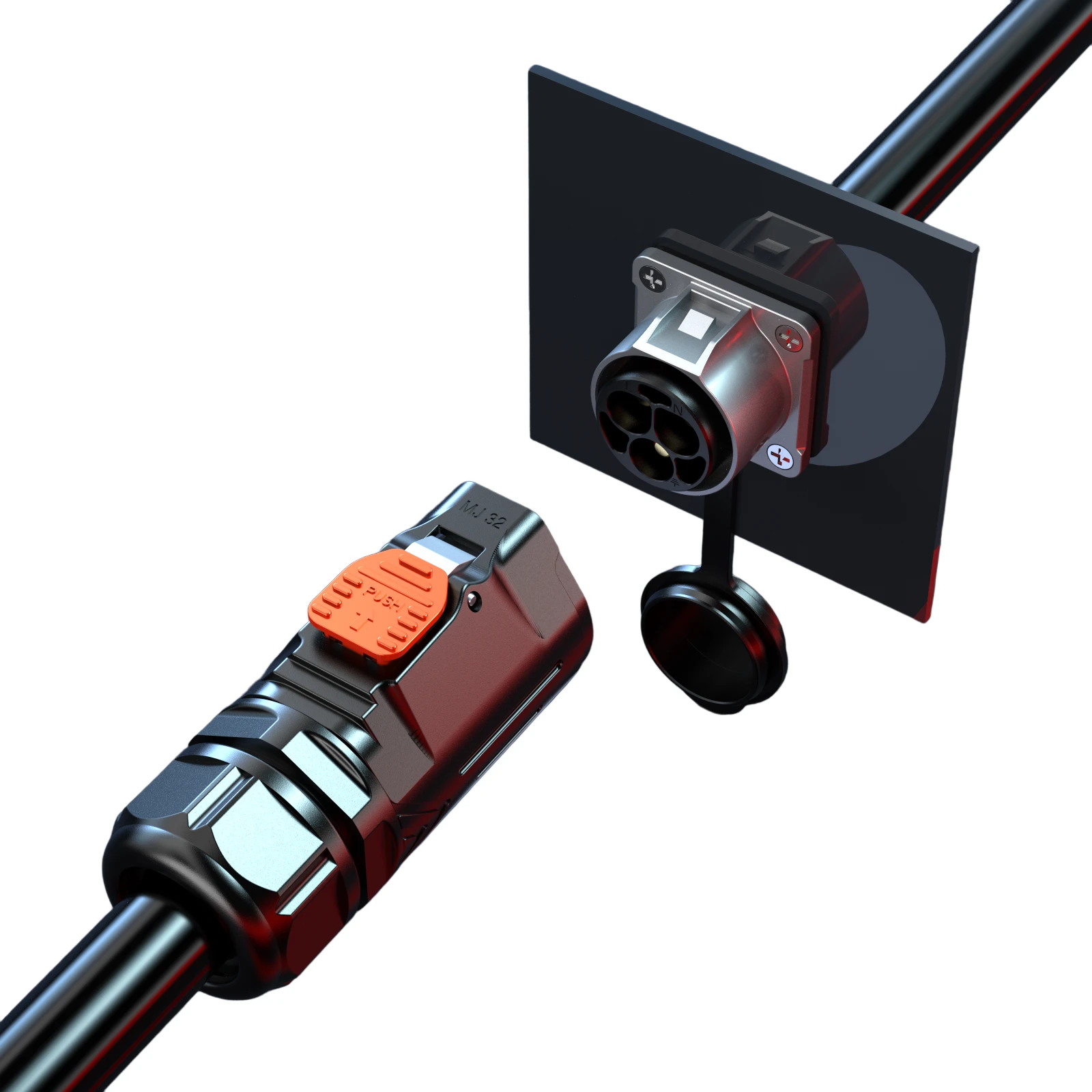
MJ32 3-Pin Waterproof Connector 80A Quick Lock for Energy Storage
80A quick-lock waterproof connector for energy storage and industrial power, with IP67 protection and reliable power transmission.
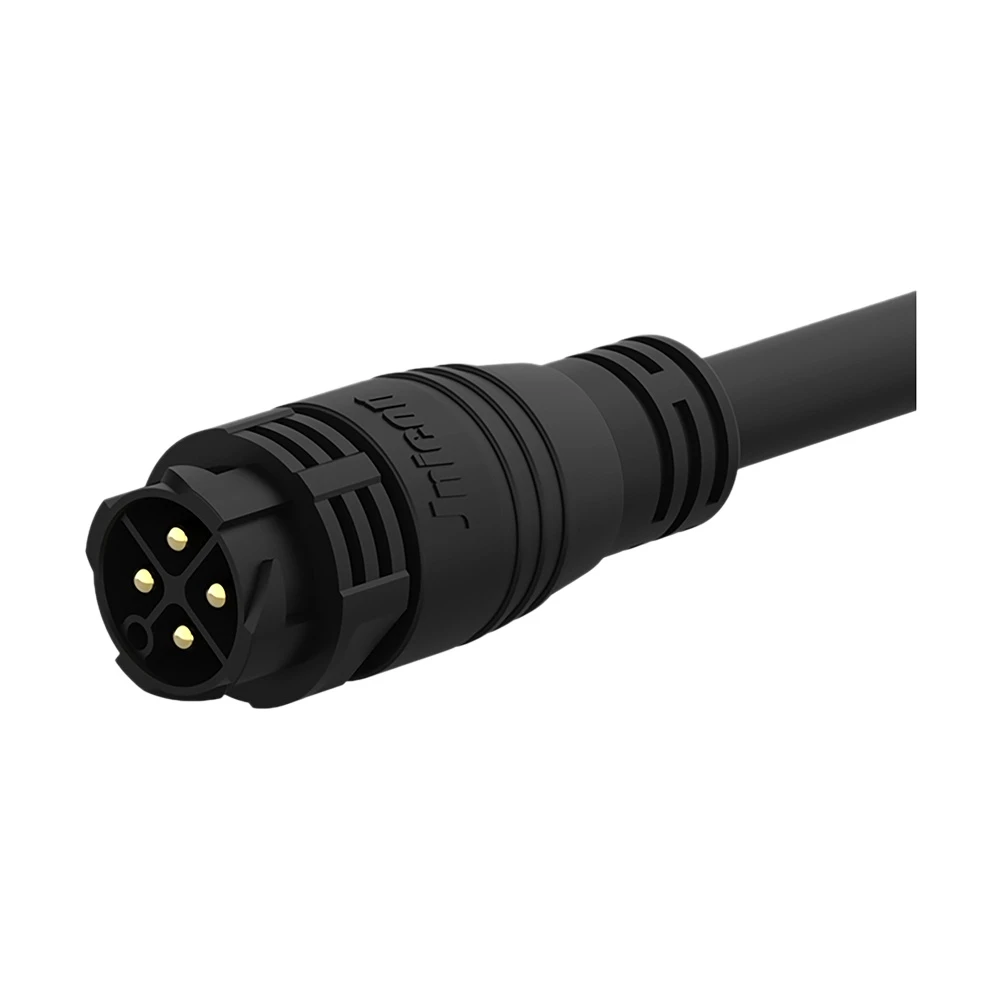
M25 4-Pin Waterproof Connector 50A Push Locking Molded with Cable for Industrial Automation
Pre-molded 50A 4-pin push-locking waterproof connector with IP67-rated cable, ready-to-use for industrial equipment and outdoor LED lighting installations.
Related Industrial Solutions

New Energy & Energy Storage
Connector and cable assembly options for battery racks, BMS interfaces, power conversion equipment and energy-storage cabinets. JNICON supports configuration review based on current, voltage, thermal conditions, polarity, service access and environmental exposure.
Explore Solutions
Marine & Offshore
Sealed power, signal and cable interfaces for marine equipment and offshore installations. Review salt exposure, condensation, vibration, cleaning and service conditions with JNICON. A stated IP68 rating does not by itself establish continuous subsea, pressure-depth or marine-class approval.
Explore Solutions
Industrial Automation
Power, signal, and data connectivity for factory machines, robotic cells, sensors, and control cabinets. JNICON can review circular connectors and cable assemblies against motion, sealing, shielding, and maintenance requirements before prototype approval.
Explore SolutionsFAQ
What does Jnicon provide as a cable assembly manufacturer?
Jnicon provides industrial cable assemblies, high-flex harnesses, connectorized cables, waterproof solutions, and custom power-signal connection options. The exact construction is defined from the OEM drawing, application, and validation requirements.
Can Jnicon build custom cable assemblies for factory equipment?
Yes. Jnicon supports custom cable assembly development for industrial automation, machinery, energy storage, vehicles, robotics, and other OEM applications, subject to technical review and sample approval.
Does Jnicon support high-reliability cable assembly testing?
Jnicon’s stated framework includes ISO9001, IATF16949, ISO14001, IPC/WHMA-A-620 Class 3, IP68/IP69K, and UL94-V0-related capabilities. Customers should confirm the exact tests, limits, reports, and qualification evidence required for their project.
How should an OEM request a cable assembly quotation?
Send the drawing, BOM, cable specification, connector details, quantity, application environment, and required testing to Jnicon. The engineering team can then clarify the design and prepare a project-specific quotation through the Inquiry and Contact Portal.
Conclusion: Select a Manufacturing Partner, Not Just a Cable Vendor
Reliable cable assemblies protect uptime, signal quality, operator safety, and the OEM’s reputation. When comparing cable assembly manufacturers, look beyond unit price and ask how each supplier controls terminations, materials, shielding, flexing, sealing, testing, traceability, and engineering changes. The right partner should help convert the factory’s operating conditions into a repeatable, documented assembly.
Jnicon Electric can support OEM teams evaluating industrial cable assemblies, custom harnesses, waterproof interfaces, coaxial assemblies, robotics wiring, and hybrid power-signal configurations. Share your requirements through the Inquiry and Contact Portal to start a technical review and request a quotation.