

A dependable cable assembly is more than a cable with two connectors. For factory equipment, it is a documented, tested interface that must carry power or data, survive the operating environment, and fit the customer's production process. This guide explains how OEM buyers can select a cable assembly partner, compare cable harness assembly options, and move from prototype to repeat production with fewer field failures.
What Is a Cable Assembly?
A cable assembly is a finished interconnection product made from one or more cables, wires, terminals, connectors, seals, backshells, labels, and protective materials. The supplier cuts the cable to a defined length, prepares the conductors, installs the terminals, applies strain relief or overmolding, and tests the completed unit before shipment.
The result is intended to be installed directly into a machine, control cabinet, vehicle, energy system, or other finished product. For a factory customer, the most important question is whether the supplier can repeatedly build the same electrical and mechanical interface at the required quality level.
That requires controlled materials, accurate work instructions, stable crimping, correct pinouts, inspection at critical operations, and final verification. Jnicon supports this ready-to-install approach through molded cable assemblies, waterproof connector families, hybrid power-and-signal interfaces, and OEM wiring harness options.
Cable Assembly vs. Wiring Harness
The difference between a single cable assembly and a harness cable assembly is normally defined by the application's routing and connection requirements. A point-to-point lead is suitable when two devices are close together and the route is fixed. A branched harness is more useful when one equipment interface distributes power or signals to multiple sensors, actuators, motors, or control modules.
When evaluating a cable harness assembly, map the complete route instead of specifying only the connector part number. Record start and end points, branch locations, bend radii, moving sections, mounting features, heat sources, fluid exposure, and service access.
Factory buyers should also decide whether the assembly will be static, flexing, or continuously moving. A static cabinet lead may use a standard jacket and simple strain relief. A robotic or automated machine application may require high-flex cable, flexible conduit, abrasion protection, bend-control features, and a defined flex-life target.
When Should OEMs Choose Custom Cable Assemblies?
Custom cable assemblies become more valuable when a machine has a defined footprint, nonstandard cable lengths, special pin assignments, multiple interfaces, harsh environmental conditions, or a requirement to reduce installation labor.
Customization may involve selecting a compatible cable, changing the length, adding labels, using a right-angle exit, combining power and signal contacts, adding shielding, or molding the connector and cable together. These changes can simplify installation and make every machine in a production batch easier to build consistently.
Evaluate total installed cost. A low unit price can be offset by field stripping, manual crimping, testing, rework, and the risk of wiring errors on the factory floor. A pre-terminated assembly can reduce operations performed by the equipment builder and make incoming inspection simpler.
How to Specify a Cable Assembly Before Requesting a Quote
A clear RFQ gives cable assembly manufacturers enough information to quote the correct construction and identify risks early. Provide the connector series or mating interface, cable type, total length, end termination, pinout, quantity, operating environment, and expected annual demand. Include a drawing or marked-up photograph when the route or branch geometry matters.
For power applications, specify voltage, continuous current, peak current, inrush conditions, conductor size, insulation temperature rating, and allowable voltage drop. For signal and data applications, specify impedance, shielding, pair construction, frequency range, data rate, and the required test method.
For moving systems, define the motion profile, bend radius, travel distance, cycle count, and installation orientation. Also state whether the assembly must be waterproof, oil resistant, flame retardant, halogen free, RoHS compliant, or suitable for a particular certification program.
Cable Assembly Manufacturing: From Drawing to Tested Product
Reliable cable assembly manufacturing is a controlled sequence rather than a single workstation operation. The process begins with a design review. Engineering checks the drawing, connector compatibility, cable outer diameter, terminal range, tooling, bend requirements, and possible assembly risks before the first sample is built.
Material preparation follows. Cables, terminals, connector bodies, seals, boots, braid, labels, and other components should be identified by controlled part numbers. Production may include cutting, stripping, crimping, soldering, terminal insertion, shielding termination, overmolding, sleeving, labeling, and electrical testing.
Each operation needs the correct tool and a clear work instruction. Crimp height, pull force, conductor brush, insulation support, insertion depth, and terminal retention are typical process controls. A documented process helps the supplier build the same assembly repeatedly across production lots.
Testing and Documentation for Reliable Cable Assemblies
Testing should be selected from the failure modes that matter to the application. A continuity and pinout test confirms that the intended electrical path is present, but it may not identify weak crimping or poor sealing. A pull test, crimp cross-section review, insulation resistance test, or hipot test may be required depending on design and safety risk.
Mechanical checks can include connector mating, lock verification, dimensional inspection, bend-radius review, and strain-relief inspection. Environmental validation may include temperature cycling, vibration, water exposure, salt spray, or flex testing when the application justifies it.
Documentation should include the approved drawing, bill of materials, work instruction, inspection standard, test specification, certificate of conformity, and change history. This helps the OEM maintain a stable release process and makes future design revisions easier to approve.
For an acceptance plan that links the approved netlist to fixture validation and event-retaining fault checks, use the cable assembly pinout and intermittent-fault testing checklist. Agree on application-specific test limits before production release.
How to Evaluate a Cable Assembly Manufacturer
When comparing custom cable assembly manufacturers, review manufacturing capability, engineering response, quality systems, and communication—not only the quoted price. Ask whether the supplier can produce a controlled sample, support drawing changes, maintain a bill of materials, and provide inspection or test records for each production lot.
Confirm whether the supplier coordinates the connector, cable, and assembly process or simply outsources the work. A coordinated supplier can reduce compatibility risk and simplify corrective action. Request process photographs, sample inspection data, capability information, and references relevant to your industry.
A strong supplier should identify what is standard and what is customized, then explain minimum order quantities, tooling charges, sample lead time, production lead time, packaging, change control, and warranty handling. A transparent quote is easier to compare than a low price that excludes testing, labels, tooling, or engineering work.
Military Cable Assembly Manufacturers and High-Reliability Projects
OEMs searching for military cable assembly manufacturers usually need more than a rugged connector. They may require controlled drawings, secure project communication, special shielding, environmental qualification, labeling, lot traceability, and strict configuration management. The exact requirements depend on the platform and contract, so a supplier should review the applicable specification before promising compliance with a military standard.
The same disciplined approach is valuable in industrial automation, robotics, transportation, energy storage, and outdoor equipment. Define the operating environment, identify critical characteristics, agree on verification methods, and control every engineering change. Reliability comes from a complete system specification and repeatable execution, not from a product label alone.
For high-reliability projects, ask the supplier how it controls revisions, protects drawings, manages approved materials, records test results, and handles nonconforming product. These questions help procurement and engineering teams evaluate the supply chain with evidence.
Jnicon Support for Custom Cable Assembly Projects
For OEMs, Jnicon combines connector selection, cable preparation, termination, molding, inspection, and final testing into a controlled cable assembly manufacturing workflow. The company supports industrial, energy, transportation, automation, and other factory applications where a repeatable interface matters.
Jnicon engineering can review drawings, mating interfaces, cable routing, current and signal requirements, environmental exposure, and production targets. This helps customers decide when a standard platform is suitable and when custom cable assemblies are the better fit.
For procurement teams, a practical evaluation should include sample approval, bill-of-material control, inspection records, change management, packaging, and delivery support. These controls make it easier to move from an initial prototype to stable repeat production with fewer surprises.
Related Cable Assembly Products
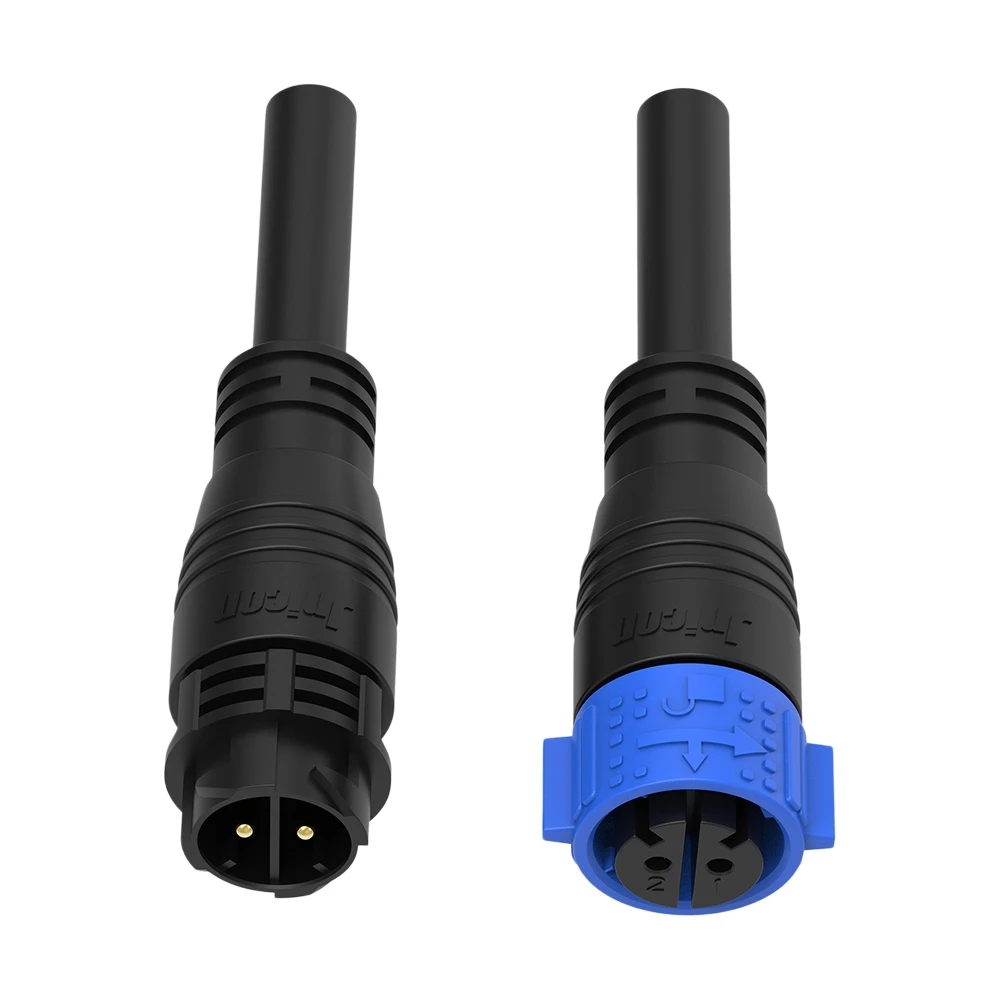
M25 2-Pin Waterproof Connector 50A Push Locking Molded with Cable for Solar & Energy Storage
Pre-molded 50A push-locking waterproof connector with IP67-rated cable, ready-to-use for reliable outdoor power connections in solar and energy storage systems.
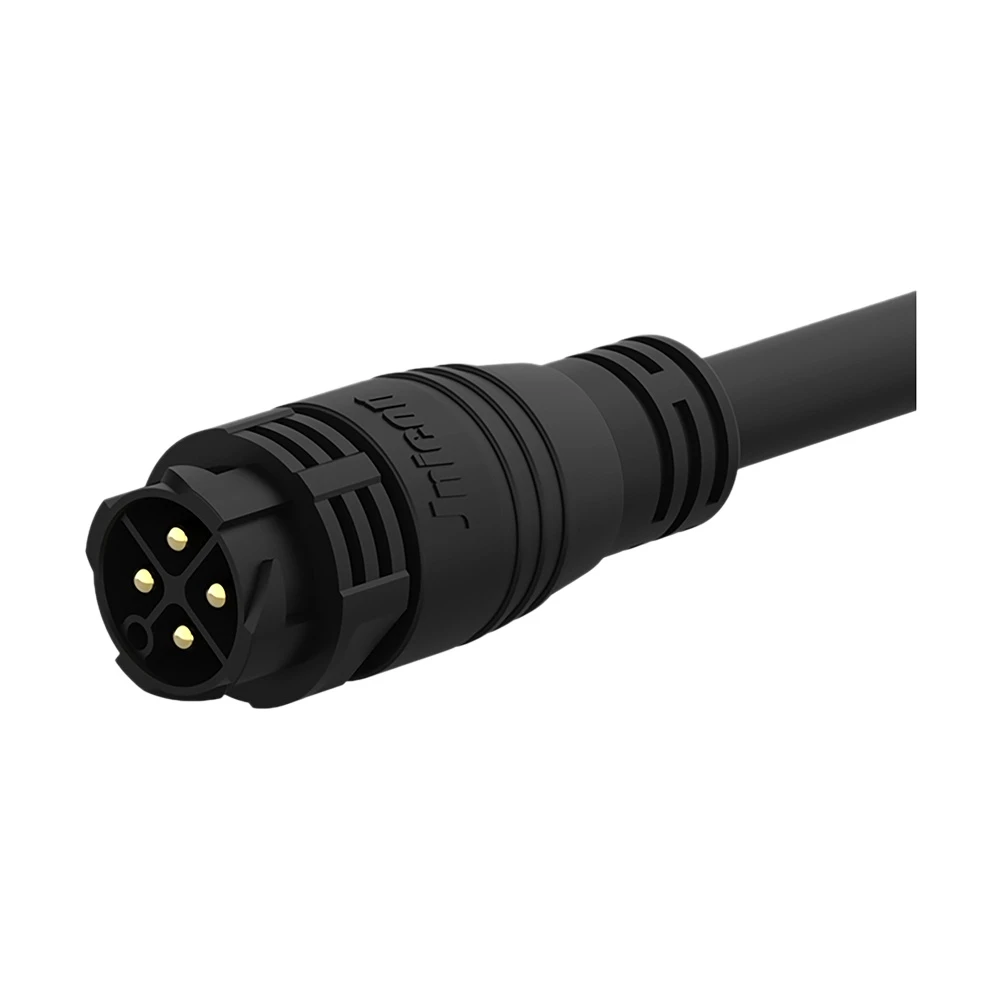
M25 4-Pin Waterproof Connector 50A Push Locking Molded with Cable for Industrial Automation
Pre-molded 50A 4-pin push-locking waterproof connector with IP67-rated cable, ready-to-use for industrial equipment and outdoor LED lighting installations.
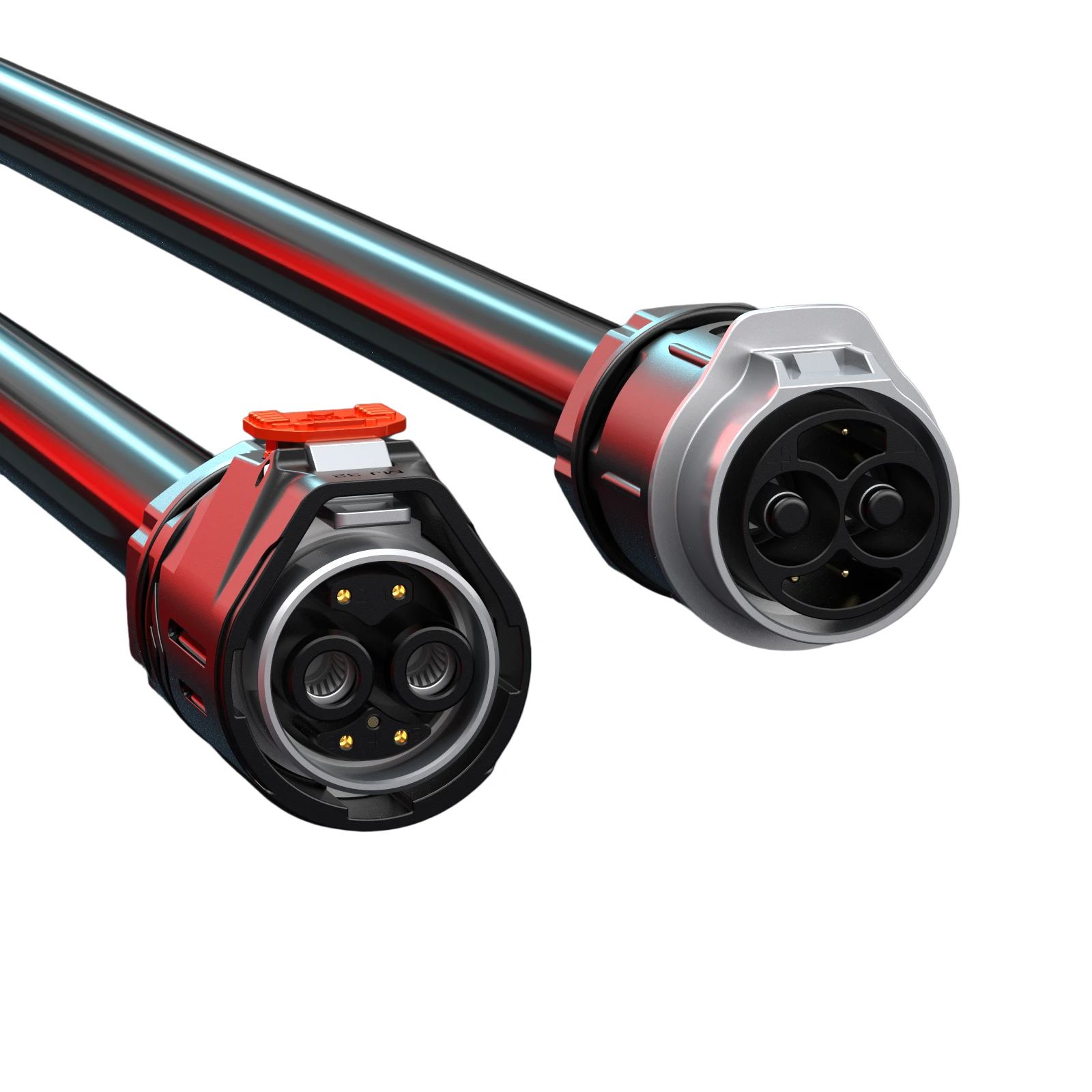
MJ32 2+5 Pin Hybrid Waterproof Connector 120A for BMS Signal Transmission
The JNICON MJ32 hybrid waterproof connector combines two 120A power contacts and five 10A signal contacts in a quick-lock, IP67-rated interface for BMS and industrial control wiring. Request the exact mating-pair drawing and validate ratings, cable fit and application conditions before production approval.
Related Cable Assembly Solutions

Industrial Automation
Power, signal, and data connectivity for factory machines, robotic cells, sensors, and control cabinets. JNICON can review circular connectors and cable assemblies against motion, sealing, shielding, and maintenance requirements before prototype approval.
Explore Solutions
New Energy & Energy Storage
Connector and cable assembly options for battery racks, BMS interfaces, power conversion equipment and energy-storage cabinets. JNICON supports configuration review based on current, voltage, thermal conditions, polarity, service access and environmental exposure.
Explore Solutions
Rail Transit
Connector and harness options for rail equipment cabinets, auxiliary systems and monitoring interfaces. JNICON can review circuits, vibration, material requirements and maintenance with the OEM. Rail-specific approval must be confirmed for the exact part and installation, not inferred from industrial product ratings.
Explore SolutionsFrequently Asked Questions About Cable Assemblies
Conclusion: Choose a Cable Assembly Partner for Repeatable Production
The best cable assembly manufacturers help an OEM control the entire interconnection: material selection, cable routing, terminations, sealing, testing, traceability, and engineering changes. The right partner reduces manual wiring, prevents avoidable installation errors, and gives the factory a repeatable part that can be installed and inspected consistently.
When comparing a cable assembly manufacturer, look beyond the unit price. Review the drawing process, tooling control, test capability, documentation, change management, and experience with your operating environment.
If you are developing a new machine, replacing a failure-prone harness, or preparing a production release, share your requirements through the Jnicon Inquiry and Contact Portal.


