

Industrial Connector Blogs & Technical Insights
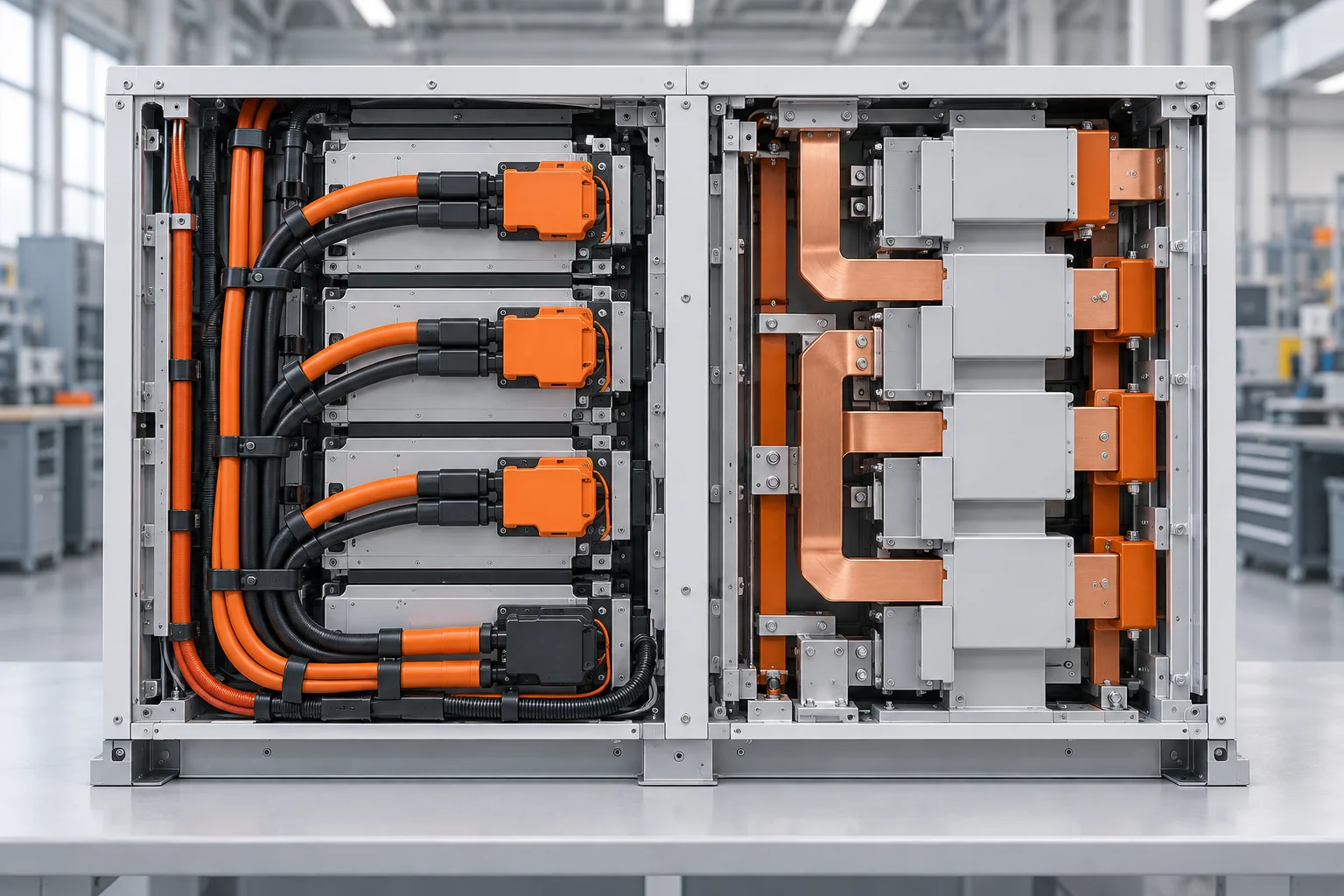
Energy Storage Connectors: Cable vs Busbar Interfaces
Energy storage connectors need a defined conductor interface as well as an electrical rating. This OEM guide compares cable and busbar arrangements through installation space, alignment, assembly controls, replacement access, and quotation scope so engineering and purchasing teams can approve the same configuration.

Energy Storage Connectors for Battery Energy Networks
Unplanned thermal events and power interruptions across commercial Battery Energy Storage Systems (BESS), utility grid arrays, and heavy industrial energy banks are most frequently traced to environmental or electrical failures at connection interfaces. Modern energy storage infrastructure operates under severe physical and electrical stress. High-capacity battery modules carry continuous direct current (DC) loads reaching hundreds […]

6 Pin Circular Connector Selection for Factory Robotics
Unplanned machinery shutdowns and telemetry signal losses across automated robotics cells, commercial processing lines, and outdoor equipment installations are most frequently caused by environmental or mechanical failures at electrical connection points. On modern high-speed manufacturing floors, multi-axis automated machinery subjects wiring harnesses to continuous torsional flexing, high-pressure liquid washdowns, synthetic coolant mists, and thermal swings. […]

Circular Electrical Connectors for Factory Grid Automation
Unplanned power interruptions and signal degradation across automated assembly lines, commercial marine yards, and outdoor energy storage infrastructure are frequently traced to environmental failures at electrical junction points. On modern industrial factory floors, power distribution networks operate under continuous physical stress. They encounter high-pressure chemical washdowns, synthetic cutting lubricants, intense multi-axis vibration, and ambient thermal […]

Industrial Circular Connectors: Types & Selection Guide
Industrial circular connectors should be selected by electrical load, pin assignment, mating interface and environmental exposure—not shell diameter alone. This guide compares locking types and outlines the checks OEM engineers and purchasing teams should complete before requesting a JNICON drawing or quotation.

Industrial Connectors for Factory Automation Networks
Unplanned machinery downtime across modern automated assembly lines, processing plants, and energy storage facilities is most frequently caused by environmental or mechanical failure at electrical connection points. On high-speed manufacturing floors, electrical interconnects operate under continuous physical stress. They are subject to high-pressure washdowns, synthetic coolant mists, multi-axis robotic vibration, and temperature swings. When standard […]

Waterproof Automotive Connectors for Heavy Vehicle Fleets
In heavy commercial transport fleets, off-road agricultural machinery, and automated guided vehicle (AGV) systems, electrical wiring harnesses form the central nervous system of equipment operations. Whether routing high-current 24V battery power to electric lift actuators or transmitting real-time CAN-bus sensor telemetry across diesel engine chassis, vehicle electrical circuits operate under continuous environmental stress. Exposed beneath […]
- Previous blog page
- 1
- …
- 4
- 5
- 6
- 7
- 8
- 9
- Next blog page