

Unplanned thermal events and power interruptions across commercial Battery Energy Storage Systems (BESS), utility grid arrays, and heavy industrial energy banks are most frequently traced to environmental or electrical failures at connection interfaces. Modern energy storage infrastructure operates under severe physical and electrical stress. High-capacity battery modules carry continuous direct current (DC) loads reaching hundreds of amperes while exposed to outdoor climate swings, high atmospheric humidity, and thermal cycling. When standard commercial plugs or low-grade lugs are deployed in high-voltage battery racks, surface oxidation and contact resistance spike rapidly. Increased resistance triggers localized overheating, plastic housing degradation, and dangerous thermal runaway risks that jeopardize multi-million-dollar energy storage facilities. For facility procurement directors, energy storage systems integrators, and battery rack original equipment manufacturers (OEMs), deploying certified energy storage connectors is a fundamental operational necessity to safeguard thermal stability and maintain continuous power output.
Navigating the global supply chain for high-power battery interconnects requires evaluating suppliers beyond generic component brokers and trading intermediaries. Partnering directly with an advanced energy storage connector manufacturing company guarantees complete control over alloy copper machining, contact pin electroplating, and end-to-end quality tracking. Establishing direct factory partnerships with an affordable energy storage connector supplier enables facility operators to secure certified IP68 high-current plugs, integrate fire-retardant thermoplastics, and deploy power-and-BMS hybrid layouts engineered to perform across demanding electrical, thermal, and chemical operating environments.
Thermal Mechanics & High-Current Safety in Battery Systems (BESS)
In utility-scale energy storage installations, battery racks continuously charge and discharge massive amounts of direct current. Managing thermal safety at every interconnect node requires analyzing the physics of contact resistance and heat dispersal.
Joule Heating and Contact Resistance Controls
High current flowing through conductive metal contacts generates internal thermal loss according to Joule's Law (P = I²R). In a high-current battery energy storage connector, even a micro-ohm increase in contact resistance (R) generates substantial heat at full current (I). If contacts oxidize due to moisture ingress, localized thermal spikes can melt plastic carriers and ignite surrounding wiring.
To prevent thermal runaway risks, a premium energy storage connector utilizes solid-machined copper alloy pins finished with thick gold-over-nickel electroplating. Machined contacts maintain minimal contact resistance below 0.2 milliohms, ensuring efficient power transmission and preventing thermal accumulation during peak battery discharge cycles.
To analyze general industrial power distribution and 3-phase AC grids, explore our technical guide on power connectors selection for factory electrical grids.

When a project combines battery storage, power conversion and auxiliary circuits, review each interface against the complete system duty. Our new energy connector selection guide for industrial OEMs explains how to define current-rating conditions, voltage, sealing, cable assemblies and sample validation before approving a mating pair.
Dielectric Insulation & Ingress Defense in High-Voltage Racks
Commercial BESS container units operate at high DC voltages, often reaching 1000V DC to 1500V DC. Operating at high voltage while exposed to outdoor condensation or HVAC cooling mists introduces severe dielectric risks.
Dielectric Creepage and Arc Prevention
When atmospheric moisture or liquid condensation enters an unsealed battery housing, fluid forms a conductive path across the plastic insulator separating positive and negative busbars. Under 1000V DC potential, current leaks along this fluid path, carbonizing the surrounding plastic carrier and creating a permanent conductive channel—a failure known as arc tracking.
High-performance energy storage plugs prevent arc tracking by molding raised isolation barriers between contact chambers. Combined with non-porous V0-rated engineering polymers, these internal walls maximize creepage and clearance distances, maintaining complete dielectric isolation even under high ambient humidity.
Global Sourcing: Evaluating Manufacturing Capability & Supplier Value
Procurement managers at energy storage OEM facilities face pressure to reduce bill-of-materials (BOM) costs without compromising system safety or international certification standards.
Sourcing from a Certified Manufacturer in China
Partnering with the best energy storage connector manufacturer in china provides access to advanced manufacturing infrastructure, automated pin plating, and rigorous testing laboratories. Working directly with an authentic factory eliminates intermediary trading markups, allowing procurement teams to source high-reliability components from a certified bulk energy storage connector supplier.
Direct factory sourcing ensures that every high-current battery connector undergoes 100% factory inspection, including high-voltage dielectric withstand testing and IP68 hydrostatic pressure validation.
Custom Hybrid Engineering: High Power + BMS Telemetry Lines
Modern energy storage containers rely on intelligent Battery Management Systems (BMS) to monitor individual cell voltages, temperatures, and state-of-charge (SoC). Traditional rack designs required separate physical harnesses for heavy power busbars and delicate BMS CAN-bus telemetry lines.
To optimize battery module assembly, energy storage OEMs specify custom hybrid connectors. These advanced interfaces combine high-amperage power contacts and shielded, low-voltage signal tracks within a single compact circular housing.
Designing custom hybrid BESS connectors involves complex engineering considerations:
-
Electromagnetic Interference (EMI) Shielding: High-current DC power lines generate surrounding electromagnetic fields that can introduce noise into adjacent low-voltage BMS telemetry signals. Custom hybrid designs integrate internal metallic shielding barriers and grounded drain pins to isolate the signal compartment.
-
Precision Cable Overmolding: Sealing a complex hybrid cable containing different wire gauges requires custom overmold tooling. Factory overmolding applies molten polyurethane (PUR) under monitored pressure to fully encapsulate the wire exit, forming an air-tight bond around irregular cable geometries.
For an in-depth analysis of auditing factory quality systems and evaluating custom tooling capabilities, read our technical guides on analyzing an industrial connector manufacturer for harsh grids and our comprehensive waterproof connector sourcing guide for industrial plants.

Technical Performance Matrix: Energy Storage Interconnect Standards
To assist procurement managers and systems integration engineers in selecting the ideal hardware platform, this technical matrix compares key performance parameters across energy storage connector styles.
For a separate review of the conductor interface, compare cable and busbar energy storage connector interfaces. Check installation space, mechanical alignment, assembly controls, and replacement access before approving the complete configuration.
| Technical Parameter | Standard Cable Lugs | Standard Threaded Power Plugs | Heavy BESS Power Plugs | Custom Hybrid Power + BMS Plugs |
| Ingress Defense Rating | IP00 / Unsealed | Certified IP67 / IP68 | IP68 / IP69K (Washdown) | IP68 Factory Sealed |
| Flame Retardancy Rating | Standard Plastic Cover | UL94-V2 | UL94-V0 (Self-extinguishing) | UL94-V0 Thermoplastic |
| Max Current Handling | 50A to 100A | 32A to 80A | 120A to 250A Heavy Duty | Power: 80A / Signal: 5A |
| Coupling Mechanism | Bolted terminal | Threaded sleeve | Heavy push-lock / Bayonet | Push-lock quick coupling |
| Primary Sourcing Vector | Static indoor terminal blocks | Low-capacity battery packs | Utility BESS container racks | Integrated OEM smart battery modules |
Recommended Industrial Product Lineup
To assist procurement managers and systems engineers in selecting the ideal component platform for their facility needs, we maintain distinct product families engineered for specific current capacities, custom configurations, and operational environments.
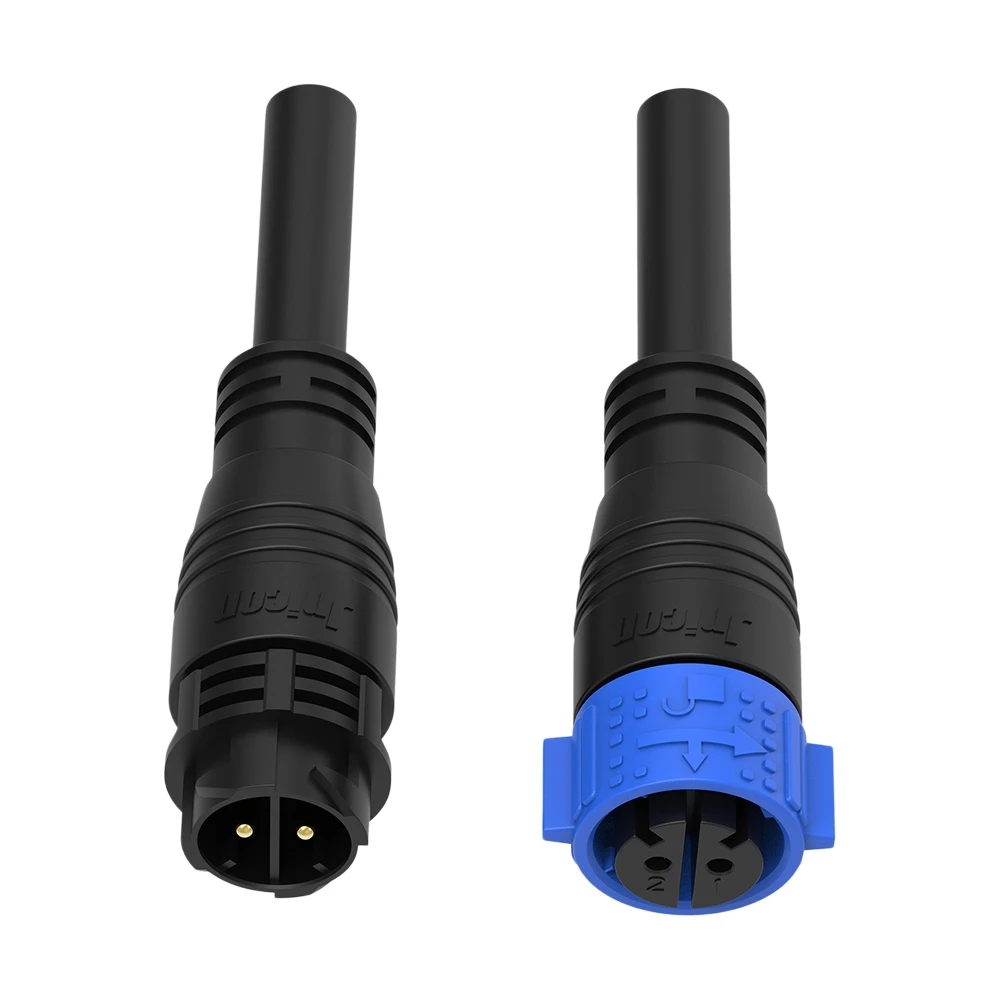
M25 2-Pin Waterproof Connector 50A Push Locking Molded with Cable for Solar & Energy Storage
Pre-molded 50A push-locking waterproof connector with IP67-rated cable, ready-to-use for reliable outdoor power connections in solar and energy storage systems.
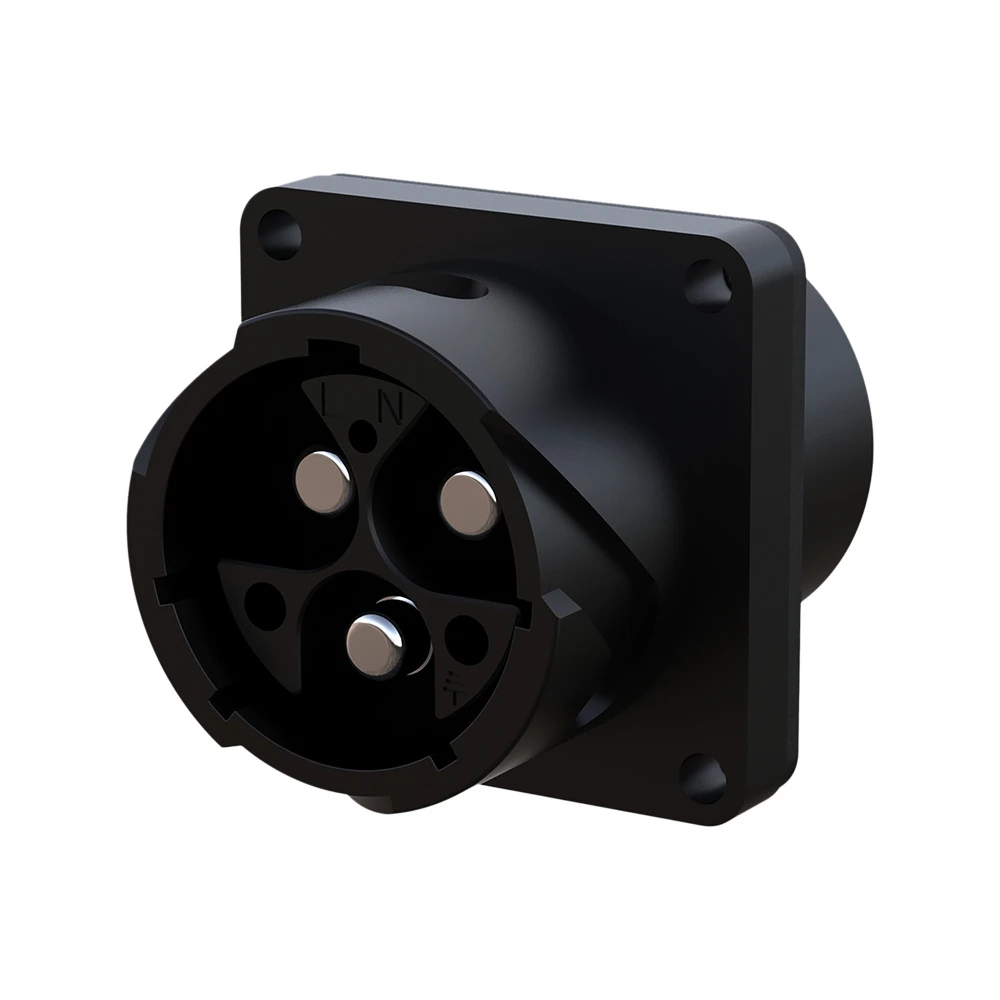
M28 3-Pin Waterproof Connector 80A Bayonet Locking IP67 for Solar & Storage
80A 3-pin bayonet-locking waterproof circular connector with IP67 rating for solar photovoltaic and energy storage systems.
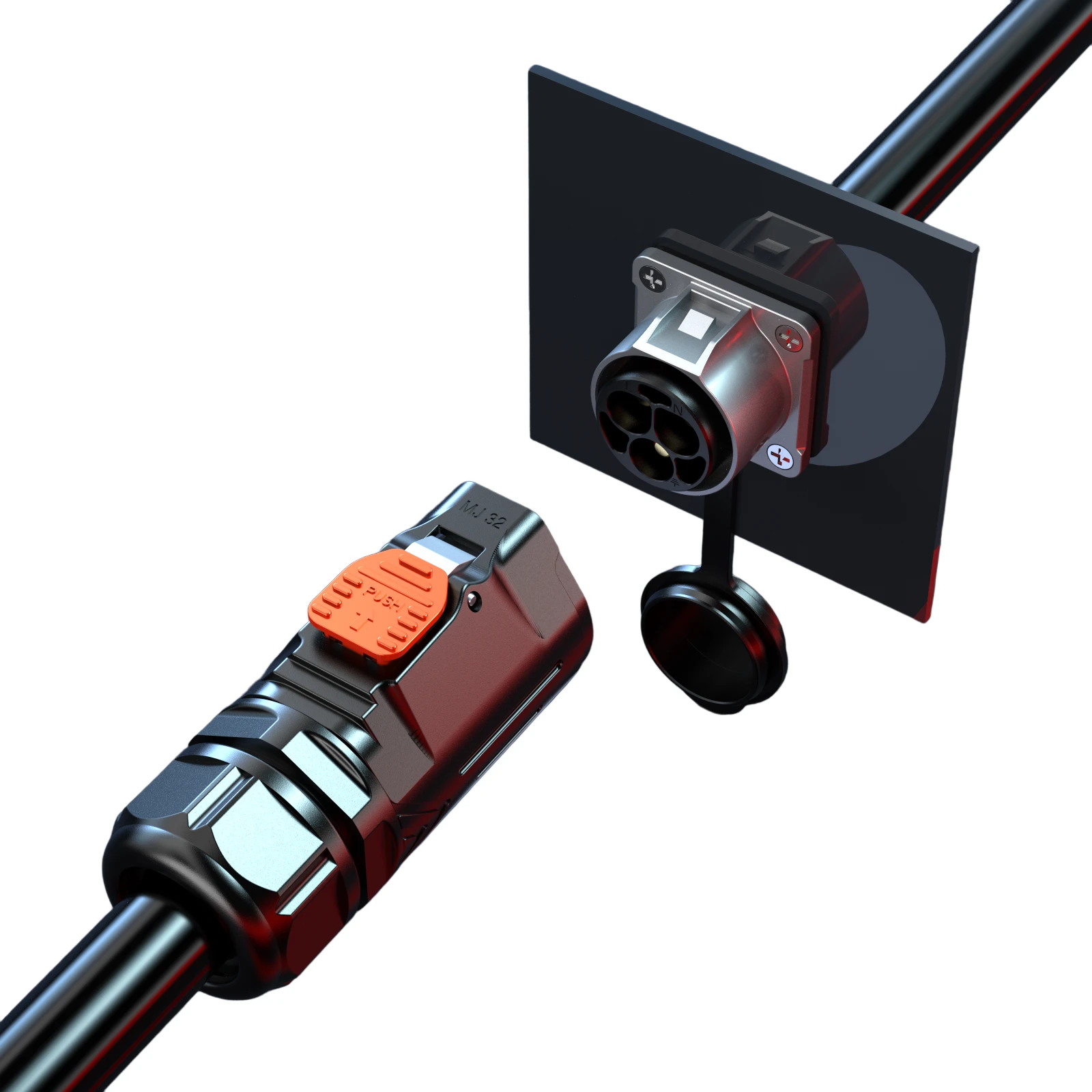
MJ32 3-Pin Waterproof Connector 80A Quick Lock for Energy Storage
80A quick-lock waterproof connector for energy storage and industrial power, with IP67 protection and reliable power transmission.

M40 5-Pin Waterproof Connector 50A Bayonet Lock for Industrial Power
50A bayonet lock waterproof connector for industrial power and automation, with IP67 protection and reliable performance.
To view complete technical specs, dimensional prints, and datasheets across our full hardware catalog, explore our comprehensive Circular Connectors Portfolio, our main Product Center, and our dedicated Connectors Category.
Recommended Industrial Solution Frameworks
Facility infrastructure management extends beyond individual hardware selection to complete electrical distribution architectures. Sourcing from an established manufacturing partner provides access to fully validated engineering frameworks tailored to challenging industrial environments.

Low-Altitude Economy
Connector and cable assembly review for UAV ground equipment, payload interfaces and related industrial systems. Define weight, space, vibration, power and signal requirements with JNICON. Airborne or safety-critical use requires its own qualification; an industrial catalog listing is not aircraft approval.
Explore Solutions
Marine & Offshore
Sealed power, signal and cable interfaces for marine equipment and offshore installations. Review salt exposure, condensation, vibration, cleaning and service conditions with JNICON. A stated IP68 rating does not by itself establish continuous subsea, pressure-depth or marine-class approval.
Explore Solutions
Security & Safety
Power and signal connectivity for surveillance, alarm, access-control and outdoor security equipment. JNICON can review circular connectors, Ethernet interfaces and cable assemblies against the installation drawing, data requirements and exposure conditions.
Explore SolutionsTo review detailed operational case studies and access industry-specific technical blueprints, browse our complete Industrial Solutions Directory.
Quality Audits and Manufacturing Validation Frameworks
Sourcing electrical components for critical industrial grids requires working with an original manufacturer that maintains rigorous quality controls and transparent factory validation procedures. Relying on unverified trading companies introduces risks of component failure if sub-assemblies lack comprehensive testing.
An authentic, high-quality component factory maintains accredited international quality management systems, specifically ISO9001 for corporate quality control, IATF16949 for automotive-grade supply chain tracking, and ISO14001 for environmental management. These audited operating procedures ensure consistent component quality across multi-year purchasing contracts.
Prior to mass delivery, production samples undergo rigorous laboratory validation:
-
High-Pressure Hydrostatic Testing: Sub-assemblies are submerged in pressurized testing vats past 1 meter depth to confirm IP68 sealing integrity.
-
Thermal Shock Cycling: Connectors are cycled between minus 40 degrees Celsius and plus 105 degrees Celsius inside environmental chambers to verify that plastic bodies do not warp or crack.
-
Salt Spray Corrosion Testing: Assembled components endure extended salt fog exposure to confirm that plating layers prevent contact oxidation.
To learn more about selecting high-reliability wiring hardware, review our published technical guides on waterproof wire connectors for plant sourcing, waterproof electrical connectors for factory automation, waterproof wire connector selection for factory OEM lines, waterproof wiring connectors for marine trailer harnesses, 2 pin waterproof connector selection for 12V DC grids, waterproof automotive connectors for heavy vehicle fleets, industrial connectors for factory automation networks, circular connectors selection for industrial plant networks, circular electrical connectors for factory grid automation, and 6 pin circular connector selection for factory robotics.
Frequently Asked Questions (FAQ)
Conclusion: Partnering for Reliable Industrial Sourcing
Optimizing your facility's electrical infrastructure requires looking beyond low-cost parts and carefully evaluating a supplier's engineering capabilities, quality control systems, and raw material tracking. Sourcing components directly from a trusted manufacturing partner protects your equipment from field failures and helps stabilize your assembly line costs. The Jnicon engineering team is ready to support your business with a wide selection of standard circular connectors or completely customized hybrid cable assemblies. To request detailed technical spec sheets, arrange a digital factory audit, or receive a project quotation, connect with our support team through our direct Inquiry and Contact Portal.