

Unplanned electrical breakdown across commercial marine vessels, heavy boat trailers, automated transportation fleets, and outdoor industrial machinery is most frequently caused by a single point of vulnerability: moisture ingress at cable harness junctions. When vehicle wiring assemblies are subjected to continuous sea spray, high-pressure liquid washdowns, road salt, or ambient humidity, standard commercial wiring splices suffer immediate dielectric breakdown. Water migration along stranded wire cores leads to short circuits, contact pin oxidation, and sudden fuse blowouts that stop operations. For marine engineers, fleet maintenance directors, and original equipment manufacturer (OEM) machinery builders, specifying validated waterproof wiring connectors is a critical decision to maintain long-term electrical safety.
Navigating the international supply chain for heavy-duty harness components requires looking beyond generic component brokers and off-the-shelf retail distributors. Sourcing electrical connectors directly from an established original component manufacturer guarantees total control over engineering polymer formulations, automated pin electroplating, and end-to-end quality validation. By establishing direct factory partnerships, industrial operations can customize exact wire entry glands, integrate high-performance sealing elastomers, and deploy power-and-signal hybrid layouts engineered to perform across demanding mechanical, thermal, and chemical operating environments.
Environmental Hazards in Marine & Vehicle Cable Harnesses
Understanding why standard wiring connections fail under marine and automotive duty cycles requires analyzing the fluid dynamics and chemical stresses present in mobile vehicle operating environments.
Salt Fog Corrosion and Electrochemical Degradation
Commercial marine vessels, boat trailers, and coastal transport equipment operate under constant exposure to airborne salt fog and sea water spray. Sodium chloride solution acts as an aggressive electrolyte. When salt water enters an unsealed electrical junction, it accelerates galvanic corrosion between dissimilar metals.
In a energized electrical harness, salt water creates a continuous conductive path across positive and negative contacts. This conductive path causes rapid electrochemical oxidation, dissolving copper conductors and forming non-conductive green copper carbonate crusts. As contact resistance spikes, voltage drops prevent navigation lights, bilge pumps, and electronic braking systems from operating reliably.
Thermal Cycling and Capillary Moisture Wicking
A primary cause of hidden wire harness failures in vehicles is thermal vacuum capillary wicking. During operation, electric motors, engine alternators, and LED lighting driver circuits generate substantial heat. This heat expands the air trapped inside the stranded copper wire cores and insulating jackets, forcing warm air out through loose wire ends.
When the vehicle or machinery is turned off, the internal air rapidly cools and contracts, creating a localized vacuum inside the sealed cable insulation. If the exposed junction lacks an air-tight seal, this pressure differential draws ambient moisture, splash water, or road salt brine directly into the center of the stranded wire core. Through capillary action, water travels inside the insulated harness cable, corroding copper strands until it reaches sensitive electronic control units (ECUs).
Mechanical Insulation & Strain Relief in Trailer Wiring Systems
Boat trailers and commercial utility transport rigs present challenging operating environments for electrical wiring systems. Trailer wiring is submerged during boat launching and subjected to continuous road shock, gravel impacts, and frame flexing.
Challenges in Boat Trailer Submersion
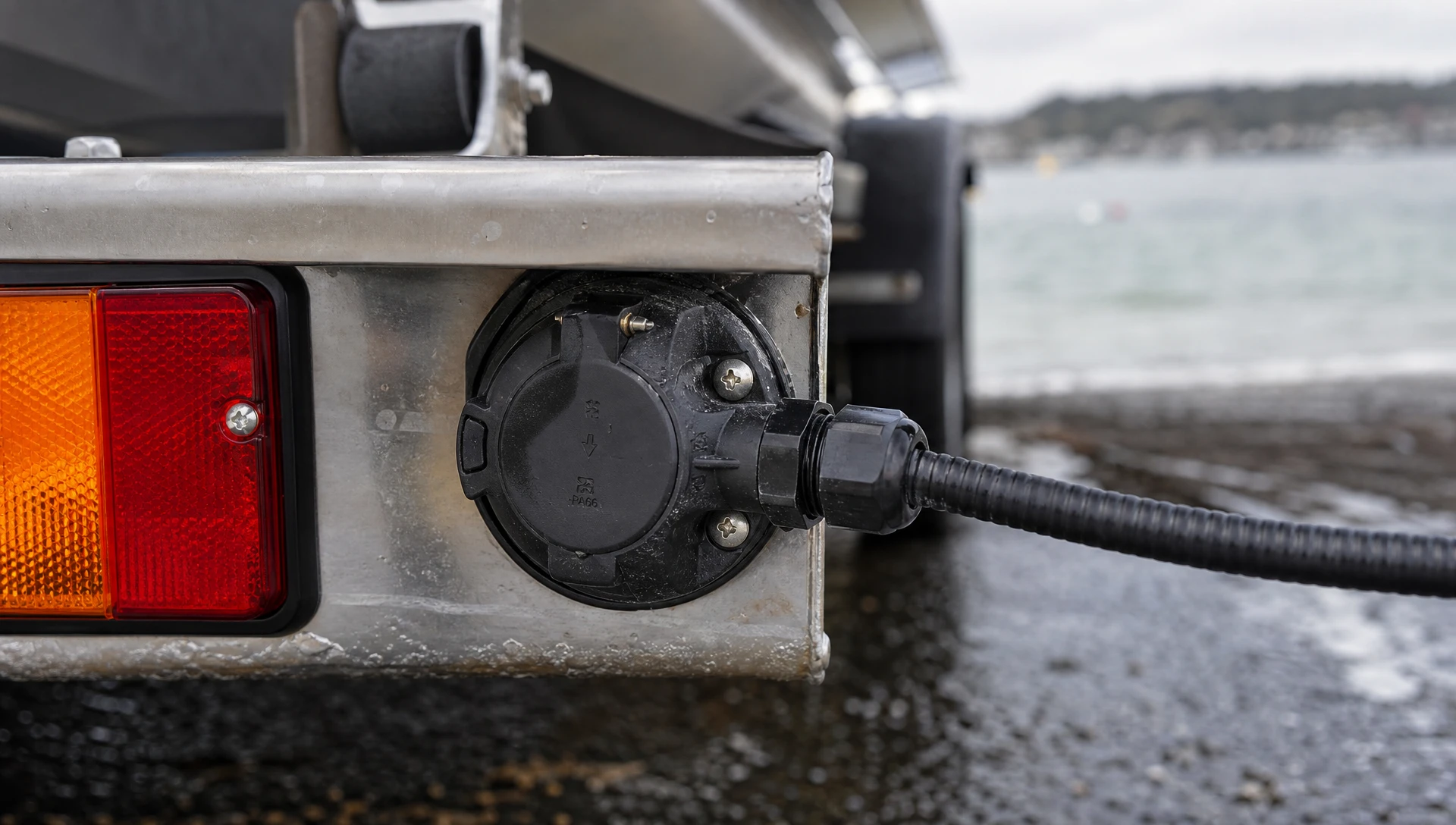
When launching a vessel into fresh or salt water, the entire trailer frame—including all lighting wire harnesses—is completely submerged. Traditional crimp caps or basic electrical tape cannot resist the hydrostatic water pressure exerted at depth. Water enters the light housings and wiring junctions, causing immediate short circuits and corroding lamp sockets.
Deploying dedicated boat trailer wiring waterproof connectors solves this challenge by maintaining an IP68 hermetic seal. These heavy-duty components utilize compression rubber grommets that seal around the outer cable jacket and internal elastomeric O-rings that compress when the coupling ring is locked, preventing water entry even during deep submersion.
Strain Relief Mechanics in Heavy Trailer Harnesses
As a trailer travels along highways, the wiring harness experiences continuous vibration and axial pull forces. If a cable is pulled or twisted, physical stress transfers to the internal wire crimps, pulling wire strands away from terminal pins or gapping the rear sealing grommet.
Heavy-duty waterproof trailer wiring connectors incorporate integrated compression strain-relief glands at the rear cable exit. When the rear locking nut is tightened, an internal plastic collet compresses a thick rubber grommet tightly around the cable jacket. This design achieves two key goals:
-
360-Degree Radial Sealing: Compresses the grommet evenly around the cable jacket to block water migration along outer insulation.
-
Mechanical Cable Retention: Transfers pulling forces to the tough outer cable jacket, protecting internal crimped wire terminations from strain and vibration fatigue.
Automotive & Motorcycle Wiring Harness Resilience
Mobile transport platforms—ranging from heavy commercial trucks to off-road motorcycles—subject electrical wiring to constant engine heat, splash water, and road chemicals.
High-Vibration Automotive Environments
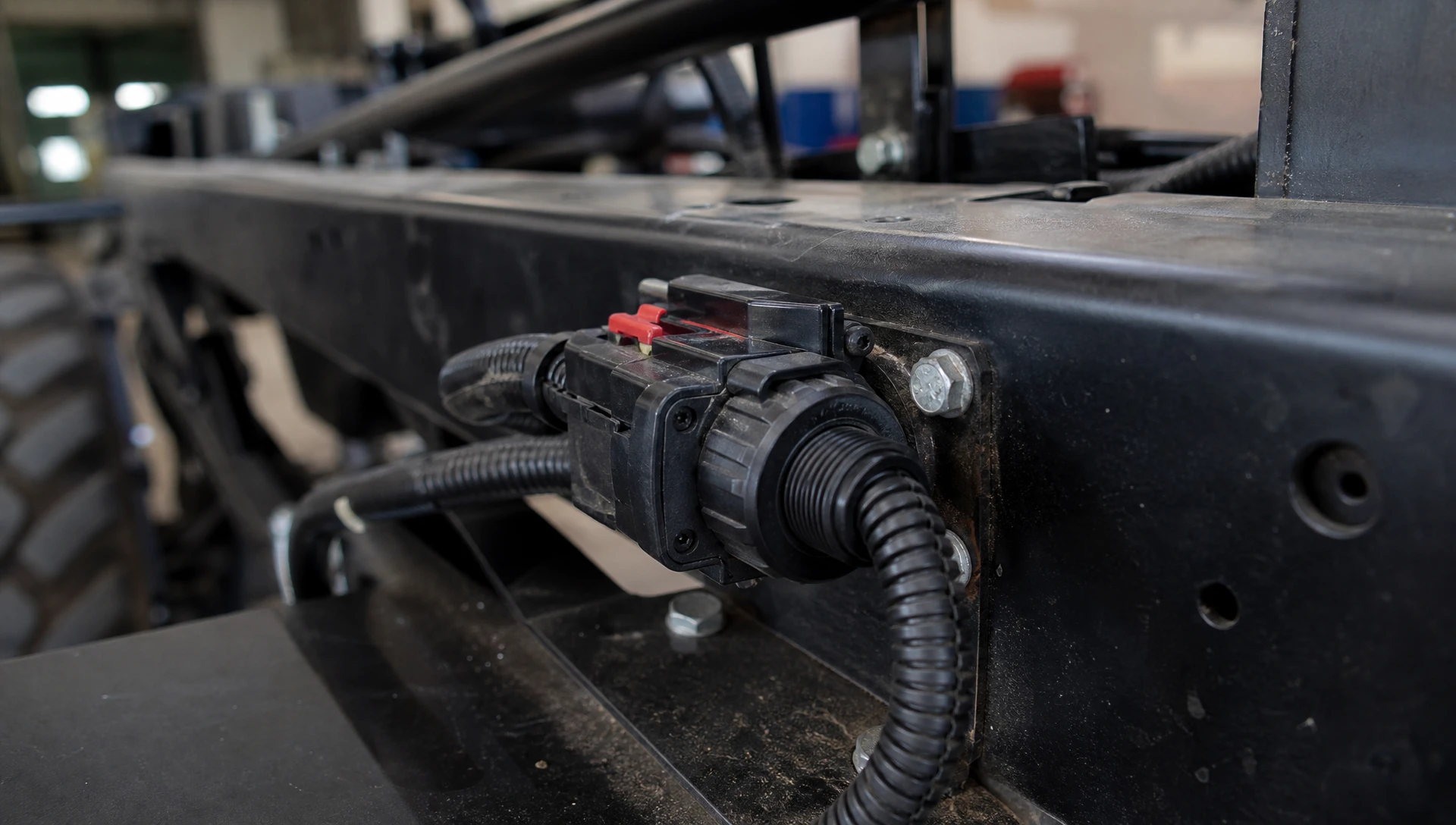
Heavy trucks, agricultural vehicles, and specialized utility transport fleets rely on complex wiring harnesses to route engine telemetry, sensor data, and lighting power. These mobile platforms subject wiring junctions to continuous engine vibration and shock. Standard commercial plugs lack secondary locking mechanisms and can back out over time, relaxing internal O-ring seals and allowing water or oil mist to seep into the contact block.
To prevent vibration-induced disconnects, systems engineers specify specialized waterproof automotive wiring connectors and heavy-duty waterproof wiring harness connectors. These components combine high-impact plastic bodies with secondary locking clips, such as Terminal Position Assurance (TPA) latches. TPA clips physically lock the crimped contacts inside the housing, preventing pin backing even under severe engine vibration.
Off-Road Motorcycle and Marine Craft Exposure
Off-road motorcycles, all-terrain vehicles (ATVs), and personal watercraft operate in mud, river crossings, and high-humidity environments. Electrical harnesses on these vehicles must resist high-pressure water spray during washing while occupying minimal physical space.
Utilizing compact waterproof motorcycle wiring connectors and waterproof boat wiring connectors ensures reliable circuit performance in compact frames. These connectors feature specialized fluorosilicone gaskets engineered to resist fuel, motor oil, and mud exposure without swelling, softening, or losing sealing compression over time.
To explore heavy-duty chassis and engine compartment wiring solutions, read our comprehensive breakdown on waterproof automotive connectors for heavy vehicle fleets.
Technical Performance Matrix: Marine vs. Automotive Wiring Interconnects
To assist procurement and engineering teams in matching connector specifications to operational requirements, this technical matrix compares key parameters across wiring interconnect styles.
| Technical Parameter | Commercial Gel-Filled Splices | Boat Trailer Wiring Connectors | Automotive Harness Plugs | Heavy-Duty Industrial Plugs |
| Ingress Protection Level | IP65 (Light splash defense) | IP68 (Submersible up to 2m) | IP67 / IP68 (Engine bay) | IP68 / IP69K (High washdown) |
| Vibration Defense Rating | Low (Internal springs loosen) | Medium (Threaded lock ring) | High (TPA secondary latches) | Extremely High (Bayonet/Quick-Lock) |
| Chemical Resistance | Poor (Gel degrades in oil) | High (Resists salt water) | Superior (Resists fuels/oils) | Superior (Resists solvents/acids) |
| Operating Temp Range | -10°C to +60°C | -40°C to +105°C | -40°C to +125°C | -40°C to +105°C |
| Primary Sourcing Vector | Static indoor utility wiring | Boat trailers, marine docks | Vehicle engines, mobile fleet | Heavy factory automation, ESS |
Custom Hybrid Wire Harness Solutions: Power + Telemetry Signals
Modern marine vessels, commercial trailers, and automated vehicles rely on complex electronic architectures. Traditional harness designs required separate physical cables for high-amperage power delivery and low-voltage telemetry signals (CAN-bus, sensor signals, digital feedback). This multi-cable approach required multiple panel pass-throughs, increased assembly time, and doubled potential leak points.
To streamline harness installation, vehicle OEMs specify custom hybrid connector assemblies. These advanced interfaces combine high-amperage power contacts and shielded, low-voltage signal tracks within a single circular housing.
Designing custom hybrid harness connectors presents complex engineering challenges:
-
Electromagnetic Interference (EMI) Isolation: High-current power lines generate surrounding electromagnetic fields that can introduce noise into adjacent low-voltage data signals. Custom hybrid designs integrate internal metallic shielding barriers and grounded drain pins to isolate the signal compartment.
-
Precision Cable Overmolding: Sealing a complex hybrid cable containing different wire gauges requires custom overmold tooling. Factory overmolding applies molten polyurethane (PUR) under monitored pressure to fully encapsulate the wire exit, forming an air-tight bond around irregular cable geometries.
For an in-depth analysis of auditing factory quality systems and evaluating custom harness tooling, read our technical guides on analyzing an industrial connector manufacturer for harsh grids and our comprehensive waterproof connector sourcing guide for industrial plants.
Recommended Industrial Product Lineup
To assist procurement managers and systems engineers in selecting the ideal component platform for their facility needs, we maintain distinct product families engineered for specific current capacities, custom configurations, and operational environments.
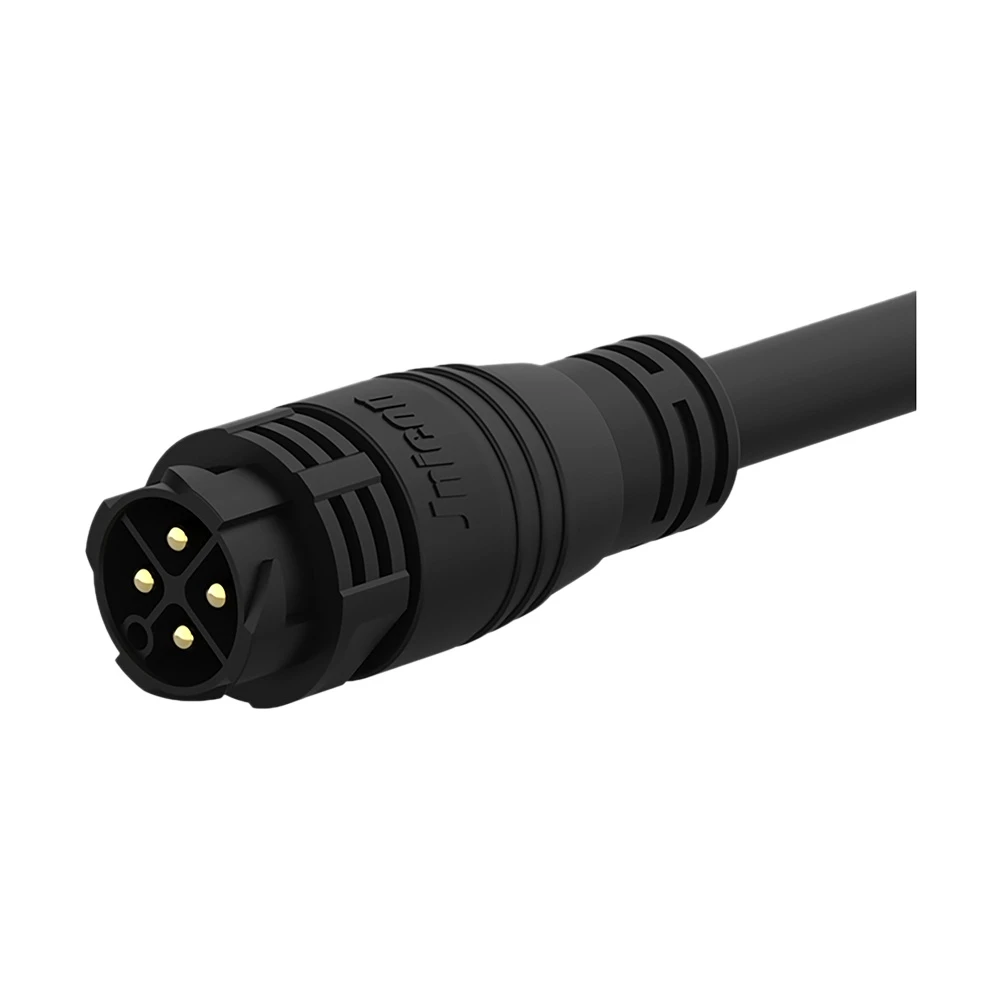
M25 4-Pin Waterproof Connector 50A Push Locking Molded with Cable for Industrial Automation
Pre-molded 50A 4-pin push-locking waterproof connector with IP67-rated cable, ready-to-use for industrial equipment and outdoor LED lighting installations.

M28 5 Pin Waterproof Connector 40A Bayonet Locking IP67 for LED Lighting & Control
40A 5-pin bayonet-locking waterproof circular connector with IP67 rating for outdoor LED lighting and industrial control systems.
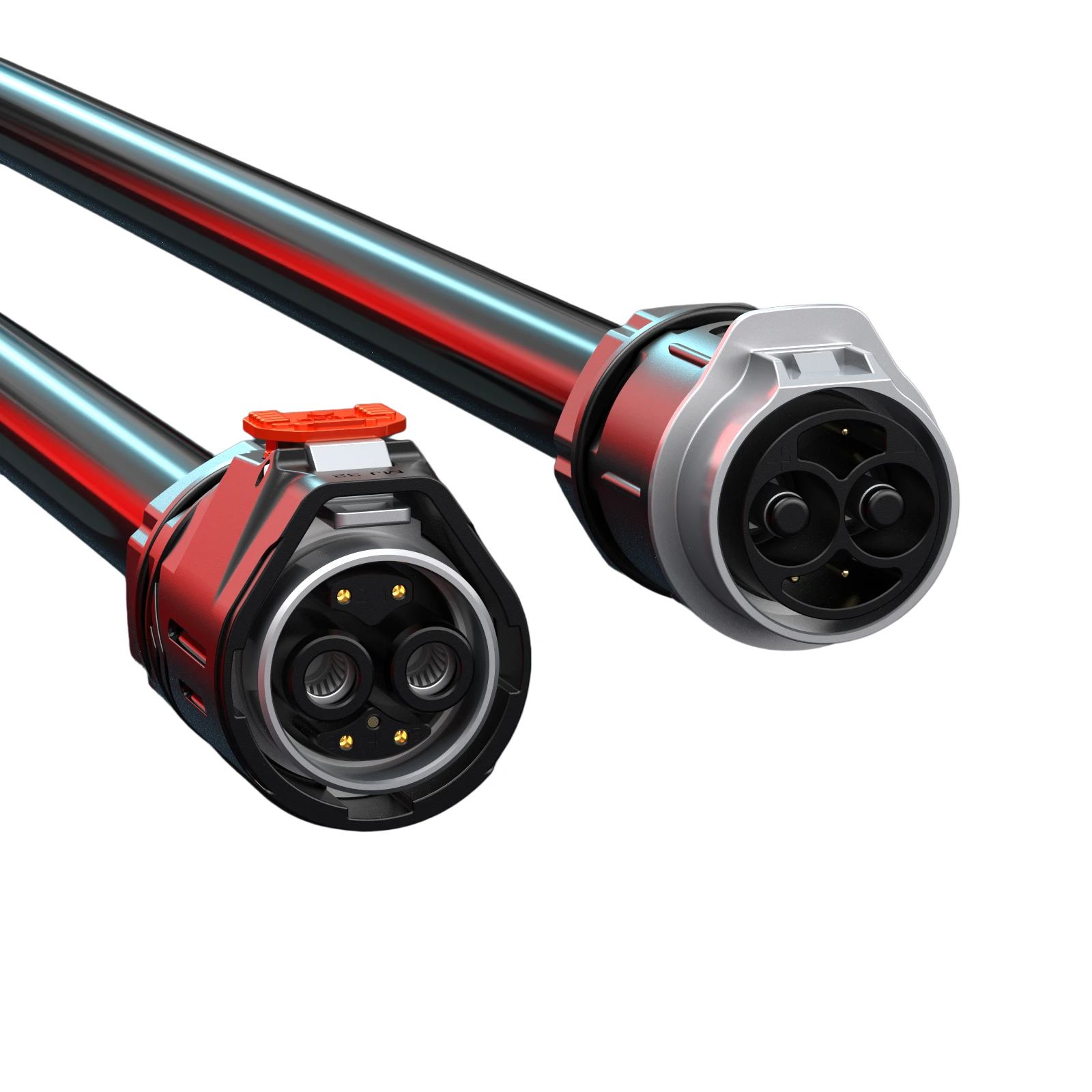
MJ32 2+5 Pin Hybrid Waterproof Connector 120A for BMS Signal Transmission
The JNICON MJ32 hybrid waterproof connector combines two 120A power contacts and five 10A signal contacts in a quick-lock, IP67-rated interface for BMS and industrial control wiring. Request the exact mating-pair drawing and validate ratings, cable fit and application conditions before production approval.

M40 3+9 Pin Hybrid Waterproof Connector for Control Systems
50A+10A hybrid bayonet lock waterproof connector for industrial control and signal transmission.
To review complete technical specs, dimensional prints, and datasheets across our full hardware catalog, explore our comprehensive Circular Connectors Portfolio, our main Product Center, and our dedicated Connectors Category.
Recommended Industrial Solution Frameworks
Vehicle and facility infrastructure management extends beyond individual hardware selection to complete electrical distribution architectures. Sourcing from an established manufacturing partner provides access to fully validated engineering frameworks tailored to challenging industrial environments.

New Energy & Energy Storage
Connector and cable assembly options for battery racks, BMS interfaces, power conversion equipment and energy-storage cabinets. JNICON supports configuration review based on current, voltage, thermal conditions, polarity, service access and environmental exposure.
Explore Solutions
Marine & Offshore
Sealed power, signal and cable interfaces for marine equipment and offshore installations. Review salt exposure, condensation, vibration, cleaning and service conditions with JNICON. A stated IP68 rating does not by itself establish continuous subsea, pressure-depth or marine-class approval.
Explore Solutions
Industrial Automation
Power, signal, and data connectivity for factory machines, robotic cells, sensors, and control cabinets. JNICON can review circular connectors and cable assemblies against motion, sealing, shielding, and maintenance requirements before prototype approval.
Explore Solutions
Solar & Photovoltaic
Connection options for solar equipment, auxiliary power, monitoring and storage integration. Review the exact circuit and connector ratings with JNICON; an industrial circular connector must not be assumed suitable for a high-voltage PV string or compatible with another manufacturer’s mating system.
Explore SolutionsTo review detailed operational case studies and access industry-specific technical blueprints, browse our complete Industrial Solutions Directory.
Quality Audits and Manufacturing Validation Frameworks
Sourcing electrical components for critical vehicle harnesses and industrial grids requires working with an original manufacturer that maintains rigorous quality controls and transparent factory validation procedures. Relying on unverified trading companies introduces risks of component failure if sub-assemblies lack comprehensive testing.
An authentic, high-quality component factory maintains accredited international quality management systems, specifically ISO9001 for corporate quality control, IATF16949 for automotive-grade supply chain tracking, and ISO14001 for environmental management. These audited operating procedures ensure consistent component quality across multi-year purchasing contracts.
Prior to mass delivery, production samples undergo rigorous laboratory validation:
-
High-Pressure Hydrostatic Testing: Sub-assemblies are submerged in pressurized testing vats past 1 meter depth to confirm IP68 sealing integrity.
-
Thermal Shock Cycling: Connectors are cycled between minus 40 degrees Celsius and plus 105 degrees Celsius inside environmental chambers to verify that plastic bodies do not warp or crack.
-
Salt Spray Corrosion Testing: Assembled components endure extended salt fog exposure to confirm that plating layers prevent contact oxidation.
To learn more about selecting high-reliability wiring hardware, review our published guides on waterproof wire connectors for plant sourcing, waterproof electrical connectors for factory automation, and waterproof wire connector selection for factory OEM lines.
Frequently Asked Questions (FAQ)
Conclusion: Partnering for Reliable Industrial Sourcing
Optimizing your facility's electrical infrastructure requires looking beyond low-cost parts and carefully evaluating a supplier's engineering capabilities, quality control systems, and raw material tracking. Sourcing components directly from a trusted manufacturing partner protects your equipment from field failures and helps stabilize your assembly line costs. The Jnicon engineering team is ready to support your business with a wide selection of standard circular connectors or completely customized hybrid cable assemblies. To request detailed technical spec sheets, arrange a digital factory audit, or receive a project quotation, connect with our support team through our direct Inquiry and Contact Portal.