

Unplanned machinery breakdowns, intermittent sensor errors, and severe electrical routing failures across automated assembly plants, heavy industrial vehicles, and outdoor energy infrastructure are most frequently caused by physical or electrical degradation within multi-branch wiring looms. On modern industrial factory floors, industrial equipment relies on complex networks of bundled conductors to route high-amperage electrical power, low-voltage control signals, and real-time fieldbus data from central control panels to distributed motors, solenoid valves, and sensor nodes. When multi-branch wire harnesses operate in harsh manufacturing environments exposed to continuous mechanical vibration, abrasive metal debris, synthetic cutting lubricants, and high-pressure chemical washdowns, poorly crimped terminals and unsealed breakout junctions quickly fail. Conductor pull-outs, wire insulation chafing, and fluid wicking lead to dead shorts, signal corruption, and catastrophic system halts that cost industrial operations thousands of dollars per hour in unplanned downtime. For plant procurement directors, electrical integration engineers, and machinery original equipment manufacturers (OEMs), sourcing certified cable harness assembly systems is an essential engineering strategy to guarantee long-term operational uptime and eliminate electrical points of failure.
Navigating the global supply chain for complex industrial wiring sub-assemblies requires looking beyond generic assembly workshops and catalog trading intermediaries. Partnering directly with an established original equipment manufacturer specializing in wire harness & cable assembly manufacturing guarantees complete control over terminal crimp geometry, conductor alloy purity, automated testing protocols, and environmental breakout sealing. Establishing direct manufacturing partnerships with verified cable harness assembly suppliers enables equipment builders to customize multi-branch harness routing, integrate high-performance protective sleeving, and deploy rugged cable and wire harness assembly systems engineered to perform across demanding mechanical, thermal, and chemical operating environments.
Architectural Foundations of Industrial Cable Harness Assemblies
In complex industrial machinery, a cable harness assembly serves as the coordinated central nervous system, binding hundreds of individual point-to-point wires, multi-conductor cables, and terminal connectors into a single organized, routed sub-assembly. Building a reliable harness requires analyzing the structural and mechanical principles governing industrial wire bundle integration.
Organizing Complex Wiring Density via Bundled Looms
In heavy automated machinery and commercial industrial vehicles, routing hundreds of loose, individual wires through machine frames creates severe routing chaos, increases cabinet installation times, and exposes fragile conductors to snagging and physical damage.
A custom cable assembly wire harness consolidates power feeds, digital I/O lines, and analog feedback tracks into a structured, pre-shaped geometric loom. By bundling conductors using high-tensile lacing tape, heat-stabilized spiral wrap, or woven textile sleeving, the harness reduces total harness volume, ensures consistent routing paths inside machine channels, and speeds up factory assembly line installations by allowing plug-and-play connection.
Eliminating Conductor Chafing and Abrasion
Dynamic industrial environments subject internal wiring to continuous mechanical vibration and frame flexing. If loose wires rub against sharp sheet metal edges or vibrating motor mounts, friction wears through outer insulation jackets, causing intermittent ground faults and dead short circuits.
Industrial-grade cable and harness assembly engineering protects exposed wire bundles using heavy-duty protective conduit systems. Bundles are enclosed inside modified Polyamide (PA6) corrugated conduits or high-density Polyethylene Terephthalate (PET) expandable braided sleeving. These protective layers deliver superior abrasion resistance, resist petrochemical solvent penetration, and withstand continuous mechanical impacts from flying metal chips and gravel.
To evaluate bespoke engineering, rapid mold tooling, and millimeter-precision wire lengths, read our guide on custom cable assemblies for industrial OEM automation grids.

Terminal Crimping Mechanics: Achieving Gas-Tight Electrical Joints
The electrical integrity and physical strength of any harness cable assembly depend fundamentally on the quality of its terminal crimp joints. A crimp connection must establish both high mechanical pull-out strength and low electrical contact resistance.
The Physics of Gas-Tight Crimp Deformation
During terminal crimping, an automated pneumatic or servo-driven crimping press applies monitored tonnage to compress the open barrel of a metal terminal around stranded copper conductors. When properly calibrated tooling is used, the compressive force deforms both the metal terminal sleeve and the internal copper strands beyond their elastic limits, cold-welding them into a solid, void-free metal mass.
This mechanical deformation creates a "gas-tight" joint. By eliminating microscopic air voids between adjacent copper strands, the crimp prevents atmospheric oxygen, moisture, and corrosive industrial vapors from entering the contact core. Gas-tight joints prevent electrochemical oxidation, keeping contact resistance below 0.2 milliohms across years of continuous industrial operation.
Micrographic Cross-Section Analysis and Pull-Force Testing
Leading wire harness & cable assembly manufacturing facilities maintain strict quality validation protocols in compliance with IPC/WHMA-A-620 Class 3 standards:
-
Micrographic Cross-Section Inspection: Sample crimp terminals are cut, polished, and examined under digital metallurgical microscopes to verify correct crimp compaction, symmetrical wing closure, and zero internal air pockets.
-
Destructive Tensile Pull Testing: Automated tensile testers measure the exact force required to separate the wire from the crimped terminal, ensuring mechanical retention exceeds standard industrial safety limits.
Environmental Breakout Sealing: Protecting Multi-Branch Junctions
The most vulnerable points in a complex cable harness assembly are the transition nodes—the breakout junctions where a main trunk cable splits into multiple sub-branches feeding individual sensors and motor actuators.
Limitations of Manual Heat-Shrink Breakout Boots
In low-cost wiring harnesses, assembly workshops often seal cable breakout points using pre-molded adhesive heat-shrink transition boots (Y-boots and T-boots) heated with manual hot-air guns. While heat-shrink boots provide basic insulation for static, indoor machinery cabinets, they present serious vulnerabilities when deployed on heavy processing machinery or outdoor equipment:
-
Uneven Adhesive Flow: Manual heating frequently creates localized hot spots and cold spots, resulting in incomplete adhesive bonding and leaving microscopic channels where fluid can penetrate.
-
Chemical Degradation: Synthetic cutting fluids, hydraulic lubricants, and caustic washdown detergents dissolve hot-melt adhesives over time, compromising the moisture barrier.
High-Pressure Injection Overmolded Breakout Modules
To achieve permanent environmental sealing across cable harness assemblies, advanced manufacturing plants deploy automated high-pressure injection overmolding. During production, the unsheathed wire transition is placed inside custom-machined steel tooling, and molten Polyurethane (PUR) or Thermoplastic Elastomer (TPE) is injected under monitored temperature and pressure.
The injected molten polymer encapsulates every individual conductor, bonding directly with the outer cable jackets and conduit adapters. This process forms a solid, void-free molded junction block that delivers certified IP68 and IP69K sealing, resists oil and chemical degradation, and provides integrated mechanical strain relief that absorbs multi-axis bending forces.
Testing & Validation: 100% Automated Testing for Zero-Defect Harnesses
In critical industrial automation and heavy machinery applications, a single misplaced wire or weak crimp within a multi-conductor harness can destroy expensive electronic control units (ECUs) or cause catastrophic machinery malfunctions. Sourcing from accredited cable harness assembly suppliers ensures that 100% of manufactured harnesses undergo automated multi-stage electrical testing before shipment.
Digital Continuity and Pinout Verification
Every completed harness is connected to custom computerized testing jigs. Automated test software verifies point-to-point electrical continuity across every circuit, instantly flagging open circuits, reversed wire pairs, mispinned connectors, or intermittent contacts.
4-Wire Kelvin Resistance Testing
To detect weak crimps or broken internal conductor strands that basic continuity checks might miss, computerized test fixtures employ 4-wire Kelvin resistance measurement. This precision test measures milliohm-level resistance across every wire run, ensuring uniform electrical conductivity.
High-Voltage Dielectric (Hi-Pot) & Insulation Resistance Testing
To guarantee safety in high-voltage industrial grids, harnesses undergo high-voltage potential (Hi-Pot) testing, applying voltages up to 1500V DC between adjacent conductors and ground shields. This test confirms that internal insulation resists dielectric breakdown and detects any insulation pinholes or microscopic arc paths.
For an in-depth analysis of auditing factory quality systems and evaluating custom harness tooling, read our technical guides on analyzing an industrial connector manufacturer for harsh grids and our comprehensive waterproof connector sourcing guide for industrial plants.

Technical Comparison Matrix: Cable Harness Manufacturing Standards
To assist procurement managers and systems integration engineers in selecting the ideal wiring platform, this technical matrix compares key performance parameters across different cable harness assembly styles.
| Technical Parameter | Manual Workshop Wire Harnesses | Standard Industrial Harness Assemblies | Heavy-Duty Overmolded Vehicle Harnesses | High-Flex Dynamic Robotic Harnesses |
| Manufacturing Standard | Basic Commercial Assembly | Certified IPC/WHMA-A-620 Class 2 | Certified IPC/WHMA-A-620 Class 3 | Certified Class 3 High-Flex |
| Ingress Defense Rating | IP50 / IP65 (Splash defense) | Certified IP67 / IP68 | Certified IP68 / IP69K | IP68 Factory Overmolded |
| Terminal Crimp Quality | Manual hand-crimp pliers | Automated press (Standard) | Automated press + Crimp Force Monitor | 100% Metallurgical Verified |
| Breakout Protection | Heat-shrink tubing / Tape | Molded rubber boots | High-pressure molded PUR blocks | Flexible molded PUR transitions |
| 100% Pre-Shipment Test | Basic manual buzzer test | Automated continuity testing | Full Hi-Pot + Kelvin 4-Wire testing | Digital continuity + Hi-Pot |
| Primary Sourcing Vector | Static indoor electronics | Industrial control cabinets | Heavy transport, construction, AGVs | 6-Axis robotic automation lines |
Recommended Industrial Product Lineup
To assist procurement managers and systems engineers in selecting the ideal component platform for their facility needs, we maintain distinct product families engineered for specific current capacities, custom configurations, and operational environments.
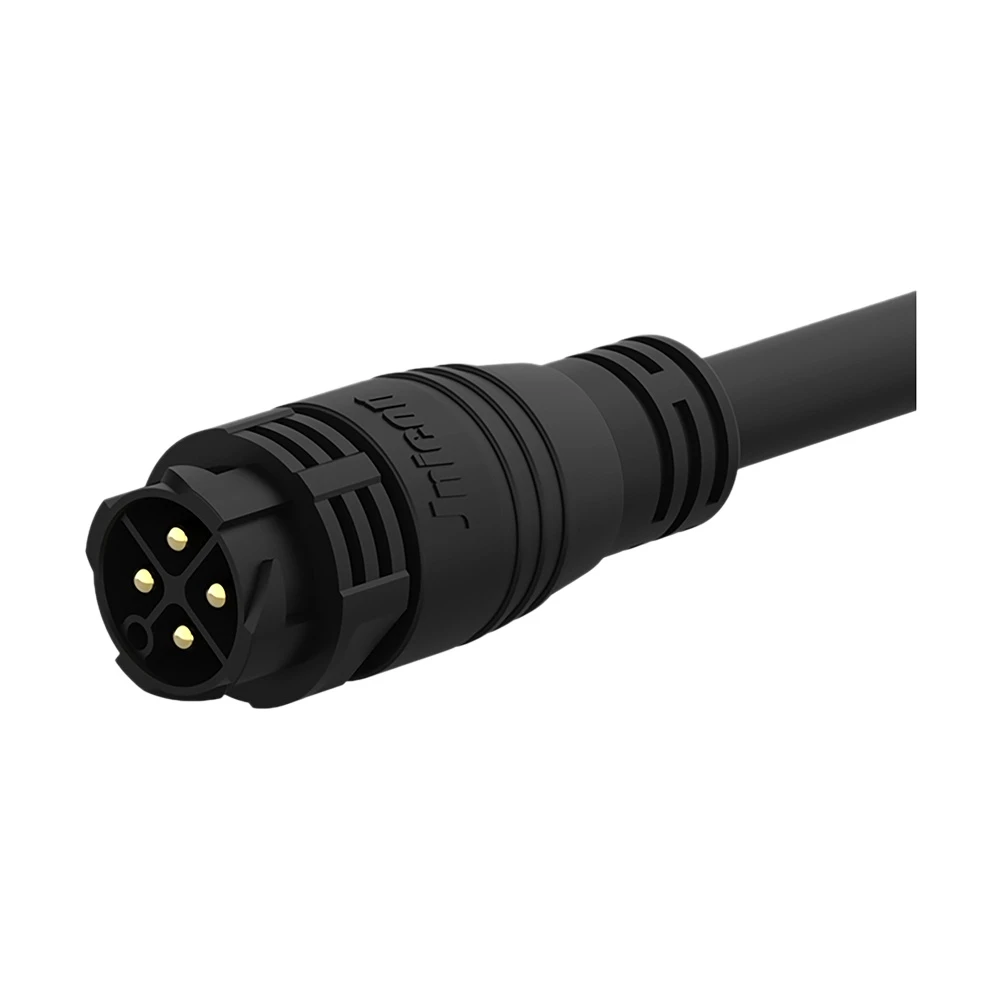
M25 4-Pin Waterproof Connector 50A Push Locking Molded with Cable for Industrial Automation
Pre-molded 50A 4-pin push-locking waterproof connector with IP67-rated cable, ready-to-use for industrial equipment and outdoor LED lighting installations.

M28 5 Pin Waterproof Connector 40A Bayonet Locking IP67 for LED Lighting & Control
40A 5-pin bayonet-locking waterproof circular connector with IP67 rating for outdoor LED lighting and industrial control systems.
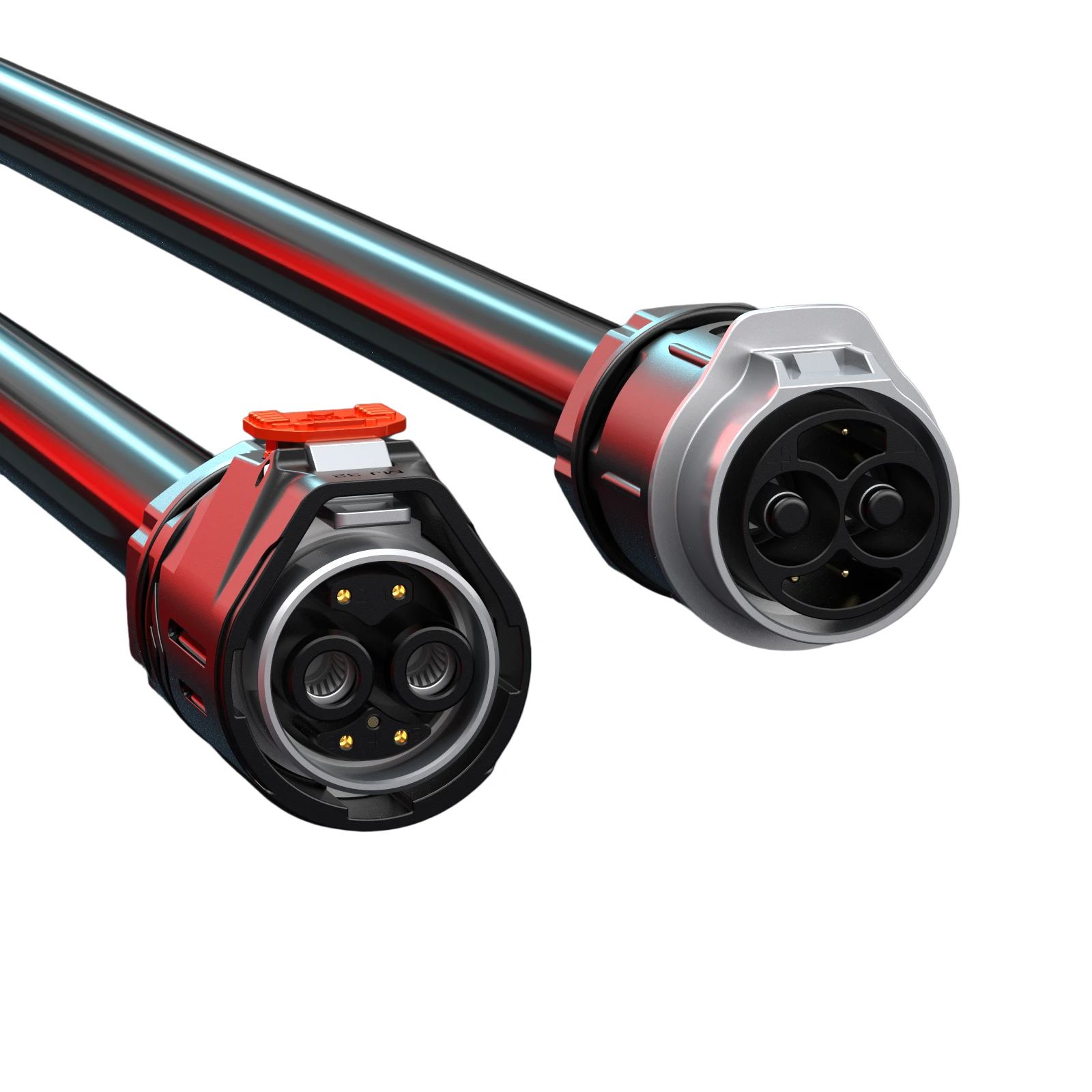
MJ32 2+5 Pin Hybrid Waterproof Connector 120A for BMS Signal Transmission
The JNICON MJ32 hybrid waterproof connector combines two 120A power contacts and five 10A signal contacts in a quick-lock, IP67-rated interface for BMS and industrial control wiring. Request the exact mating-pair drawing and validate ratings, cable fit and application conditions before production approval.

M40 3+9 Pin Hybrid Waterproof Connector for Control Systems
50A+10A hybrid bayonet lock waterproof connector for industrial control and signal transmission.
To view complete technical specs, dimensional prints, and datasheets across our full hardware catalog, explore our comprehensive Circular Connectors Portfolio, our main Product Center, and our dedicated Connectors Category.
Recommended Industrial Solution Frameworks
Facility infrastructure management extends beyond individual hardware selection to complete electrical distribution architectures. Sourcing from an established manufacturing partner provides access to fully validated engineering frameworks tailored to challenging industrial environments.

Low-Altitude Economy
Connector and cable assembly review for UAV ground equipment, payload interfaces and related industrial systems. Define weight, space, vibration, power and signal requirements with JNICON. Airborne or safety-critical use requires its own qualification; an industrial catalog listing is not aircraft approval.
Explore Solutions
Marine & Offshore
Sealed power, signal and cable interfaces for marine equipment and offshore installations. Review salt exposure, condensation, vibration, cleaning and service conditions with JNICON. A stated IP68 rating does not by itself establish continuous subsea, pressure-depth or marine-class approval.
Explore Solutions
Security & Safety
Power and signal connectivity for surveillance, alarm, access-control and outdoor security equipment. JNICON can review circular connectors, Ethernet interfaces and cable assemblies against the installation drawing, data requirements and exposure conditions.
Explore SolutionsTo review detailed operational case studies and access industry-specific technical blueprints, browse our complete Industrial Solutions Directory.
Quality Audits and Manufacturing Validation Frameworks
Sourcing electrical components for critical industrial grids requires working with an original manufacturer that maintains rigorous quality controls and transparent factory validation procedures. Relying on unverified trading companies introduces risks of component failure if sub-assemblies lack comprehensive testing.
An authentic, high-quality component factory maintains accredited international quality management systems, specifically ISO9001 for corporate quality control, IATF16949 for automotive-grade supply chain tracking, and ISO14001 for environmental management. These audited operating procedures ensure consistent component quality across multi-year purchasing contracts.
Prior to mass delivery, production samples undergo rigorous laboratory validation:
-
High-Pressure Hydrostatic Testing: Sub-assemblies are submerged in pressurized testing vats past 1 meter depth to confirm IP68 sealing integrity.
-
Thermal Shock Cycling: Connectors are cycled between minus 40 degrees Celsius and plus 105 degrees Celsius inside environmental chambers to verify that plastic bodies do not warp or crack.
-
Salt Spray Corrosion Testing: Assembled components endure extended salt fog exposure to confirm that plating layers prevent contact oxidation.
To learn more about selecting high-reliability wiring hardware, review our published technical guides on waterproof wire connectors for plant sourcing, waterproof electrical connectors for factory automation, waterproof wire connector selection for factory OEM lines, waterproof wiring connectors for marine trailer harnesses, 2 pin waterproof connector selection for 12V DC grids, waterproof automotive connectors for heavy vehicle fleets, industrial connectors for factory automation networks, circular connectors selection for industrial plant networks, circular electrical connectors for factory grid automation, 6 pin circular connector selection for factory robotics, energy storage connectors for battery energy networks, power connectors selection for factory electrical grids, China power connector manufacturer for industrial grids, AC power connector types for factory electrical systems, hybrid connectors selection for industrial power and signal grids, and cable assemblies sourcing guide for industrial plant OEMs.
Frequently Asked Questions (FAQ)
Conclusion: Partnering for Reliable Industrial Sourcing
Optimizing your facility's electrical infrastructure requires looking beyond low-cost parts and carefully evaluating a supplier's engineering capabilities, quality control systems, and raw material tracking. Sourcing components directly from a trusted manufacturing partner protects your equipment from field failures and helps stabilize your assembly line costs. The Jnicon engineering team is ready to support your business with a wide selection of standard circular connectors or completely customized hybrid cable assemblies. To request detailed technical spec sheets, arrange a digital factory audit, or receive a project quotation, connect with our support team through our direct Inquiry and Contact Portal.